
Lieferung heute & morgen

Qualitätsgarantie

Willkommens-Angebote freischalten: KOSTENLOSE Lieferung | Bis zu 80 % RABATT | Kostenlose 30-Tage-JoyPlus-Testphase
App herunterladen
If you’re looking to buy Asian snacks online, you’ll find a wide selection from Thailand, China, Japan, Korea and beyond. But products such as rice crackers, seafood snacks, fruit pieces, wafer rolls and Asian sweets can vary considerably in their ingredients, portion sizes, spice levels and allergens.
Packaging doesn’t always give you the full picture. A bold flavour label tells you little about the sugar or salt content, and a large bag isn’t necessarily ideal for sharing with a group. A few things you can check will help you choose snacks that suit the occasion and your taste.
A multipack can be handy if you’re looking for snacks to share or keep at the office. For eating on the go, however, small, resealable or individually wrapped portions are often more convenient. Before buying, check the net weight, number of individual portions and type of packaging.
A product name or marketing claim may highlight one particular nutritional value without telling you about the overall nutritional profile. So compare the information per 100 g. For example, Orion Haitai Good Day Fish-Shaped Crackers contain 15.5 g of sugar and 0.71 g of salt per 100 g. A 33 g pack makes portioning easier, but it’s still worth checking the ingredients list.
Chilli, wasabi, fish sauce, crab flavouring or seaweed can all have a strong influence on the flavour. Fish, molluscs, crustaceans and soya are also potential allergens that must be declared in seafood snacks. Classic Asian biscuits and wafer rolls often contain wheat, milk or soya, too. Always check the current packaging before buying, especially if you have allergies or intolerances.
Ingredients are listed in descending order by weight. For a seafood snack, it should be clear whether it actually contains squid or fish and where these ingredients appear in the list. BENTO Mixed Seafood Snack Hot & Spicy 20 g contains 40% dried squid and 30% tuna surimi. The product information also lists fish, squid, crustaceans and wheat.
Look out for ingredients such as sulphites, milk, egg, sesame and gluten, too. Information can change, so always refer to the labelling on the product you receive.
For a fair comparison, check the energy, fat, saturates, carbohydrates, sugars, protein and salt per 100 g. The amount you actually eat will then depend on the pack size. A 20 g bag is suitable for a small individual portion, while a 150 g pack may be better for sharing.
Examples from the selection:
These figures aren’t a judgement on the products; they simply help you choose what suits your personal needs.
For a film night or party, crispy Asian snacks, rice crackers and a snack mix are all good options. Small packs and individually wrapped snacks are handy for keeping in your desk drawer. If you prefer sweet treats, choose from fruit snacks, Asian biscuits, wafer rolls and Pocky sticks. If you’re more into savoury flavours, try seafood snacks, fish snacks, seaweed crackers, or wasabi and chilli snacks.
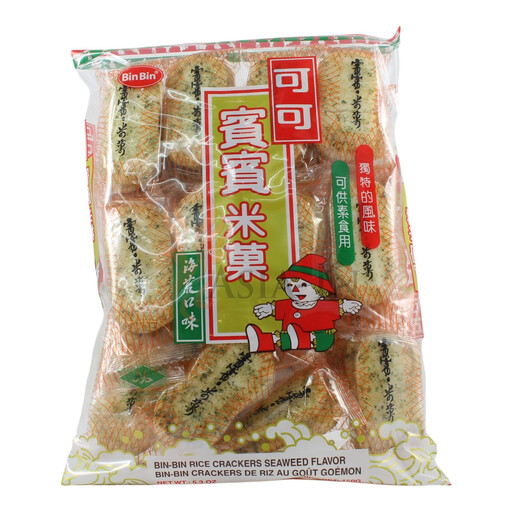
Why this product suits this profile: The 150 g pack is a classic introduction to seaweed-flavoured rice crackers, ideal for your own snack cupboard or for sharing.
The pack size is clearly stated, and the ingredients and allergen information include rice, soya and wheat.
Crispy rice crackers, 150 g net weight and 0.6 g of salt per 100 g according to the product information.
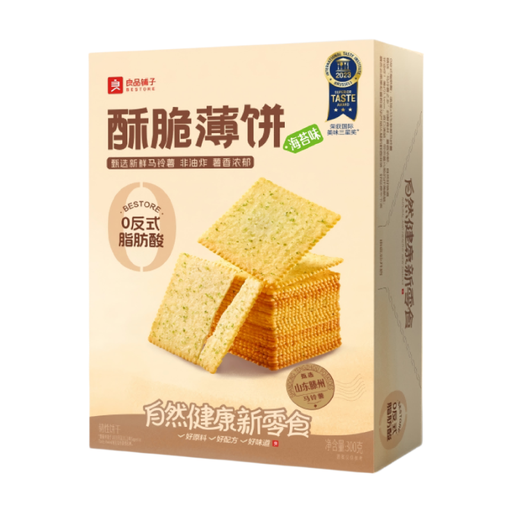
Why this product suits this profile: This large pack is made for sharing and can be served with dips, cheese or spreads.
The product information clearly lists key allergens, including wheat, soya, crustaceans, egg and sulphites.
300 g pack, a thin, crispy texture and seaweed seasoning; listed at 500 kcal per 100 g.
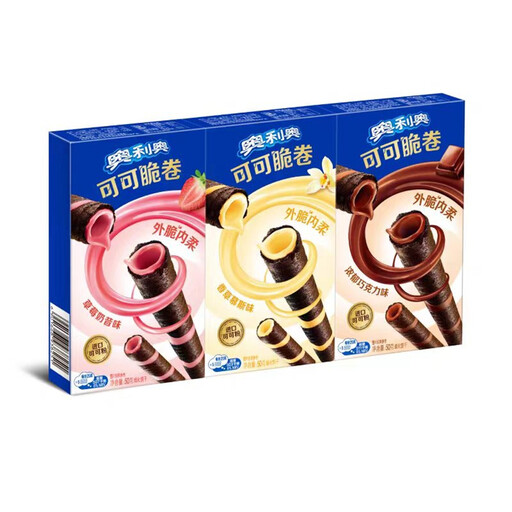
Why this product suits this profile: Three individually wrapped 50 g portions are ideal for the office, picnics, parties or handing out controlled portions to a group.
The individual wrappers mean you don’t have to leave the whole quantity open; wheat and soya are listed as allergens.
Multipack with chocolate, vanilla and strawberry flavours; 150 g total weight.
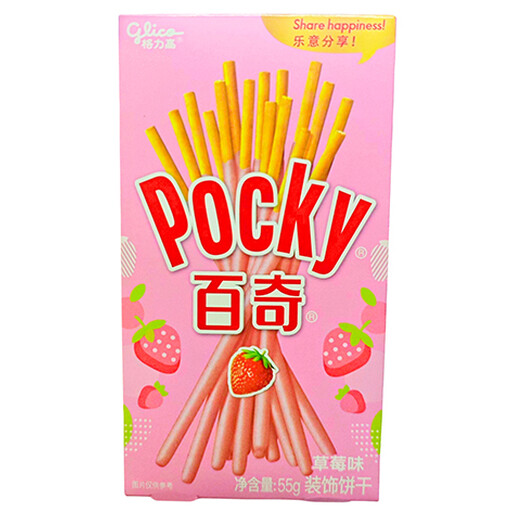
Why this product suits this profile: The compact 55 g pack is an easy introduction to Japanese snacks, with a sweet strawberry flavour.
The ingredients list states that it contains 10% strawberry powder; wheat, barley, milk and soya are listed as allergens.
Crispy biscuit sticks with a strawberry coating, 55 g net weight and 496 kcal per 100 g according to the product information.
We’ve put together a complete, regularly updated list of products that fully meet these strict selection criteria and the safety requirements in force in the EU.
Most products are ready to eat straight from the pack. Store crispy snacks in a cool, dry place away from direct sunlight. Moisture can affect the texture of rice crackers, biscuits and wafer rolls. Reseal opened packs as airtight as possible and check the best-before date on the packaging.
Seafood snacks such as BENTO or Taro Fish Snack should be eaten soon after opening. In warm temperatures, chocolate or fat-based coatings may show visible changes. Always follow the instructions from the individual manufacturer.
Larger packs of rice crackers, seaweed crackers or a snack mix are good for groups, as are individually wrapped wafer rolls. Offering a mix of sweet and savoury options caters to different tastes. If any guests have allergies, check the ingredients lists before serving.
Individual portions of 20 to 55 g are easy to pop in your bag, lunchbox or rucksack. Options include seafood snacks, Pocky sticks and small portions of biscuits. For longer trips, multipacks with individually wrapped portions can be a good choice.
Shelf life varies by product and is shown on the packaging. When stored properly, unopened dry products can be kept until the stated best-before date. Once opened, crispy snacks should be eaten as soon as possible to prevent moisture affecting their texture.