
Lieferung heute & morgen

Qualitätsgarantie

Willkommens-Angebote freischalten: KOSTENLOSE Lieferung | Bis zu 80 % RABATT | Kostenlose 30-Tage-JoyPlus-Testphase
App herunterladen
If you want to buy baby food online, you’ll quickly find a wide selection of infant formula, baby purées, milk porridge and toddler milk. Product pages can look very similar, but age recommendations, ingredients, portion sizes and preparation instructions can vary considerably. That’s why parents and carers need clear, reliable information rather than eye-catching marketing claims.
“From 4 months”, “from 6 months” and “from 12 months” are not interchangeable recommendations. A baby purée for the start of weaning has a different composition from a breakfast porridge with coarser cereal. Always check the age recommendation on the packaging before buying and consider whether it suits your child’s individual development. If you’re unsure, speak to your child’s GP or health visitor.
A product with no added sugar may naturally contain sugar from fruit or milk. So check the ingredients list and nutritional information per 100 grams or 100 millilitres. For fruit purées, it’s also worth checking the fruit content and the order in which the ingredients are listed.
Organic baby food may be a suitable choice, but the label alone doesn’t tell you whether a product contains milk, gluten, fish or possible traces of these ingredients. Flavourings, types of cereal and texture should also suit your child’s age and dietary needs.
Start by working out what you need:
Look for clearly listed ingredients such as milk, wheat, oats, spelt, barley, rye, fish or soya. The gluten content is particularly relevant in products containing several types of cereal. A single-ingredient product such as pumpkin purée can make the start of weaning easier to navigate, while mixed purées offer more variety.
Before opening, check the best-before date and make sure the pouch, jar or tin is undamaged. Once opened, storage times vary by product. Leftovers from some jars should be refrigerated and used the following day, while powdered products often need to be used within three to four weeks.
Milk powder and porridge powder should be freshly prepared for each meal. Follow the manufacturer’s instructions for the amount of water and powder, the temperature and use of the measuring scoop provided. Microwaving can heat food unevenly, and is specifically not recommended for some products.
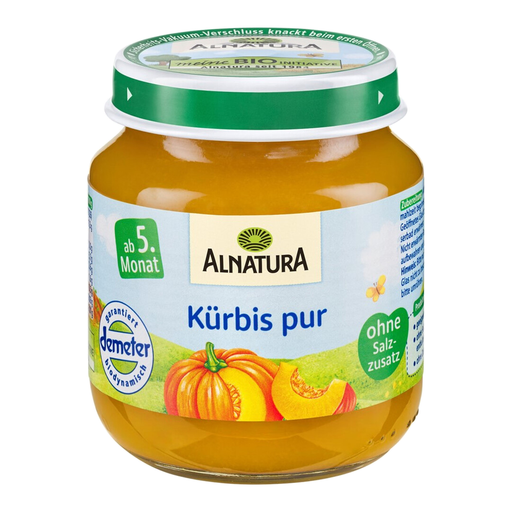
Why this product suits this profile: This single-ingredient jar is a straightforward option for families looking to start weaning with a small portion of vegetables.
The ingredients list states 95% pumpkin and water; according to the product information, no salt has been added. This makes it easy to compare with more complex mixtures.
Single-ingredient recipe in a 125 g jar; listed as gluten-free. Refrigerate any leftovers after opening and use them the following day.
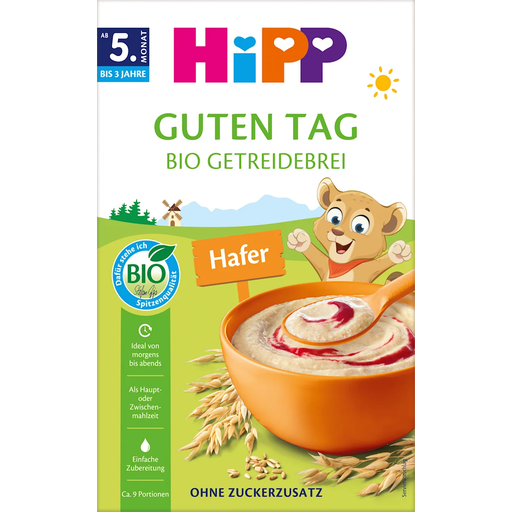
Why this product suits this profile: This plain oat porridge is a good choice for households that prefer a clearly defined cereal base and organic labelling.
The product information states that it contains 100% organic oat flour and no added sugar. Before buying, however, check the warning about possible traces of other ingredients, such as mustard.
No added sugar, with vitamin B1. Can be made with water, milk or infant formula.
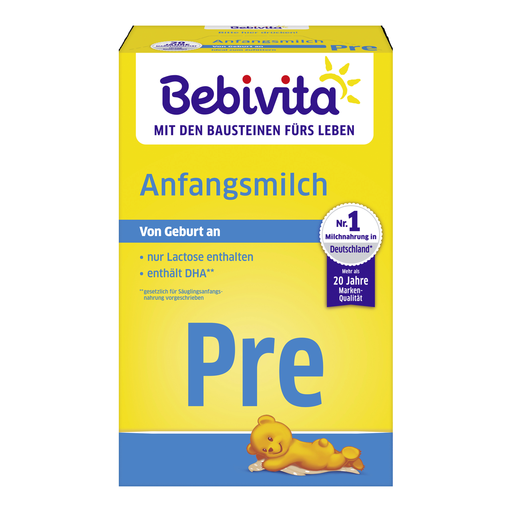
Why this product suits this profile: This Pre formula is intended for families looking for first infant formula from birth, either as their baby’s sole bottle feed or alongside breastfeeding.
The product information lists lactose as its only source of carbohydrate. Accurate measuring and hygienic, fresh preparation of every bottle are still essential.
500 g pack, DHA according to the product information, and a clear dosage table by age. Contains milk and fish.
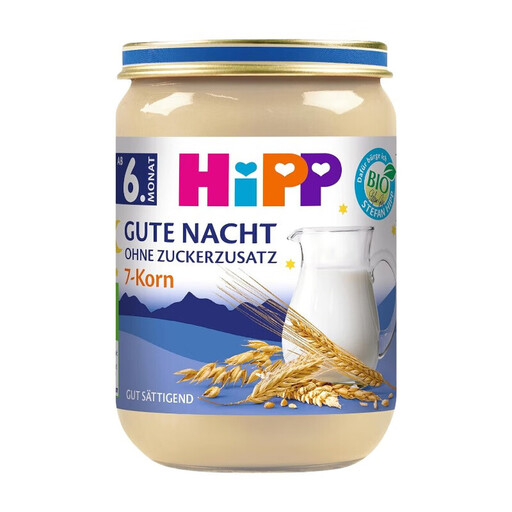
Why this product suits this profile: This portioned milk porridge is designed for families who want a warm or cold bedtime porridge made with several types of cereal.
The from-6-months age recommendation and the types of cereal it contains are clearly stated. Check for allergens such as milk and gluten before ordering.
Multipack with six 190 g portions, no added sugar according to the product information, and vitamins A, B1 and D, plus calcium.
We’ve put together a complete, regularly updated list of products that meet these strict selection criteria and fully comply with the safety regulations in force in the EU.
It depends on your child’s development and individual advice. Products labelled from 4 months or from 6 months may offer different ways to get started. A finely puréed single vegetable such as pumpkin makes it easier to check the ingredients. If you’re unsure, discuss introducing solids with your child’s GP or health visitor.
This varies by product type. Leftovers from opened jars are often kept in the fridge and used the next day. Powdered infant formula or cereal porridge should be stored in a dry, well-sealed container and used within the time stated. Always follow the current label.
Compare more than just the pack price: check the price per 100 grams or per prepared portion too. Multipacks can be practical if you use a product regularly, while single jars mean you don’t need to buy as much when trying something for the first time. Remember to factor in delivery charges, minimum order values and the best-before date.