
Lieferung heute & morgen

Qualitätsgarantie

Willkommens-Angebote freischalten: KOSTENLOSE Lieferung | Bis zu 80 % RABATT | Kostenlose 30-Tage-JoyPlus-Testphase
App herunterladen
Anyone looking to buy baby food online will quickly find a wide range of jars, meals and fruit purées. The choice is convenient, but it can also lead to unsuitable purchases: a product may be intended for a different age group, contain a relevant allergen or come in a quantity that does not match the family’s actual needs.
The product name alone is therefore not enough. The age recommendation, ingredients list, allergen information, preparation instructions and storage guidance after opening are all important.
‘From 4 months’, ‘from 5 months’, ‘from 8 months’ and ‘from 12 months’ do not simply represent different marketing categories. The consistency, texture and composition may vary. A finely puréed vegetable jar for starting complementary feeding is not automatically suitable for a toddler with greater chewing and energy needs.
Always check the specific information on the label. If you are unsure about introducing new foods, take your paediatrician’s or midwife’s individual recommendation into account.
Fruit purée can contain no added sugar and still naturally contain sugar. When comparing fruit purée for babies, it is therefore worth checking the ingredients list and nutritional information. If fruit is listed first, the stated sugar will generally come mainly from the fruit used.
For vegetable purées and baby meals, information such as ‘no added salt’ is also relevant. This does not mean that the product contains no naturally occurring sodium whatsoever.
Practical multipacks can reduce the cost per item and the effort involved in shopping. However, they only make sense if your child accepts the flavour and the pack size matches your consumption. Once opened, products have a short use-by period; leftovers that have been heated should not be offered again.
For baby food from 5 months, finely textured products with mild ingredients are often suitable when starting complementary feeding. Baby food from 8 months may already contain a finer texture with small pieces to support learning to chew. With baby food from 12 months, larger portions and a more pronounced texture are usual.
The type of product should also suit the situation:
With organic baby food, the EU organic logo or a verifiable inspection-body reference should appear on the packaging. Terms such as ‘natural’ or ‘mild’ are no substitute for checking the ingredients.
In particular, check:
If your child has a known allergy, the complete labelling on the product is the decisive source of information. Online product details may change, so always check the current label before use.
A pack of 6, with 190 g or 220 g per jar, is suitable for families that regularly use the same variety. Smaller individual jars may be more practical if you want to try several different flavours.
Many products can be heated in a bain-marie or in the microwave. Stir thoroughly afterwards and check the temperature. Store unopened jars according to the instructions on the packaging. Opened leftovers that have not been heated should be kept in the fridge and generally used by the following day.
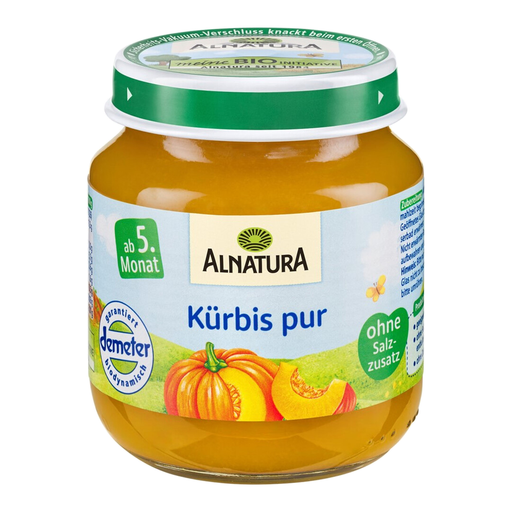
Why this product suits this profile: This individual jar has a short ingredients list, making it suitable for families starting with a single vegetable and not initially needing a larger pack.
The from-4-months age recommendation and straightforward recipe make it easier to check the ingredients when starting complementary feeding.
95% organic pumpkin, finely puréed, with no added salt and gluten-free according to the product information.
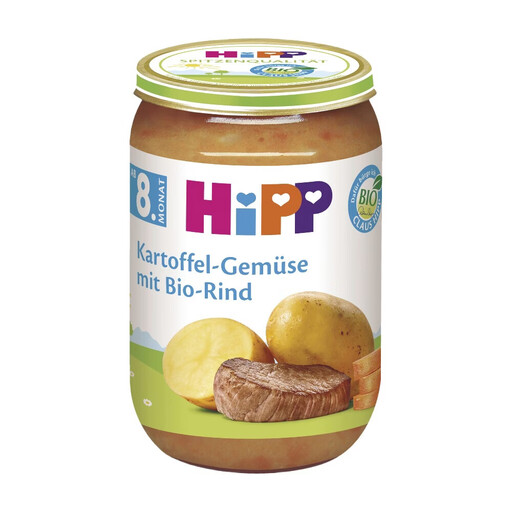
Why this product suits this profile: This multipack is aimed at parents who want to regularly use an organic meal with a clearly defined age recommendation and straightforward preparation instructions.
The product information explicitly states ‘no added salt’ and that it contains no flavourings, preservatives, colourings or thickeners.
65% vegetables according to the ingredients list, 8.2% beef and fine pieces to support learning to chew.
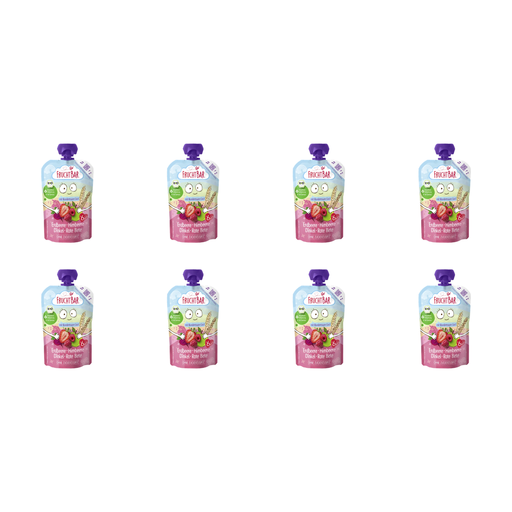
Why this product suits this profile: The resealable pouch is suitable for use when out and about, provided you follow the guidance on dental care and use after opening.
The packaging states that no sugar has been added; at the same time, the nutritional information makes the naturally occurring fruit sugar clear.
8 x 100 g pouches, organic ingredients and spelt listed as a gluten-containing ingredient.
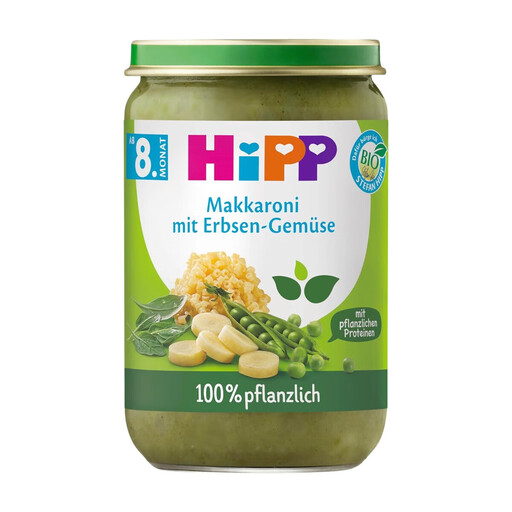
Why this product suits this profile: This plant-based meal combines vegetables, pasta and pea protein for a varied vegetarian option.
The information lists the allergens wheat, gluten and celery, as well as possible traces of egg and mustard.
6 jars of 220 g each, 48% vegetables according to the product description and no added salt.
We have put together a complete, regularly updated list of products that fully meet these strict selection criteria and the safety regulations applicable in the EU.
Before ordering HiPP baby food, Bebivita baby food or other brands, you can tick off these points:
This depends on your child’s stage of development and their individual dietary recommendation. Products for babies from 4 or 5 months are often finely puréed and made with just a few ingredients. Always check the age recommendation on the specific product and introduce new foods gradually.
This depends on the product and manufacturer. Opened products that have not been heated should often be covered, kept in the fridge and used by the following day. Leftovers that have already been heated or that your child has eaten directly from the jar with a spoon should not be stored again. The information on the label is decisive.
A multipack can reduce the price per jar and make regular orders easier. Whether it is genuinely worthwhile depends on the unit price, delivery costs, shelf life and your child’s consumption. Compare the price per unit of weight and only buy larger quantities of varieties your child already accepts.