
Lieferung heute & morgen

Qualitätsgarantie

Willkommens-Angebote freischalten: KOSTENLOSE Lieferung | Bis zu 80 % RABATT | Kostenlose 30-Tage-JoyPlus-Testphase
App herunterladen
Anyone looking to buy baby milk can quickly be faced with a bewildering range of terms: Pre milk, first infant milk from birth, HA formula, follow-on milk, organic baby milk and growing-up milk. There are also well-known brands such as Aptamil, HiPP, Bebivita, Milupa and Nestlé BEBA. However, your choice should not depend solely on the brand name or eye-catching advertising claims.
The key factors are your child’s age, the intended use, the ingredients list and correct preparation. If you are unsure, suspect an allergy or have specific dietary requirements, you should consult your paediatrician or midwife.
Pre milk and other first infant formulas are intended for babies from birth. Follow-on milk 2 is offered from the sixth or seventh month, depending on the product, while follow-on milk 3 is generally intended from the tenth or twelfth month. Growing-up milk is usually aimed at children from one or two years of age.
A higher number therefore does not automatically mean that a product is more suitable. It initially describes the intended age stage and composition.
Terms such as GOS, FOS, HMO, LCP, DHA, lactic acid cultures or Metafolin may stand out on the packaging. They should be assessed by referring to the ingredients list and nutritional information. The presence of a vitamin or fatty acid is not a general claim about its effects and does not replace individual advice.
HA formula is not automatically suitable for every baby either. Hydrolysed milk protein means that the protein has been partially broken down. Products such as HiPP PRE HA Combiotik and Bebivita Starter Milk Pre HA contain milk according to the product information and are expressly not intended for babies with an existing or suspected cow’s milk protein allergy.
A large tin may initially seem more economical. However, once opened, the powder must generally be used within around three or four weeks, depending on the product. A smaller pack may be more practical if you are feeding your baby alongside breastfeeding. For exclusive bottle feeding, on the other hand, a larger pack may mean fewer repeat purchases.
Before buying, check at least the following points:
The information on the original packaging takes precedence over general online descriptions. This also applies to Aptamil Pronutra PRE, Milupa Milumil 1, HiPP PRE and Bebivita PRE.
For Pre milk, lactose is often listed as the only carbohydrate source. According to the product information available, Bebivita PRE, Bebivita Starter Milk Pre HA and HiPP PRE HA Combiotik contain no added starch. Other products, such as HiPP Bio Combiotik 2 and Bebivita Follow-on Milk 3, contain starch.
This affects the composition and, in some cases, the consistency. If you have questions about how filling a product is or how well it is tolerated, discuss whether a formula with or without starch is suitable for your individual circumstances with a healthcare professional.
Baby formula must be prepared fresh immediately before feeding. Typical instructions for the products mentioned are:
Depending on the recipe, the products contain milk, fish oil and, in some cases, soya. If your baby has known allergies, check the ingredients and warnings carefully.
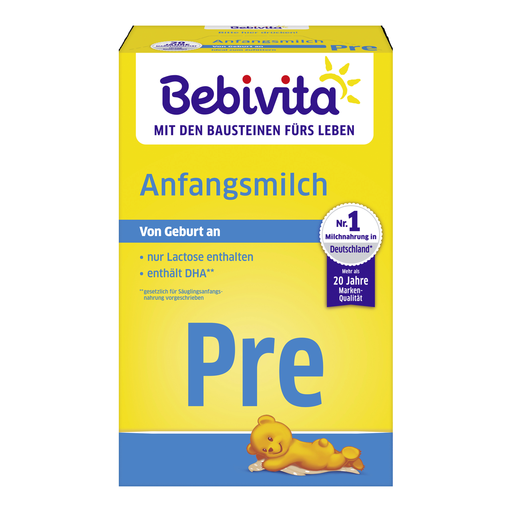
Why this product suits this profile: A manageable 500g pack for parents looking for Pre milk from birth who do not initially need a large supply.
The product information lists lactose as the only carbohydrate source. This makes the formula easier to assess before purchase than products containing added starch.
Suitable from birth; DHA is listed; the measuring spoon and dosage table support consistent preparation.
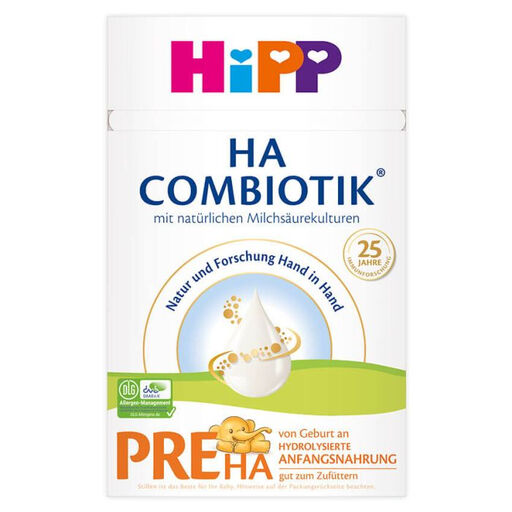
Why this product suits this profile: For parents who want a first infant milk from birth with a clearly documented ingredients list and organic certification.
The product description lists hydrolysed whey protein, lactose as the sole carbohydrate source and no added starch.
600g pack; according to the product information, it contains GOS, LCPs and a natural lactic acid culture.
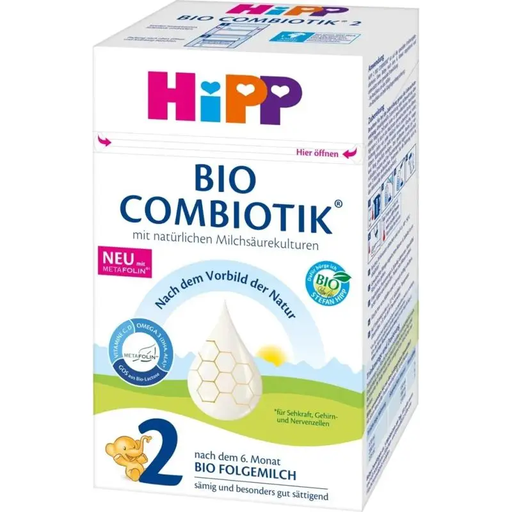
Why this product suits this profile: Follow-on milk for babies from six months, once weaning has begun and a suitable stage of formula is needed.
The six-month age stage is clearly stated, avoiding a common mix-up with Pre milk or first infant milk from birth.
Organic certification DE-ÖKO-001; according to the product description, with L. fermentum, GOS, DHA and added starch.
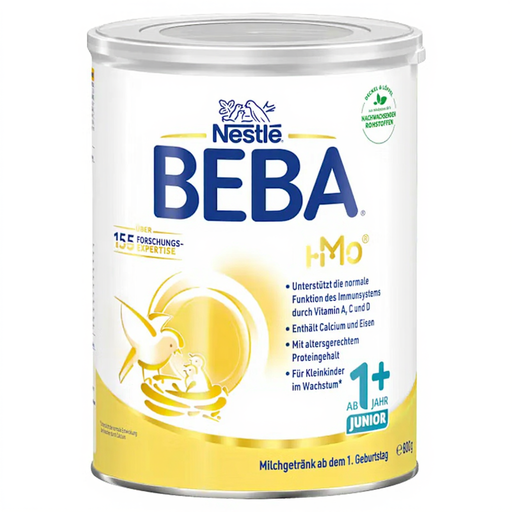
Why this product suits this profile: For families looking for a larger pack of milk specifically labelled as growing-up milk after their child’s first birthday.
The from-twelve-months labelling prevents this drinking milk from being confused with infant formula for the first months of life.
800g tin; according to the product information, with 2’-FL HMO, calcium, iron and vitamins A, C and D.
We have compiled a complete, regularly updated list of products that fully meet these strict selection criteria and the safety regulations applicable in the EU.
From birth, consider products explicitly labelled as Pre milk or first infant milk from birth. These include, for example, Bebivita PRE, Aptamil Pronutra PRE, Milupa Milumil 1 and various HiPP products. Your specific choice should be based on the information on the packaging and, in special circumstances, the recommendation of your paediatrician.
The products mentioned should be prepared fresh and fed immediately. Leftover formula should not be reused. Depending on the product, opened powder often needs to be used within three to four weeks. The instructions on the relevant packaging always take precedence.
Ongoing costs depend on the pack size, dosage, number of bottles and product stage. For a meaningful comparison, consider not only the pack price but also the price per 100g and the recommended amount of powder per bottle. With follow-on milk and growing-up milk, consumption also changes as other foods are introduced.