
Lieferung heute & morgen

Qualitätsgarantie

Willkommens-Angebote freischalten: KOSTENLOSE Lieferung | Bis zu 80 % RABATT | Kostenlose 30-Tage-JoyPlus-Testphase
App herunterladen
Anyone who wants to buy biscuits online can conveniently choose from biscuits, wafers, piped biscuits and international specialities. At the same time, important sensory impressions are missing when shopping online: you cannot fully assess crispness, size and the actual packaging in advance. Carefully checking the ingredients, weight, shelf life and intended use helps you avoid disappointing purchases.
A box or tin may look larger than its net weight would suggest. For a fair comparison, always check the stated weight in grams and, where possible, the price per 100 grams. A 400-g bag is suitable for several coffee breaks, while 150 to 200 g may be enough for a smaller household or for trying a product.
An assortment of biscuits containing several varieties often has a long list of ingredients. Wheat, egg, milk, soya, peanuts and nuts are relevant allergens in many biscuits and wafers. Check the product information before buying and compare it with the current packaging each time you place a new order. Recipes and labelling may change.
Wafers and fine pastries quickly lose their crispness in humid conditions. Instructions such as “store in a dry place”, “protect from heat” or “seal airtight after opening” are therefore practical guidance, not minor details. For products with a short remaining shelf life, you should also check whether the quantity matches your planned consumption.
For keeping in your own cupboard, larger packs such as 400 g are often practical. For the office, a coffee get-together or a small gift, 175 to 250 g may be a better fit. Individually wrapped pieces are convenient for sharing and taking on the go, but they create more packaging waste.
If you want to buy biscuits, start by checking the flavour and then look at the ingredients. For butter biscuits, the butter content provides a specific point of reference. For example, the product “Schulte Butter Spritzgebäck” states a butterfat content of 24%. Vanilla wafers, on the other hand, may contain vegetable fats, vanilla sugar or flavourings. These details describe the composition, but do not make any blanket statement about quality or how easy the product is to digest.
The nutrition table generally refers to 100 g and allows for a direct comparison. In the selection available, the stated energy values range, for example, from 376 kcal per 100 g for Jeden Tag Ladyfingers to 577 kcal per 100 g for Kathi Crispy Vanilla Waffle Crunch Bites. Sugar, fat and saturated fatty acids can also vary considerably. The actual weight of each piece is also relevant when estimating portions.
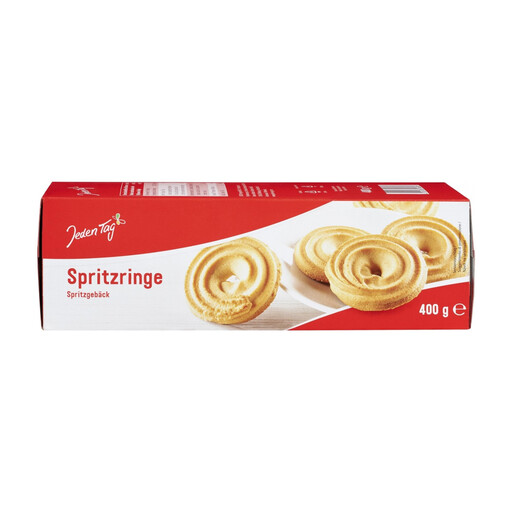
Why this product suits this profile: The 400-g pack provides a larger quantity for regular coffee breaks, the household or sharing with several people. The product is ready-to-eat piped biscuit that requires no preparation.
The clearly stated net weight makes it easier to compare quantities. The product information also gives storage instructions, allergens and nutritional values per 100 g.
400 g of contents, cardboard packaging and a classic butter biscuit profile; according to the product information, 434 kcal per 100 g.
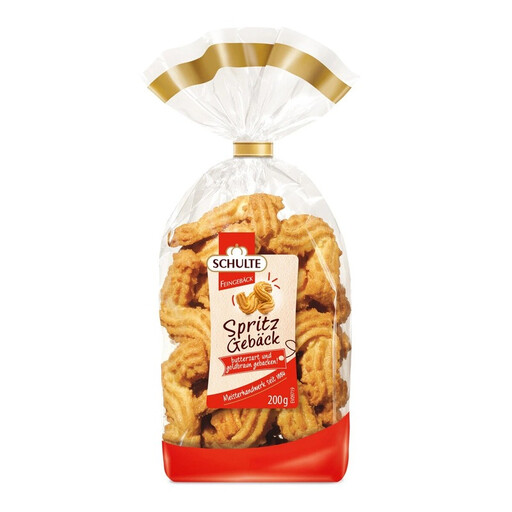
Why this product suits this profile: If you look for a clearly declared ingredient in butter biscuits, this 200-g product contains 24% butterfat and natural vanilla flavouring, according to the product description.
The stated butterfat content replaces vague terms with a verifiable quantity. Allergens including wheat, milk, egg and soya are also listed.
24% butterfat, a 200-g pack size and 518 kcal per 100 g according to the product information.
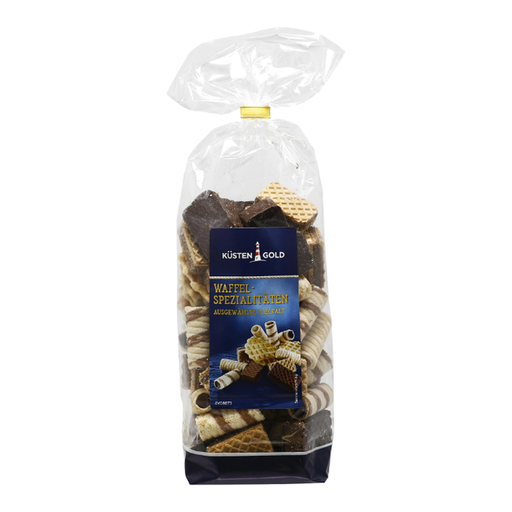
Why this product suits this profile: This assortment combines several wafer specialities, including chocolate, hazelnut and vanilla chocolate wafers, as well as nougat and milk rolls. It is therefore ideal for sharing and serving with coffee and tea.
The individual varieties and allergens they contain are listed. This allows you to check before buying whether wheat, egg, milk, soya, peanuts and nuts are suitable for you.
300 g of assorted wafer specialities, 517 kcal per 100 g and dry storage away from heat, according to the product information.
We have put together a complete, regularly updated list of products that fully meet these strict selection criteria and the safety regulations applicable in the EU.
The shelf life is stated on the product packaging. Depending on the product, the item details may state an unopened shelf life of at least 32 or 48 days, for example. The information shown on the packaging actually delivered is what matters. Once opened, biscuits and wafers should be stored in a dry, sealed place away from heat.
For a gift or a visit, an assorted selection of fine pastries, a decorative tin or individually wrapped specialities are practical choices. Pay attention to the pack size, presentation and shelf life. If the recipient has allergies, check the ingredients list in advance.
Compare the flavour, filling, source of fat, sugar content and allergens. With vanilla wafers, the flavour may come from vanilla sugar or flavouring; with chocolate biscuits, it is worth checking the stated cocoa or chocolate content. Nutritional values per 100 g also make it easier to compare different packs objectively.