
Lieferung heute & morgen

Qualitätsgarantie

Willkommens-Angebote freischalten: KOSTENLOSE Lieferung | Bis zu 80 % RABATT | Kostenlose 30-Tage-JoyPlus-Testphase
App herunterladen
If you're looking to buy board games and video games, you'll find a huge selection for families, children, couples and groups of friends. However, the product description alone isn't always enough to make the right choice. Games are often promoted through well-known brands, eye-catching packaging or seemingly extensive content, while important details such as number of players, age rating or required hardware can easily be overlooked.
An age rating doesn't automatically tell you whether a game is suitable for your intended group. A board game rated for ages 8 and up can have long rules, lots of small pieces or a playing time of more than 45 minutes. For games for children aged 6 and up, simple mechanics and straightforward decisions are usually more important than a lavish set of components.
With video games, parents should also be aware of the difference between USK and PEGI. USK is the German age rating system. A classification such as USK 0 or USK 6 is not an educational recommendation, but a legal guideline for youth protection.
With Nintendo Switch games and Nintendo Switch 2 games, system compatibility is crucial. A title for Nintendo Switch 2 is not automatically compatible with the original Switch. It's also worth checking the format for PlayStation products: a "Code in a Box" may contain only a download code rather than a disc, and requires internet access and a suitable platform account.
A game for 2 to 8 people isn't much help if your typical group consists of two players and the rules only become clear after a lengthy introduction. Before buying, you should match the number of players, approximate playing time and game mode to your own habits. This applies equally to family games, party games, card games and social games.
Pay attention to the age limit stated on the packaging and the warning labels. Many board games contain small cards, figures, tokens or markers. These can pose a choking hazard for younger children. With games like Catan Junior or compact travel games, the age rating is therefore particularly important.
The number of players tells you what group size the game is designed for. Cooperative board games such as a shared detective or strategy game are ideal for groups who want to make decisions together. With competitive titles, buyers should check whether direct confrontation, trading, bluffing or time pressure suits the group's playing style.
For board games, sturdy cardboard or plastic components, clear storage and an understandable instruction manual are practical selection criteria. Games with large game boards also need enough table space. For digital titles, consider storage capacity, download size, internet connection, online membership and whether a disc or just a code is included.

Why this product fits the profile: The game is designed for 2–4 players aged 6 and up, offering a simplified introduction to trading, resources and planning.
The age limit, number of players and material information are clearly stated. This makes it easy to check suitability against your family group before buying.
2–4 players, recommended age from 6 years, no batteries required.
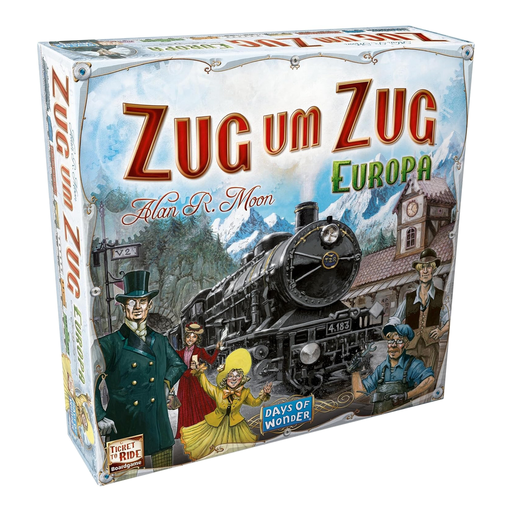
Why this product fits the profile: This strategy game combines a clearly described route-building system with 2–5 players and a stated playing time of around 45 minutes or more.
The product data lists the number of players, age, materials and approximate duration. This reduces the risk of choosing a game with the wrong level of complexity or format.
2–5 players, ages 8 and up, German edition with components made from paper, cardboard and plastic.

Why this product fits the profile: Designed for two players, this cooperative strategy game offers a clearly defined format with 21 airport missions and scenarios with varying requirements.
The limitation to two players is transparent. Buyers don't need to hope for a large group to make good use of the game.
Cooperative game for 2 players, 21 missions, ages 10 and up, no batteries required.
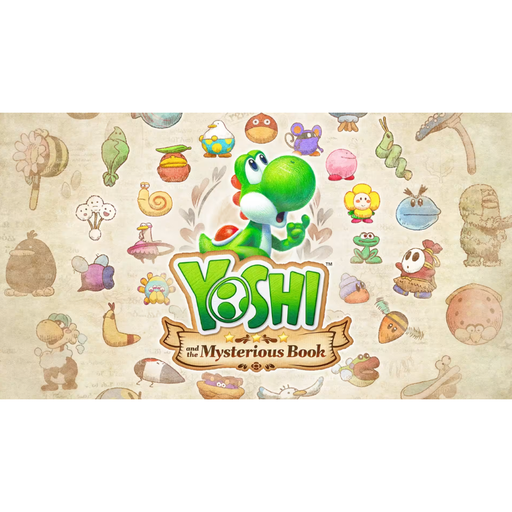
Why this product fits the profile: This single-player adventure uses TV, tabletop and handheld modes and is clearly labelled for Nintendo Switch 2.
The supported console, USK rating from age 6 and the game modes are all stated in the product information.
1 player, physical version, German language available, TV, tabletop and handheld modes.
We've put together a complete, regularly updated list of products that fully meet these strict selection criteria and the safety regulations in force in the EU.
Start with the youngest person who will be playing, then choose based on the number of players and playing time. For families, titles rated from age 6 or 8 with straightforward rules are often a good fit. Also consider whether competition, cooperation or quick rounds suit your group better.
First, check which console the game is intended for. With Nintendo Switch 2 games, the system information is especially relevant. You should also check the language, game mode, number of players and whether an online membership is required.
Durability mainly depends on the quality of the cardboard, how you store the game and how you handle the components. Keep cards and tokens dry, protected from direct sunlight and stored complete in the original box. With games that use single-use materials, such as certain EXIT editions, reusability is limited.