
Lieferung heute & morgen

Qualitätsgarantie

Willkommens-Angebote freischalten: KOSTENLOSE Lieferung | Bis zu 80 % RABATT | Kostenlose 30-Tage-JoyPlus-Testphase
App herunterladen
Board games need to suit the age, group size and occasion. In practice, however, it quickly becomes clear that a big box or a well-known brand alone doesn't tell you much about whether a game is actually suitable. If you want to buy a family game, party game or board game, you should therefore avoid some typical purchasing pitfalls.
“For 2 to 10 people” sounds flexible, but it doesn't automatically mean that every group size works equally well. Some card games only come into their own with four or more players, while a cooperative game is designed for two. So check:
The “ages 8+” label doesn't replace an assessment of the difficulty level. A strategy game with lots of rules can be unsuitable for younger children, while a simple card game can work across generations. You should also pay attention to small parts and swallowable components. The warnings on the packaging take priority over general marketing claims.
Some board games require a smartphone, an internet connection or a specific account. With escape room games, cards may need to be folded, written on or cut up. This is part of the game concept, but it limits how the game can be passed on and replayed. So before you buy, you should check:
Choose the game according to the age of the youngest person playing. For children aged 4 and over, role-playing and simple matching games are suitable, for example. From ages 8, 10, 12 or 16, the complexity of the rules, reading comprehension and strategic demands usually increase.
The age recommendation should also be distinguished from the safety warnings about small parts. A game may be suitable for older children but still not intended for children under 36 months. For younger children, adult supervision is recommended.
For a family games night, short rounds and an easy start are often more practical than a long board game with extensive preparation. For parties, on the other hand, quick explanations and suitability for large groups are key.
Look out for:
Card games and board games are often made from cardboard, paper, plastic parts or game pieces. Cards should be stored in a dry place and cleaned only with a soft, dry cloth if needed. For games with lots of small parts, organised storage in the original packaging is helpful.
With an escape room game, reusability is particularly important. If components are written on or altered during the game, it's often a one-time experience. That can be great for a special games night, but it should factor into your buying decision.
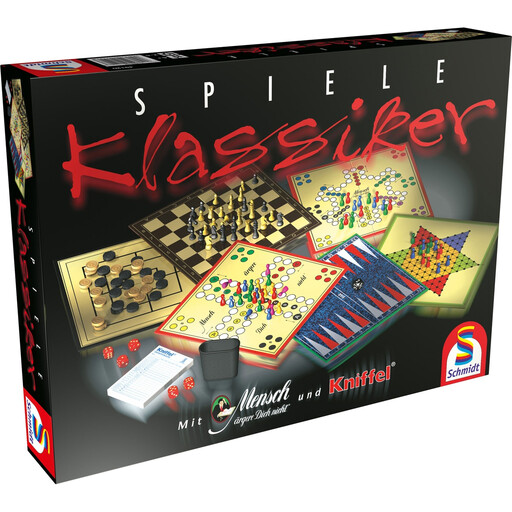
Why this product fits the profile: This collection is aimed at families with children aged 6 and over and offers over 50 game options, including classic board, dice and strategy games. This means a group can try out different types of games without having to buy several boxes.
The number of players and age range are clearly stated. What's more, no batteries are required, so there are no ongoing costs for power or accessories.
Over 50 game options, suitable from age 6, pack dimensions 37 × 26.8 × 5.7 cm.

Why this product fits the profile: This cooperative board game is designed for exactly two players aged 10 and over. 21 airport scenarios provide varied challenges and are aimed at players who enjoy tactical decisions and focused teamwork.
The target audience isn't vaguely defined: the game is explicitly designed for two players and cooperative play. It requires neither batteries nor an app.
21 scenarios, two players, age rating from 10 years and a cooperative game mechanism.
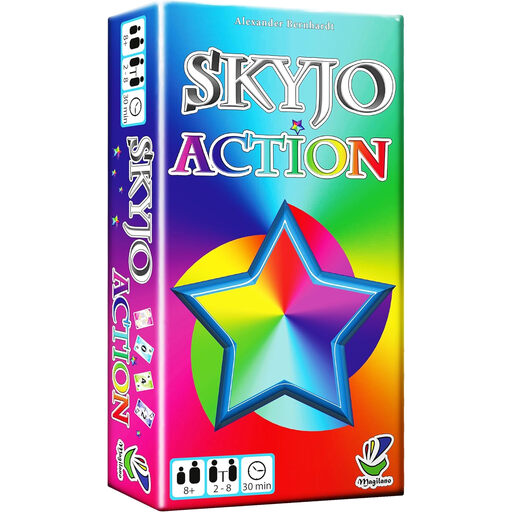
Why this product fits the profile: This compact card game is designed for 2 to 8 players aged 8 and over. The quick setup and handy format make it ideal for regular games nights, travel and spontaneous get-togethers.
The flexible number of players is specifically stated as 2–8 people. The game requires no batteries and can be fully packed away in its box after each round.
2–8 players, age recommendation from 8 years, compact card format and repeatable rounds.
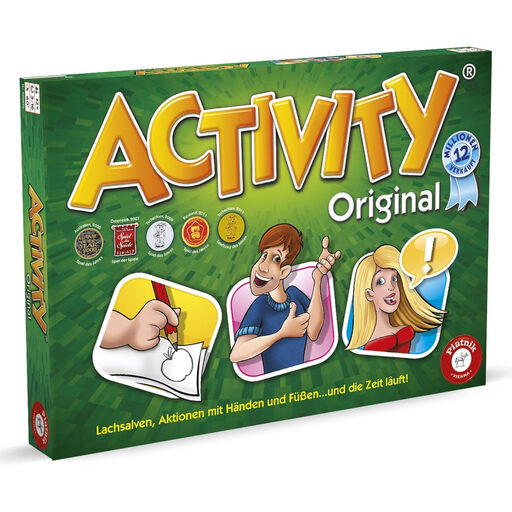
Why this product fits the profile: This party game combines drawing, mime and explaining, and is designed for 3 to 16 players aged 12 and over. That makes it perfect for birthdays, larger groups of friends and sociable games nights.
The group size is specified as up to 16 people. The game mechanics don't require an app and, with 2,640 terms, provide a clearly described basis for repeated rounds.
3–16 players, 2,640 terms, three game variants and an age recommendation from 12 years.
We've put together a complete, regularly updated list of products that fully meet these strict selection criteria and the safety regulations in force in the EU.
Family games for ages 6 or 8 are often a good choice when children and adults want to play together. Look for easy-to-understand rules, a flexible number of players and rounds that don't last too long. A game collection can be useful when different age groups and preferences come together.
For larger groups, party games with team rounds, quick explanations and minimal materials on the table work well. Activity, for example, is designed for 3 to 16 people. Card games like SKYJO Action are better suited to smaller to medium-sized groups of 2 to 8 players.
That depends on the specific product. With many EXIT games, clues or materials are folded, written on or altered during play. These editions are therefore usually intended for a single session. If you're looking for a reusable game, you should instead go for classic card, dice or board games.