
Lieferung heute & morgen

Qualitätsgarantie

Willkommens-Angebote freischalten: KOSTENLOSE Lieferung | Bis zu 80 % RABATT | Kostenlose 30-Tage-JoyPlus-Testphase
App herunterladen
If you're specifically looking for Cabernet Sauvignon red wine, you likely already appreciate its characteristic, full-bodied flavour. However, the market is vast, and not every bottle lives up to its label's promise. Before you buy a Cabernet Sauvignon, it's important to understand a few common pitfalls that often lead to disappointing wine experiences. This guide will help you distinguish marketing hype from genuine quality and make an informed decision.
Many wine lovers focus on price or an appealing label, overlooking crucial details in the process. This often results in a purchase that fails to meet expectations.
To avoid a poor purchase, you should focus on three objective criteria. These will help you better assess a wine's quality and profile.
The region of origin has an enormous impact on the wine's character. Cabernet Sauvignon is an adaptable grape variety grown worldwide, but it produces very different wines depending on the climate.
The term dry Cabernet Sauvignon refers to the residual sugar content. According to EU law, a dry wine may contain a maximum of 9 grams of residual sugar per litre. This results in a crisp, non-sweet taste experience that puts the varietal's characteristic aromas front and centre.
A full-bodied red wine like Cabernet Sauvignon gets its structure from tannins and the aging process.
For regular enjoyment or stocking up for celebrations, buying a Cabernet Sauvignon wine bundle or a case of 6 Cabernet Sauvignon is often the most economical choice. The price per bottle is usually lower, and you'll always have a suitable wine on hand. This represents excellent value for money, especially for everyday drinking wines.
Here are some recommendations tailored to different needs and taste preferences.
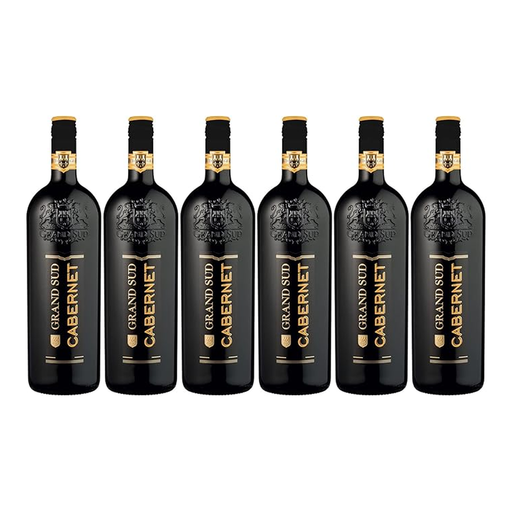
Why it's a great fit: Ideal for everyday enjoyment and parties. The 1-litre bottle in a case of 6 offers excellent value for money for a straightforward, sun-drenched red wine from the South of France.
This wine clearly communicates its origin as Pays d'Oc IGP. It doesn't promise a highly complex single-vineyard wine, but reliably delivers a characterful table wine that meets the expectations for this appellation.
Excellent price-per-litre value. Aromas of black fruits and spices, pairing well with pasta, red meat, and strong cheeses.
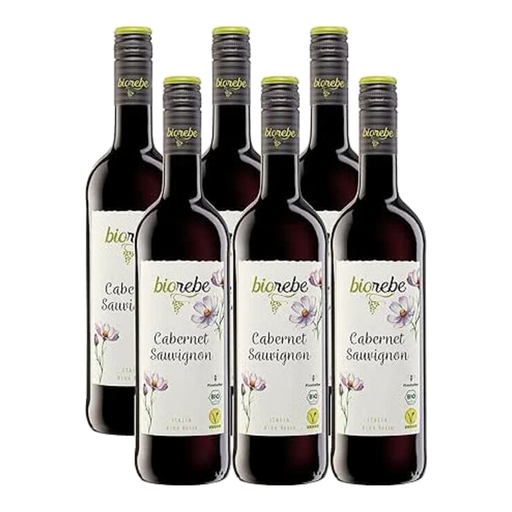
Why it's a great fit: For consumers who value conscious and sustainable production. This Italian wine combines classic Cabernet flavour with certified organic cultivation and vegan-friendly production.
This wine bypasses the pitfall of vague sustainability claims with clear, verifiable certifications. The labelling as organic and vegan isn't an empty marketing ploy here, but a verifiable product feature.
Certified organic and vegan. A dry flavour profile with a low residual sugar content of 0.7 g/L, according to the producer.
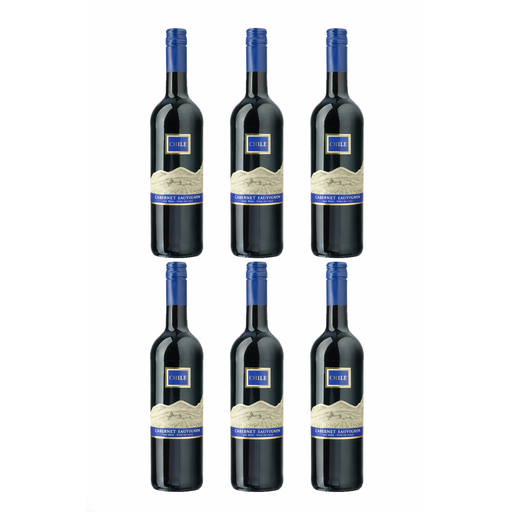
Why it's a great fit: For anyone who prefers a powerful, fruit-forward style. This Chilean Cabernet Sauvignon from the Central Valley is a typical New World representative: approachable, balanced, and packed with intense fruit aromas.
The origin, Chile, Central Valley, is clearly declared. This region is known for producing reliable and flavourful Cabernet Sauvignons. The wine delivers exactly what you'd expect from a good Chilean Cabernet: power and fruit.
Pronounced aromas of blackcurrant and raspberry. A harmonious and powerful red wine that is immediately approachable.
We have compiled a complete, up-to-date list of products that fully meet these strict selection criteria.
A wine labelled as dry must not exceed a specific residual sugar content according to EU regulations. In practice, this means the wine has no perceptible sweetness, allowing the varietal's characteristic notes of fruit, spice, and tannin to take centre stage.
The aging potential depends heavily on the wine's quality and maturation process. Simple, fruit-forward wines intended for immediate consumption (like many in the lower price range) should be enjoyed within 1–3 years. More complex wines, especially those that are barrel-aged, can often be stored for 5 years or more, developing additional aromas over time. For optimal storage, keep the case of 6 Cabernet Sauvignon in a cool, dark place with a constant temperature.
Although the combination with grilled or braised red meat is a classic, Cabernet Sauvignon is far more versatile. Its full body and distinct tannins also harmonise beautifully with strong hard cheeses (like aged Cheddar or Parmesan), pasta with rich tomato or meat sauces, mushroom dishes, and even lentil or bean stews. The notes of blackcurrant, bell pepper, and cedar complement many savoury and earthy foods.