With a vast array of models, materials, and features, the search for the right tent can quickly become overwhelming. Whether for a family holiday, a demanding trek, or the next festival, the requirements for a mobile shelter vary greatly. This guide is designed to help you understand the key criteria and make an informed decision when you're looking to buy a camping tent. We will present objective features and a selection of models to help you find the perfect option for your needs.
What to Look for When Buying a Camping Tent
To make the right choice, it's helpful to consider three fundamental aspects: the tent type, its weather resistance, and its intended use.
1. Tent Shape: From Tunnel Tents to Pop-Up Tents
A tent's design directly impacts its setup, stability, and available space.
- Dome Tents: These tents are often free-standing and offer high wind stability thanks to their crossed pole arches. They are versatile, suitable for everything from short trips to more challenging tours.
- Tunnel Tents: A tunnel tent is distinguished by its excellent space-to-weight ratio. It often provides a spacious interior and vestibules for storing gear. However, it must be properly guyed out to ensure stability.
- Tipi or Glamping Tents: For those who prioritise comfort and generous standing height, a glamping tent is an ideal solution. These tents, often tipi-shaped, are perfect for longer stays in one location and can accommodate larger groups or serve as a family tent.
- Pop-Up Tents: A pop-up tent is designed for extremely fast setup. It typically unfolds on its own and just needs to be secured with pegs. Ideal for festivals or short trips where time is a factor.
2. Water Resistance and Material: The Importance of the Hydrostatic Head
A crucial feature for comfort is a waterproof tent. Water resistance is indicated by the hydrostatic head rating in millimetres (mm). This value describes the water pressure the material can withstand before moisture penetrates.
- Flysheet: For conditions in Central Europe, a hydrostatic head of at least 3,000 mm is recommended for the flysheet to stay dry during prolonged or heavy rain.
- Groundsheet: As the floor is subjected to mechanical pressure (from people and equipment), the hydrostatic head should be higher here, ideally from 5,000 mm upwards.
Most modern tents are made of polyester or polyamide (nylon), as these materials are lightweight, tear-resistant, and quick-drying.
3. Capacity and Use: From Trekking Tents to Family Tents
The person-capacity stated by manufacturers is often based on the bare minimum. For more comfort and space for luggage, it is advisable to choose a tent rated for one more person than will actually be sleeping in it. A 4-person tent is therefore often a comfortable choice for two to three people.
- Trekking Tent: Every gram counts on a hike. A trekking tent is optimised for minimal weight and pack size.
- Family Tent: Here, space and comfort are the priority. Models like a 6-person tent often feature multiple sleeping cabins and a large living area with standing height.
Recommended Camping Tents
Based on the criteria mentioned, we have compiled a selection of tents with different specialities.
OUTFIT 6-Person Tipi Tent

- Why it stands out: With an impressive standing height of 3 metres and a hexagonal base, this tipi tent offers an exceptional sense of space that clearly sets it apart from classic tent shapes. It is a prime option for the glamping tent segment.
- Advantages:
- Capacity: Designed for up to 6 people.
- Water Resistance: The 150D Oxford polyester flysheet has a hydrostatic head of 3,000 mm and additionally sealed seams.
- Comfort: The enormous height allows you to stand upright throughout the tent. Integrated mosquito nets and ventilation openings ensure a pleasant climate.
- Additional Features: According to the manufacturer, the material is treated to be flame-retardant and offers UV30 protection.
- Who is it for? For families and groups looking for a spacious 6-person tent for stationary camping or glamping, who value freedom of movement and comfort.
J.ZAO Automatic Pop-Up Tent for 3-4 People
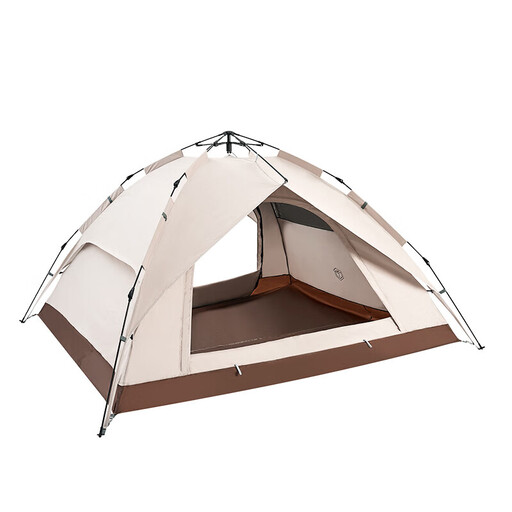
- Why it stands out: The automatic pop-up mechanism makes this model a true pop-up tent. Setup is completed in moments, making it particularly attractive for spontaneous trips.
- Advantages:
- Quick Setup: The automatic mechanism allows for setup without the tedious task of threading poles.
- Weather Resistance: The double-wall construction and a hydrostatic head of 3,000 mm provide protection against rain and wind.
- Construction: The two-layer design of the outer and inner tent improves insulation and reduces condensation.
- Who is it for? For festival-goers, weekend campers, and anyone looking for a hassle-free 4-person tent where quick and easy setup is the top priority.
Portal 5-Person Tunnel Tent
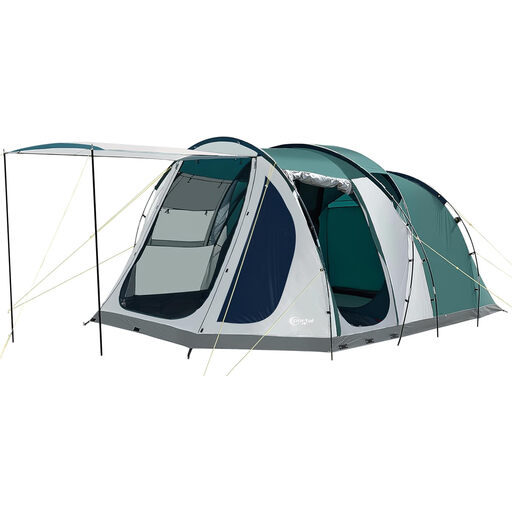
- Why it stands out: This tunnel tent impresses with its clear division into a 7.05 m? sleeping area and a separate 5.8 m? living area. The standing height of 200 cm in the living area adds extra comfort.
- Advantages:
- Layout: Separate sleeping and living areas, ideal for storing gear or as a lounge in bad weather.
- Water Resistance: A hydrostatic head of 3,000 mm and a fully sewn-in groundsheet keep the interior dry.
- Ventilation: A well-designed system with two doors, a side window, and a rear vent minimises condensation.
- Flexibility: The canopy can be set up at either the front or side door, creating an additional sheltered outdoor space.
- Who is it for? For families or small groups looking for a functional family tent for car camping who value a separate living and sleeping area.
SoBuy 1-Person Camping Tent with Cot

- Why it stands out: The innovative 2-in-1 design combines a one-person tent with an elevated cot. This protects against ground cold, moisture, and uneven surfaces.
- Advantages:
- Elevated Sleeping Position: Offers more comfort and protection than sleeping on the ground.
- Thoughtful Details: Equipped with a hook for a lamp and practical shoe pockets at the entrance.
- Portability: With a net weight of approx. 8.5 kg and the included carry bag, it is highly portable for a cot tent.
- Who is it for? For solo travellers, anglers, or campers who are looking for a comfortable alternative to a classic trekking tent and don't want to miss the comfort of a bed, even in nature.
Looking for More Options?
The models presented here already cover a broad spectrum. However, if you are looking for more specialised tents for specific requirements or other sizes, it's worth taking a look at our entire range.
? Explore our wider selection of sports tents
Frequently Asked Questions
What does the "hydrostatic head" rating on a tent mean?
The hydrostatic head is a unit of measurement for the water resistance of technical fabrics like tent flysheets. The value indicates how many millimetres of water can rest on one square centimetre of the fabric before moisture penetrates. A value of 3,000 mm means the material can withstand a 3-metre-high column of water.
How much space should you plan per person in a tent?
Manufacturer specifications for person capacity are often very tight and usually only refer to the sleeping area. As a rule of thumb for more comfort: choose a tent that is rated for one more person than will actually be staying in it. This leaves enough space for luggage and freedom of movement.
How do I properly store and care for my tent?
Proper care significantly extends the life of your tent. The most important thing is to let the tent dry completely after each use before packing it away to prevent mould. Coarse dirt can be removed with a soft brush or a damp cloth. Store the tent in a cool, dry place.
Written by: Joybuy Product Recommendation Officer


