
Lieferung heute & morgen

Qualitätsgarantie

Willkommens-Angebote freischalten: KOSTENLOSE Lieferung | Bis zu 80 % RABATT | Kostenlose 30-Tage-JoyPlus-Testphase
App herunterladen
Anyone looking to buy cereal bars online will quickly find a wide selection of cereal bars, oat bars, chocolate bars and protein-rich snacks. However, product names are not always as clear as the packaging might suggest. A bar containing wholegrain is not automatically low in sugar, and a statement such as “no added sugar” does not mean that the product is free from sweetness or carbohydrates.
As a Joybuy Product Recommendation Officer, I filter the most important information from the product data and organise it according to practical everyday situations. This makes it easier to decide whether a classic snack bar, an organic cereal bar, a bar with no added sugar or a cereal bar multipack is right for your needs.
Descriptions such as wholegrain bar, “with oats” or “with cereals” initially only describe specific ingredients or their proportion. They do not automatically indicate the product’s overall sugar content. For example, a product may contain oats and wholegrain flakes while also being noticeably sweet due to chocolate, syrup or sugar.
In practice, this means you should not just look at the front of the packaging. Compare the nutritional information per 100 grams and per bar.
A bar with no added sugar may still contain naturally occurring sugars, syrups or sweeteners. For products containing maltitol, maltitol syrup, erythritol or other sweeteners, you should also read the warnings on the packaging. Larger quantities of certain sugar substitutes may have a laxative effect.
For this reason, “sugar-free bars” are not automatically suitable for every diet. The key factors are the ingredients list, carbohydrates, sugars, polyols and the recommended serving size.
A small individual bar is ideal for a school bag or the commute. For families, offices or regular snacking, a cereal bar multipack can be more economical and practical. With larger packs, however, you should check whether the flavour, shelf life and storage space suit your actual consumption.
Under European labelling regulations, ingredients are generally listed in descending order of weight. If glucose syrup, sugar or a chocolate ingredient appears near the top of the list, the snack is usually distinctly sweet. For an oat bar, it is worth checking the actual proportion of oats.
Examples from the selection:
The information per 100 grams makes it easier to compare bars of different sizes. The serving information, on the other hand, shows how much energy and sugar you actually consume when eating a single bar.
A 25-gram Corny Chocolate & Banana Cereal Bar is listed as containing 109 kcal per bar. According to the product data, a 30-gram Corny Milk Dark & White Bar contains 129 kcal. Values like these help you fit a snack for the office, school or when you are out and about into your daily routine, without making general nutritional claims based on individual figures.
Cereal bars commonly contain gluten, milk, soya, peanuts and tree nuts. They may also contain traces of other allergens. The ingredients list and allergen labelling on the packaging delivered are therefore the authoritative source.
For specific requirements, it is worth choosing carefully:
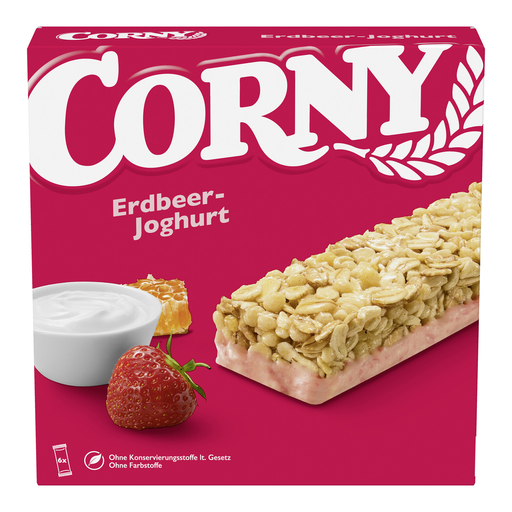
Why this product suits this profile: The pack contains six individually portioned bars with a strawberry yoghurt flavour and 22% wholegrain flakes. This makes it suitable for first-time buyers or as a several-day supply.
The individual portions limit the bar size. At the same time, the nutritional information makes it clear that wholegrain should not be equated with a low sugar content.
Six 25-g bars, 22% wholegrain flakes and a clearly defined fruit and yoghurt flavour profile.
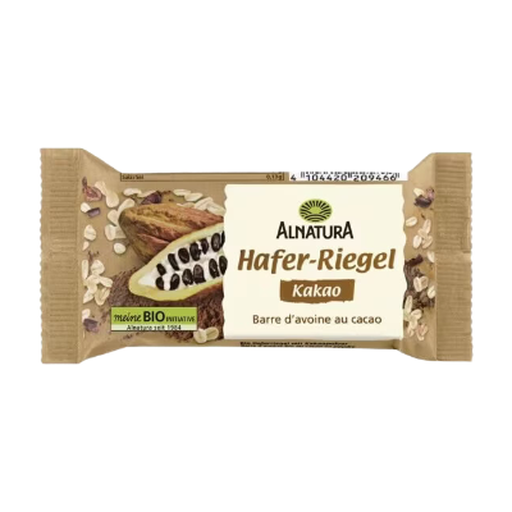
Why this product suits this profile: This bar combines certified organic ingredients with 50% oats and 15% dark chocolate. The 60-g portion is designed as a compact oat bar for eating on the go or enjoying during an office break.
The exact oat and chocolate content can be verified in the product data. The information also highlights the sugar content instead of presenting the bar as low in sugar.
Organic ingredients, 50% oats and a pronounced cocoa flavour.
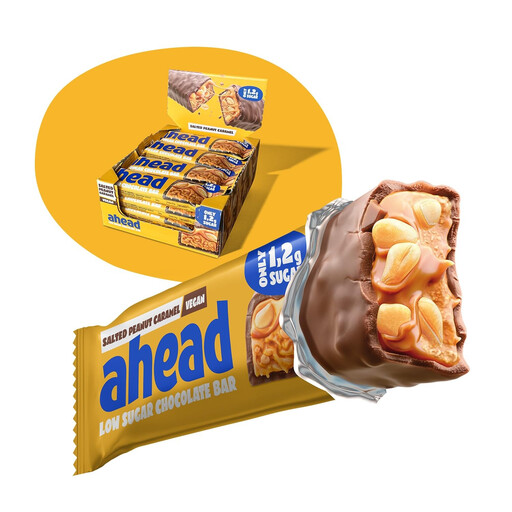
Why this product suits this profile: The multipack contains 16 bars of 35 grams each, making it suitable for regular use in the office, during the commute or as a supply at home. The recipe contains 39% roasted peanuts and no added sugar.
The product data lists both sweeteners and a recommended maximum daily intake. This allows the “Low Sugar” claim to be assessed more objectively.
16 individually wrapped bars, 39% peanut content and a palm-oil-free recipe according to the product information.
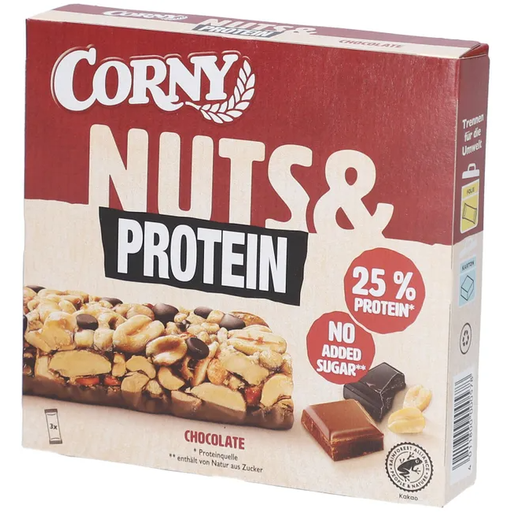
Why this product suits this profile: According to the product data, the bar provides 27 g of protein per 100 g and contains soya protein crispies and peanuts. The pack of three 35-g bars is ideal for individual snacks between appointments or after training.
The protein content is stated per 100 grams rather than simply presented as a general marketing claim. The allergens peanut, soya and milk should be checked before purchase.
27 g of protein per 100 g, 38% roasted peanuts and a compact pack of three.
Individually wrapped bars weighing between 20 and 40 grams are practical when you are out and about. They can be stored in a bag, rucksack or lunchbox and do not need to be shared after opening. In warm temperatures, chocolate-containing products should be protected from heat and direct sunlight.
No. “No added sugar” does not necessarily mean that the product contains no sugar. Ingredients such as fruit may contribute naturally occurring sugars. Sweeteners or sugar alcohols may also be present. For an objective comparison, the ingredients list and nutritional information are the key sources.
A multipack can be a sensible choice if you enjoy the flavour regularly and have enough storage space. It is easier to compare the price per bar when you consider the total weight, number of bars and individual weight together. For occasional buyers, smaller packs are often more flexible.