
Lieferung heute & morgen

Qualitätsgarantie

Willkommens-Angebote freischalten: KOSTENLOSE Lieferung | Bis zu 80 % RABATT | Kostenlose 30-Tage-JoyPlus-Testphase
App herunterladen
If you want to buy children’s toys online, you’ll find a wide selection for babies, toddlers and children up to 14 years old. However, product images and terms such as “educational” or “multisensory” reveal little about how practical a toy will be in everyday life. The key factors are the recommended age, materials, range of functions, power supply and how you plan to use it.
A toy for “babies and toddlers” may be suitable for very different developmental stages. An activity cube for toddlers with small control panels is not automatically suitable for a six-month-old baby. Conversely, a very simple toy can quickly become uninteresting for older children.
Pay attention to the specific age recommendation and any warnings. For baby toys from 6 months, easy-to-grasp, rounded elements and straightforward controls are also important. For children aged three and over, DIY construction kits, role-play toys and more complex building tasks may be suitable.
Lights, music, animal sounds and buttons can provide sensory stimulation. However, if too many functions are activated at once or the volume cannot be adjusted, the toy may be impractical in family life. Parents should therefore check whether the volume, switch-off function and controls of musical toys for children suit their home environment.
The term “educational learning toy” is not a standardised, legally protected quality mark either. Specific functions are more meaningful, such as shape sorting, rotating elements, simple cause-and-effect games or a clear, logical design.
Batteries are not included with several products. Before buying electronic toys, check which battery size is required or whether a USB connection is available. Remote-controlled toys also need space to drive or fly, as well as a safe environment.
Compact solutions such as an activity cube or portable sensory toy for babies are well suited to smaller homes. An RC helicopter for children or indoor flying toy, on the other hand, requires open spaces and consistent supervision.
Match the product not only to the child’s age, but also to the intended type of play:
A product may specify several age groups. In that case, check whether the way it is played with is genuinely suitable and useful for the child’s particular developmental stage.
For baby and toddler toys, rounded edges, a sturdy construction and, wherever possible, no easily detachable small parts are important points to check. The product information for several of the items featured here mentions ABS plastic, BPA-free materials and CE and EN71 compliance. These details come from the respective manufacturers’ information and should be checked again on the product page before purchase.
The CE mark indicates the manufacturer’s declaration that the product is intended to meet the relevant EU requirements. It is not an independent testing mark. EN71 refers to European safety requirements for toys. For products containing batteries, the battery compartment, charging instructions and storage of batteries out of the reach of young children should also be checked before buying.
Adjustable volume is useful in everyday life for children’s musical instruments, drums and electronic learning toys. Also check whether the product requires batteries, can be charged via USB or works without power. Small parts, cables and charging accessories should be stored safely after playtime.
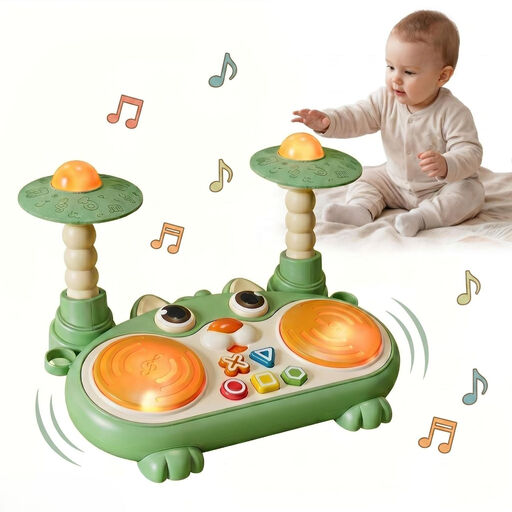
Why this product suits the profile: This compact activity centre combines drum surfaces, lights, animal sounds and five shape- or colour-based play areas for babies and toddlers.
The product description specifies a clear age range, rounded edges and a non-slip base. Batteries are not included.
Several ways to play in one device; according to the product information, it is made from ABS, is BPA-free and complies with CE and EN71 standards.

Why this product suits the profile: This cube is designed as a toy for 1–3-year-olds and combines features including a piano, guitar, telephone function, gears and music.
The functions are arranged on separate sides and designed for grasping, turning, pressing and imitation. The product information specifies BPA-free ABS plastic and rounded edges.
Compact design with a carry handle; eight described play modes for different kinds of activity.
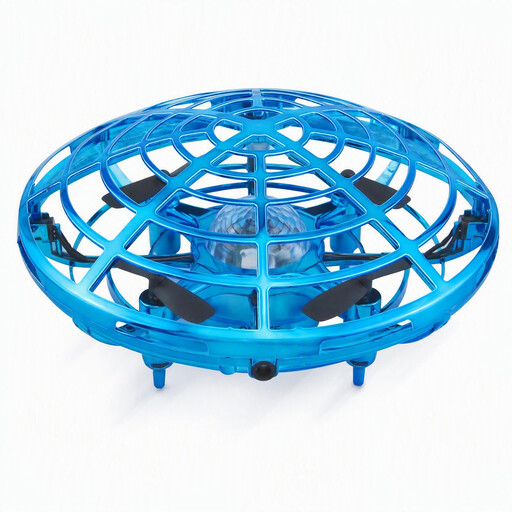
Why this product suits the profile: According to the product information, this indoor flying toy is intended for children aged 6 and over and is controlled with hand movements rather than a remote control.
The description specifies a fully protected propeller system, obstacle sensors and clear supervision guidance.
USB-rechargeable battery and LED lighting; suitable for supervised use indoors.
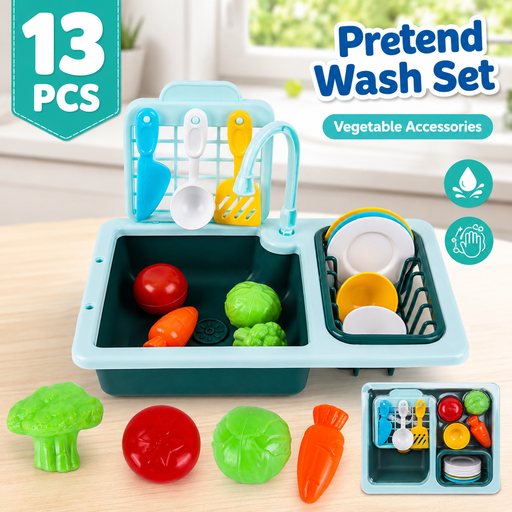
Why this product suits the profile: This 13-piece set encourages open-ended play centred around washing, household tasks and vegetables, making it suitable for shared family activities.
Play does not depend on batteries, volume levels or a specific electronic function. The product description recommends appropriate supervision.
13 pieces for flexible role play; suitable as a gift idea for children and for shared play.
For children interested in music, a children’s ukulele or a drum set with microphone may be suitable. With a drum set, check the volume control, stability and required batteries. A DIY construction kit for children mainly encourages building and designing; small parts and the recommended minimum age must be carefully observed. According to the product information, the detailed Robotime-Rolife Baking Kitchen model is intended for ages 14 and over and contains small, sometimes delicate components.
For children aged three and over, a dinosaur construction kit with connecting pieces, lights and sound effects can combine building and role play. Remote-controlled cars or an RC helicopter for children, on the other hand, require open spaces and active supervision. For children’s birthday gifts and Christmas gifts for children, it is therefore best to choose based on age, interests and living environment rather than appearance alone.
We have put together a complete, regularly updated list of products that fully meet these strict selection criteria and the safety regulations applicable in the EU.
Check the recommended age, warnings, material information, dimensions, items included and power supply. For electronic toys, the volume control and battery type are also important.
This depends on the number of ways to play, the child’s developmental stage and the opportunity for shared play. Sorting functions are often suitable for younger children, while construction kits, role-play toys and remote-controlled models require more independence as children get older.
Battery-operated products involve regular costs for replacement batteries. USB-rechargeable models require a suitable power source. Also check whether batteries are included and whether the toy may be used while charging.