
Lieferung heute & morgen

Qualitätsgarantie

Willkommens-Angebote freischalten: KOSTENLOSE Lieferung | Bis zu 80 % RABATT | Kostenlose 30-Tage-JoyPlus-Testphase
App herunterladen
Cling film is a staple in many British households, yet it's often chosen purely on length or price. This can lead to unnecessary waste, poor adhesion, or using the wrong type in the fridge and microwave. For home cooks, families, hobby chefs, and small catering businesses, the key factors are material, roll size and intended use.
A 75 m cling film might look like a bargain at first glance. However, what really matters is the film width, tear resistance and ease of handling. A roll that's too narrow or difficult to tear will create more waste. For large bowls, baking dishes and catering containers, a 30 cm roll can be far more practical.
Not every cling film is heat-safe. A label saying "microwave-safe" does not automatically mean the film can go in the oven, on the grill or near an open flame. When reheating, the film should not sit tightly against hot food – steam needs to be able to escape.
Cling film for fridge and microwave should therefore only be used according to the product labelling. For the oven, grill and high temperatures, aluminium foil is usually the right choice – though it also has its limitations.
A self-adhesive cling film can cover bowls and smooth container rims well. However, adhesion can be different on uneven, greasy or very warm surfaces. If you cover food frequently, films with a cutting edge, holder or pre-perforated tear points are often easier to use.
Polyethylene, or PE, is commonly used for cling film. A food-safe PE film is designed for direct contact with food. Before buying, you should check the information on the packaging and product page, particularly:
"Food-safe" is not a free pass for every temperature. Fatty and sugary foods can get very hot when heated. The film should not come into direct contact with particularly hot spots.
A 30 cm cling film covers most standard plates, bowls and storage containers. For smaller portions, a narrower film can be more economical, while wider rolls in a family home or catering setting require fewer overlaps.
For occasional use, 20 m is sufficient. A 75 m cling film or a 90 m roll is better suited to households with regular use, larger families or batch cooking. For a fair comparison, look at the price per metre – and don't forget to factor in the usable width.
A cling film with a cutting edge makes trimming much easier. Pre-perforated rolls, for example with dot tear points, may not need scissors at all. For kitchen and catering rolls, a sturdy box, secure roll guidance and an easy-to-find film start are also important.
For bowls and plates, disposable bowl covers can be a handy alternative. They stretch over the rim with an elasticated edge and are quick to fit on containers of different shapes.
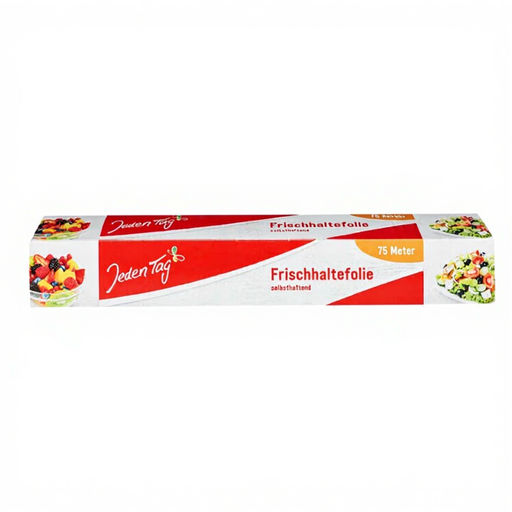
Why this product fits the profile: The 75-metre roll is designed for regular household use or small catering tasks, and works with many kitchen dispensers.
The specific roll length makes it easy to compare price per metre. The film is intended for covering and storing food, not for the oven or grill.
75 m length; PE material; designed for daily covering of food and containers.
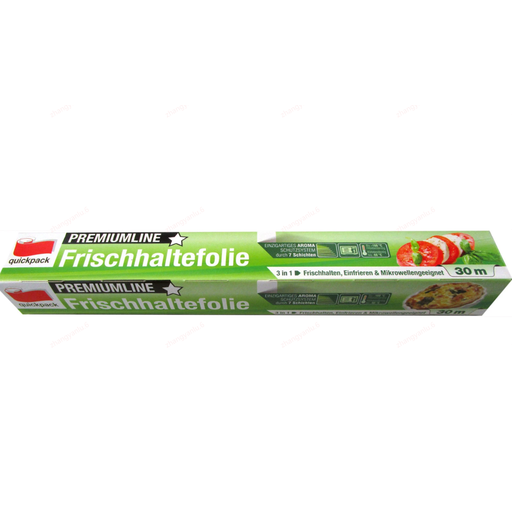
Why this product fits the profile: The 30 cm roll with a seven-layer PE construction is aimed at users who prefer clear details on width, temperature range and intended use.
The specifications clearly separate storage, freezer and microwave use from conventional ovens and direct heat sources.
30 cm width; seven-layer PE film; stated suitability up to 160 °C according to the product description.
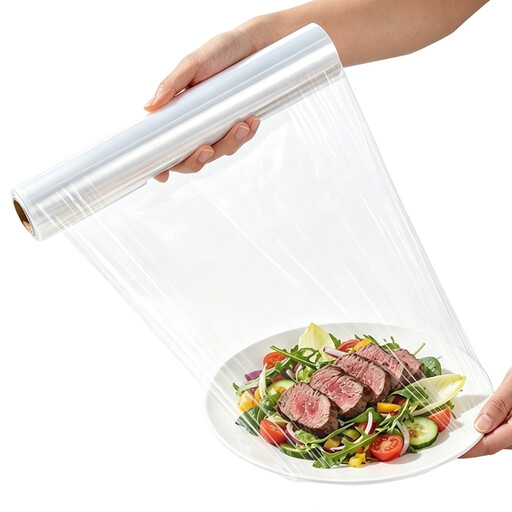
Why this product fits the profile: The 30 cm width, 90-metre length and pre-perforated tear points are ideal for frequent covering and fast workflows.
The dot tear points reduce the need for scissors or a fiddly cutting edge. The PE film is expressly not intended for the oven.
90 m length; 30 cm width; pre-perforated tear points; according to the product description, suitable for fridge and microwave.
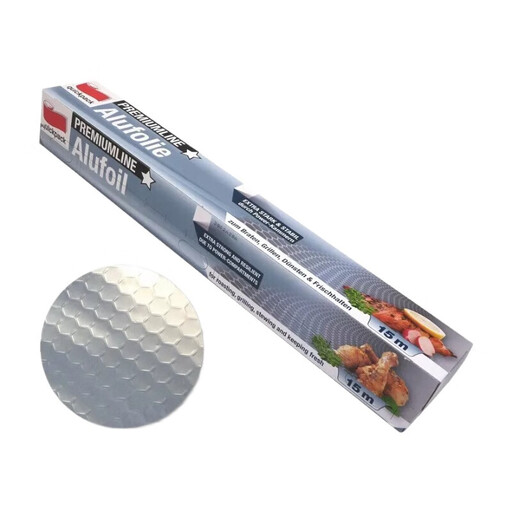
Why this product fits the profile: If you need a more tear-resistant barrier for the grill, oven or transporting food, an extra-strong aluminium foil can be used separately from cling film.
Aluminium foil is not confused with microwave-safe PE film. The Power Clips help secure it when wrapping and storing.
15 m roll length; extra-strong version according to the product name; two Power Clips included.
We've put together a full, regularly updated list of products that meet these strict selection criteria and comply with EU safety regulations.
That depends on the individual product. Only films with an explicit microwave-safe label should be used. The film must not sit tightly on the food; an opening for steam is essential. Standard PE cling film is not suitable for the oven.
Cling film does not usually have a fixed use-by date like food. What matters is the packaging information, undamaged storage and the material properties. If the film has tears, a sticky surface, an unusual smell or damaged packaging, it should no longer be used for food.
A 30 cm roll works for many standard containers and can be cut to size flexibly. Disposable bowl covers are quicker to fit and adapt to different shapes thanks to their elasticated rim. For frequently changing sizes, both solutions can be useful.