
Lieferung heute & morgen

Qualitätsgarantie

Willkommens-Angebote freischalten: KOSTENLOSE Lieferung | Bis zu 80 % RABATT | Kostenlose 30-Tage-JoyPlus-Testphase
App herunterladen
If you want to buy cocoa and chocolate drinks online, you’ll find a wide range of cocoa powder, drinking chocolate, chocolate milk powder, instant cocoa and chocolate cappuccino. But the differences go beyond the brand name. Preparation method, serving size, sweeteners, allergens and caffeine content all help determine whether a product is right for a family breakfast, the office or a quick drink on the go.
Many instant drinks are made mostly from sugar or glucose and contain relatively little cocoa. Check the ingredients list to see what’s in the product: in Germany, ingredients are generally listed in descending order by weight. The stated low-fat cocoa content is 18% for both Suchard Express and Kaba, while Nesquik products list 23%. The flavour also depends on added flavourings, milk ingredients and how the drink is prepared.
Nutritional values are usually given per 100 g, but an actual cup often contains just 13 to 25 g of powder. So check the recommended quantity, along with how much milk or water you’ll need. Single-serve sticks make it easy to plan each portion, while a refill pouch offers more flexibility if you use it regularly.
Instant cocoa usually contains no coffee. Chocolate cappuccino or instant cappuccino, on the other hand, may contain caffeine. Jacobs 3in1 Milka and Jacobs Milka Chocolate Cappuccino combine coffee, milk ingredients and a chocolate flavour. These products are more suited to adults or coffee drinkers. If you’re buying for children, check the caffeine information on the label.
Start by comparing the cocoa content, sugar content and any additional sweeteners. AGF Blendy Stick Cocoa au Lait lists ingredients including sugar, cocoa powder, milk ingredients and sweeteners such as aspartame and acesulfame-K. The product also contains a source of phenylalanine and, according to the product information, is not suitable for people with phenylketonuria.
Classic chocolate milk powders such as Nesquik or Kaba are mixed with hot or cold milk. A sachet of drinking chocolate, such as Nestlé Chococino, is made with hot water instead. So consider whether you’d prefer to use milk at home or make your drink with water.
Read the allergen information carefully before buying. Common warnings relate to milk, soya, nuts or gluten. This also applies to coffee sticks and cappuccino mixes, which may contain milk powder, whey powder or plant-based creamer powders.
Alnatura Organic Drinking Cocoa is listed as containing organic ingredients and at least 38% cocoa. The product description says it is vegan and lactose-free, but also warns that it may contain traces of milk. Always check the information on the packaging you receive, especially if you have allergies or intolerances.
Pouches of 350 to 500 g are handy for stocking up at home. A resealable refill pouch needs to be stored somewhere dry and closed tightly after each use. A tin, such as the Nesquik Original Tin, offers extra protection against moisture and clumping.
Single portions such as Jacobs 3in1, AGF Blendy Stick or Nestlé Chococino are well suited to the office, travelling and drinking on the go. They make measuring easier, but create more packaging per drink. If you use it often, a larger pack such as the 500 g Krüger Family Chocolate Cappuccino may be more economical and practical.
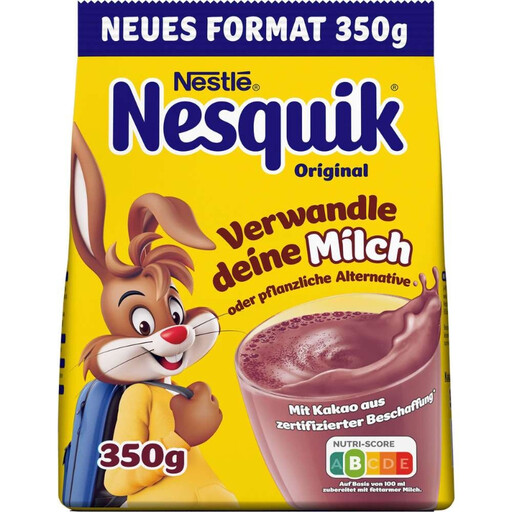
Why this product suits your needs: The 350 g refill pouch is designed for making hot or cold cocoa with milk regularly. The recommended quantity is around 13.5 g per 200 ml of milk.
The specific serving guidance makes it easier to control portions. The product description states a cocoa content of 23%.
Can be made hot or cold; 350 g refill pouch; listed as containing vitamins C and D.
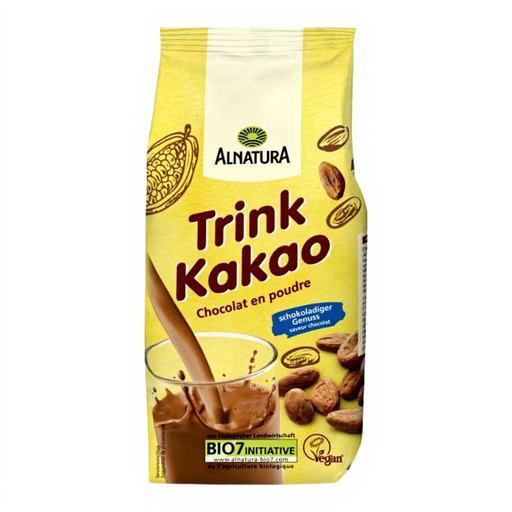
Why this product suits your needs: This organic drinking cocoa is aimed at shoppers who take certification, ingredient sourcing and a higher cocoa content into account when choosing a product.
The product description lists DE-ÖKO-001, at least 38% cocoa, and organic cocoa and raw cane sugar as ingredients.
Certified organic; suitable for hot and cold drinks; listed as vegan and lactose-free.
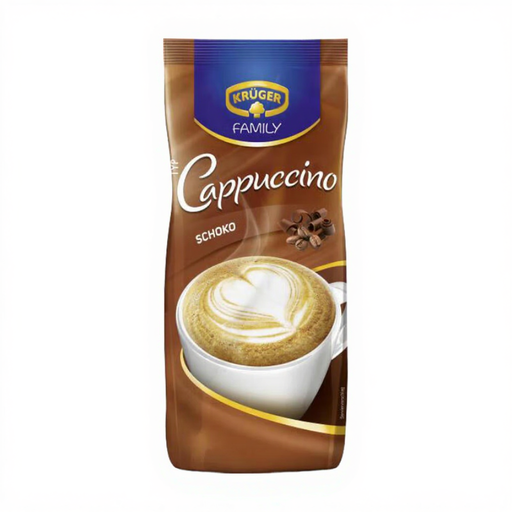
Why this product suits your needs: This large pack is well suited to households or offices where a chocolate-flavoured instant cappuccino is made regularly.
The product information lists 7% instant coffee and 5% low-fat cocoa powder. This makes it clear that it’s a coffee drink, not pure cocoa.
500 g pack; make with around 15 g of powder and 150 ml of hot, not boiling, water; contains milk.
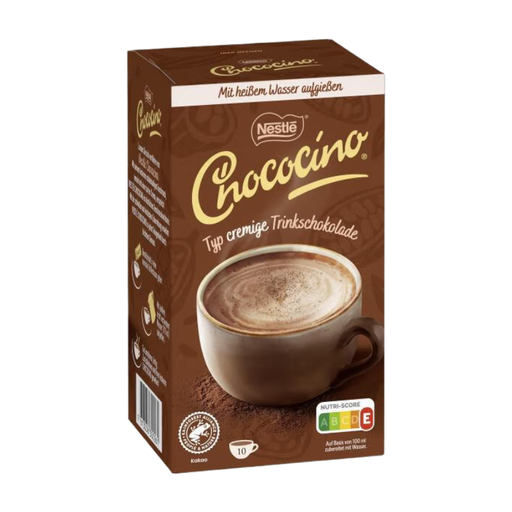
Why this product suits your needs: The ten 22 g sachets are easy to store and use one at a time at the office or on the go.
The pack states the number of servings and recommends making each one with 110 ml of hot, not boiling, water. This clearly defines the drink quantity.
10 single servings; listed as containing 21% skimmed milk powder and 16% low-fat cocoa powder; contains no coffee.
First, mix the powder with a small amount of cold or warm milk to make a smooth paste. Then add the remaining milk or water. For a hot drink, the liquid should be hot but not boiling, depending on the instructions on the pack.
This depends on the product and packaging. Store cocoa powder in a cool, dry place, away from heat. Once opened, seal the pouch tightly or transfer the contents to an airtight container. Check the best-before date and any guidance, such as “use within four weeks”.
Products containing instant coffee usually contain caffeine. Examples include Jacobs 3in1 Milka, Jacobs Milka Cappuccino and Krüger Family Chocolate Cappuccino. Pure cocoa and drinking chocolate without coffee are different. If you’re unsure, check the ingredients list and information on the packaging.