
Lieferung heute & morgen

Qualitätsgarantie

Willkommens-Angebote freischalten: KOSTENLOSE Lieferung | Bis zu 80 % RABATT | Kostenlose 30-Tage-JoyPlus-Testphase
App herunterladen
If you want to buy a coffee machine, you will find a wide range of options in Germany: electric filter coffee makers, moka pots, espresso makers, French presses and manual coffee makers for home or the office. However, your decision should not be based solely on design, brand name or advertising claims. Capacity, hob or electrical compatibility, material and cleaning requirements are the key factors.
With a coffee maker, a “cup” often means a small espresso portion rather than a large mug of coffee. A six-cup moka pot may therefore produce considerably less liquid than a filter coffee maker with six standard cups.
You should therefore check the capacity in millilitres. Around 300 to 600 ml may be sufficient for one person. Families or offices often need a larger volume, for example 750 ml to 1 litre.
Not every espresso maker works on every type of hob. Aluminium moka pots are often suitable for gas, electric, ceramic or halogen hobs, but not for induction hobs. Some models require a separate adapter plate.
Before buying, check specifically whether it is suitable for:
The description “for gas and electric hobs” does not automatically mean that the product is suitable for induction hobs.
A dishwasher-safe coffee pot can save time, while an aluminium moka pot should generally be washed by hand. With French presses, the glass container and filter are not always equally suitable for cleaning in the dishwasher either.
If you prepare coffee every day, check the following before buying:
A filter coffee maker is ideal for larger quantities and straightforward operation. Water passes through the ground coffee and a paper or permanent filter. An electric coffee maker is particularly convenient when you want the brewing process to run without supervision.
A moka pot, also known as an espresso maker, is heated on the hob. It produces a concentrated coffee in small portions. The flavour depends, among other things, on the grind size, amount of coffee and temperature.
A French press requires neither electricity nor a paper filter. Ground coffee is infused with hot water and, after the brewing time, pressed down using a metal mesh filter. This method is suitable for home, the office and travel.
Focus on the actual filling capacity rather than the advertised number of cups:
With a coffee pot featuring a keep-warm function, it is also important to check whether it sits on a hotplate or is designed as a thermos flask. A thermos flask does not require a continuously heated hotplate, whereas a glass pot may cool down more quickly after brewing.
Aluminium is widely used for moka pots and is relatively lightweight. According to the manufacturer’s instructions, these models should be washed by hand and dried thoroughly. Borosilicate glass is often used for French presses and lets you see the brewing process. Nevertheless, it remains a fragile material.
With electric appliances, wattage, automatic switch-off, water-level indicators and accessible filter baskets are also relevant. A higher wattage alone does not guarantee better coffee. Initially, it only tells you something about the appliance’s electrical power.
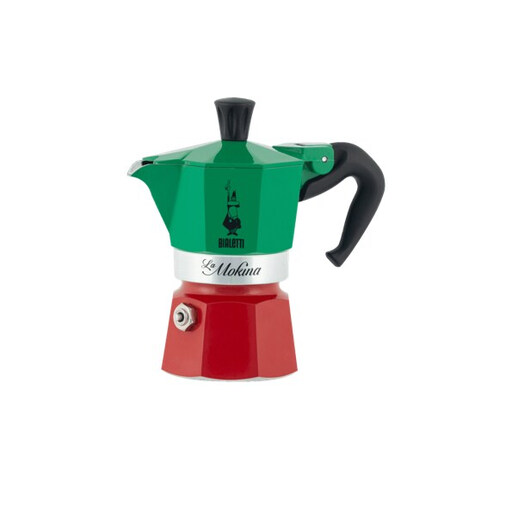
Why this product suits this profile: This small moka pot is designed for one 40 ml portion and requires no electrical connection. It is ideal for anyone looking for a compact solution for use on the hob.
The product description clearly specifies the compatible hob types: gas, electric and ceramic, but not induction. This means you can check compatibility before buying.
Manual brewing without a cable; aluminium housing and detachable construction. Not dishwasher-safe.
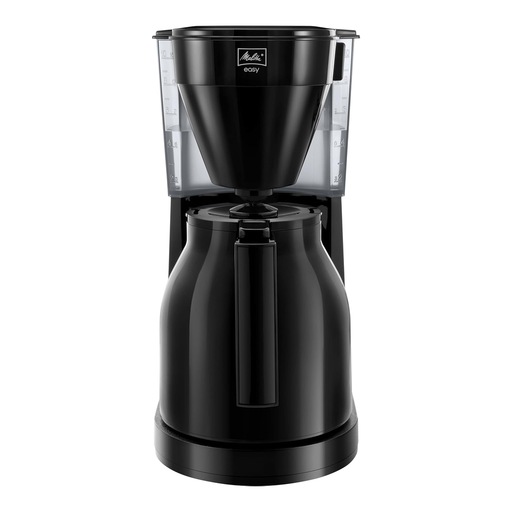
Why this product suits this profile: This electric filter coffee maker has a 1-litre capacity, a thermos flask and a removable swing-out filter.
The thermos flask keeps the coffee warm without a permanently heated hotplate. This reduces reliance on a keep-warm function on an electric plate.
1-litre capacity, integrated drip stop and 1,050 watts of power according to the product specifications. The pot should be cleaned by hand.
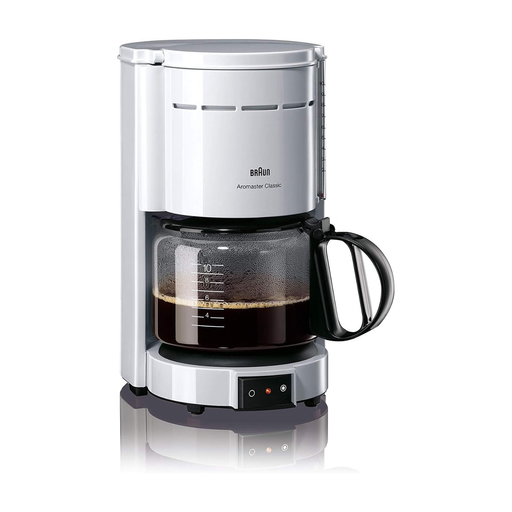
Why this product suits this profile: With a 10-cup Aroma carafe, this model is designed for households, meetings and office use.
The water-level indicator helps with measuring the correct amount. A drip stop lets you pour coffee while brewing is still in progress; the automatic switch-off is specified as 40 minutes.
10-cup capacity, removable filter basket and dishwasher-safe parts according to the instructions. The stated power output is 1,000 watts.
We have put together a complete, regularly updated list of products that fully meet these strict selection criteria and the safety regulations applicable in the EU.
An electric coffee maker incurs ongoing costs for electricity, filter paper and descaling. A 1,000-watt machine uses around 0.167 kWh during a ten-minute brewing cycle. The actual cost depends on your electricity tariff and how long the machine is used.
A manual coffee maker such as a French press or moka pot does not require its own electrical connection. However, depending on the model, you may need to pay for ground coffee, seals and replacement filters. Regularly descaling electric appliances is particularly important in areas with hard tap water. Always follow the manufacturer’s care instructions.
For single users, a small filter coffee maker, a 350 to 600 ml French press or a one- to three-cup moka pot are practical options. The key question is whether you want to prepare a single portion or several cups. An oversized coffee pot can result in unnecessary leftovers.
Its lifespan depends on the material, frequency of use, water hardness and care. With electric appliances, you should descale them regularly and follow the manufacturer’s instructions. With moka pots, the sealing ring, filter and safety valve are typical components that should be checked after extended use.
A French press requires neither electricity nor a paper filter if you use the existing metal filter. Running costs therefore mainly consist of ground coffee and cleaning. Whether it is cheaper overall depends on the purchase price, length of use and amount of coffee prepared.