
Lieferung heute & morgen

Qualitätsgarantie

Willkommens-Angebote freischalten: KOSTENLOSE Lieferung | Bis zu 80 % RABATT | Kostenlose 30-Tage-JoyPlus-Testphase
App herunterladen
Anyone looking to buy a coffee machine is faced with a wide range of options: espresso machine, bean-to-cup coffee machine, capsule machine, coffee pod machine or classic filter coffee machine. There are also manual options such as a moka pot and French press. The right choice depends less on advertising claims than on your drinking habits, available space, cleaning requirements and ongoing costs.
On an espresso machine, a rating such as “20 Bar” may initially sound impressive. However, this often refers to the maximum pump pressure. What matters for brewing is how consistently the water is pushed through the coffee grounds during extraction. A high maximum value alone therefore does not guarantee a particular flavour result.
Clear controls, suitable temperature regulation, an appropriate portafilter and regular cleaning are more important.
A capsule machine or coffee pod machine is ready to use quickly and requires little additional equipment. Before buying, however, you should check which capsules or pods are compatible, how large the water tank is and whether used capsules can be collected or recycled. With daily use, consumables can have a greater long-term impact than the purchase price.
A bean-to-cup coffee machine with a grinder and milk system offers a wide range of drinks, but requires more space and maintenance than a filter coffee machine. Milk lines, the brewing unit, water tank and coffee-grounds container all need regular cleaning. Even with a compact coffee machine, you should allow enough room to open the lid, remove the tank and take out the drip tray.
A filter coffee machine with a glass jug or thermal jug is suitable for making several cups in the morning. Models with around 1 to 1.25 litres of water capacity can provide several portions, depending on the cup size. A thermal jug keeps the coffee warm without a permanently heated hotplate, while a glass jug is usually more compact and easier to clean.
A capsule machine or coffee pod machine is ideal for households where individual portions need to be prepared quickly and with minimal effort. Check the maximum cup height, heating time and automatic switch-off.
For freshly ground beans, consider an espresso machine with grinder or a bean-to-cup coffee machine. A bean-to-cup machine largely handles grinding, dosing and brewing automatically. A portafilter machine gives you more control over the grind size, quantity and milk foam, but requires more practice and cleaning.
The tank size should suit your household. A tank holding 0.6 to 0.9 litres is sufficient for individuals or a small office, but will need refilling more often. Appliances with a capacity of 1.2 to 1.8 litres are more suitable for families or preparing several drinks one after another.
Measure the available space before buying. A compact coffee machine may be narrow, but could require additional clearance above it. With a bean-to-cup coffee machine, the bean hopper, milk container and removable components should also remain accessible.
A coffee machine with milk frother can prepare cappuccino or latte macchiato. Manual steam wands require some practice, but allow you to create a more personalised texture. Automatic milk systems simplify preparation, but involve additional cleaning steps.
Look for removable water tanks and drip trays, accessible brewing units and clear descaling instructions. In Germany, water hardness affects maintenance requirements. Descaling intervals should be based on the instruction manual and the quality of your local water.
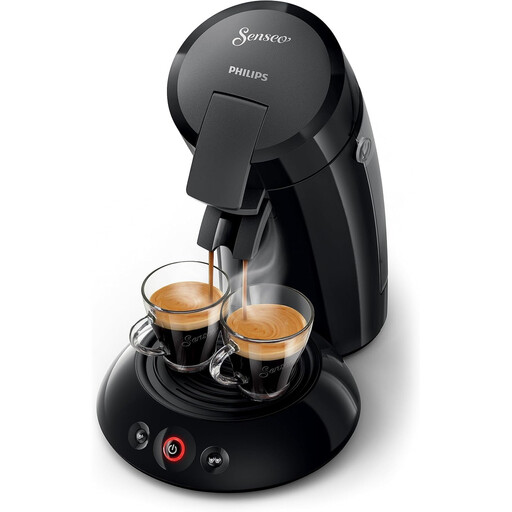
Why this product suits the profile: According to the product details, this pod machine prepares one or two cups in less than a minute and has a 0.7-litre water tank. That makes it suitable for smaller households and straightforward morning routines.
The automatic switch-off after 30 minutes reduces the risk of the appliance being left running unnecessarily. The pod holder and drip tray can be removed for washing.
One- or two-cup preparation, button controls, and Coffee Boost and Crema Plus functions according to the manufacturer.

Why this product suits the profile: This bean-to-cup coffee machine offers seven drinks selected directly from the control panel, a conical burr grinder with 13 settings and an automatic LatteCrema milk system.
The removable parts, which are described as dishwasher-safe, make cleaning easier. The 1.8-litre tank reduces the need for frequent refilling.
250-g bean hopper, two espresso portions prepared at the same time and seven stored drink options according to the product data.
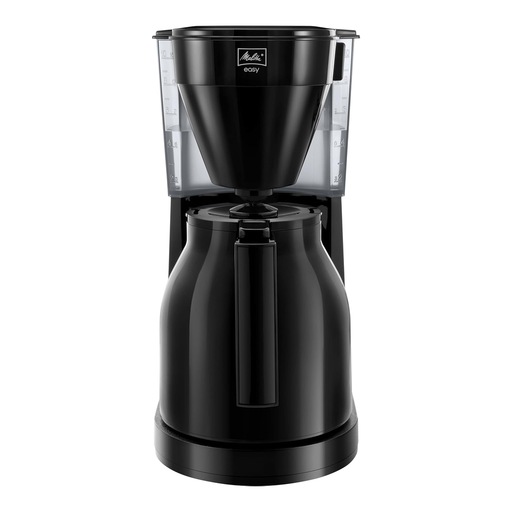
Why this product suits the profile: The filter coffee machine with a 1-litre thermal jug is suitable for households or offices where several cups are poured one after another.
According to the product description, the thermal jug does not require a hotplate. An integrated drip stop helps limit spills when the jug is removed.
Swing filter, 1-litre capacity and thermal jug; according to the specifications, the filter insert is removable and dishwasher-safe.
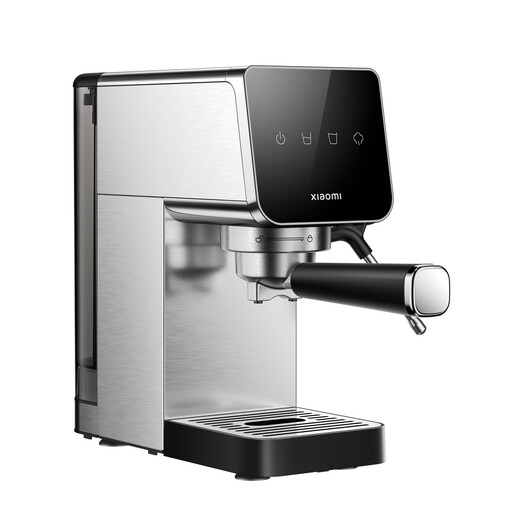
Why this product suits the profile: This portafilter machine is 14 cm wide and features single and double shots, a pre-infusion function and a steam wand for frothing milk.
Its compact width is useful where space is limited. NTC temperature control and the pre-infusion function are specific technical features rather than simply a pressure rating.
20-Bar pump rating, 0.9-litre tank and separate steam wand according to the product description; suitable for ground coffee.
We have put together a complete, regularly updated list of products that fully meet these strict selection criteria and the safety regulations applicable in the EU.
If space is limited, consider a compact capsule machine, a slim espresso machine or a small filter coffee machine. The appliance width, tank position and clearance needed to open the lid are key considerations. According to the product details, the Nespresso Essenza Mini is 11 cm wide and has a 0.6-litre water tank.
The lifespan depends on the construction, frequency of use, water hardness and care. Regular descaling, emptying the drip tray and coffee-grounds container, and cleaning the milk system can help ensure reliable use. It is not possible to give a reliable general lifespan based on a single product feature.
In addition to electricity, coffee, pods, capsules, filter paper, descaler and, where applicable, replacement parts all contribute to running costs. Filter coffee made with ground coffee is usually easy to budget for. With capsule and pod machines, you should compare the price per portion. A bean-to-cup machine often has a higher purchase price, but can grind beans portion by portion and cover several types of drink.