
Lieferung heute & morgen

Qualitätsgarantie

Willkommens-Angebote freischalten: KOSTENLOSE Lieferung | Bis zu 80 % RABATT | Kostenlose 30-Tage-JoyPlus-Testphase
App herunterladen
For many DIYers, crafters, and sewing enthusiasts, precisely cutting materials is a recurring challenge. Working with conventional scissors on thick fabrics or leather quickly leads to hand fatigue, while a utility knife often leaves messy edges on carpet or cardboard. A cordless rotary cutter promises a solution, but not every device delivers on its promise.
Many buyers invest in a model only to find that the battery dies after just a few minutes, the motor jams on tougher materials, or the blade becomes dull after the first project. This buyer's guide highlights the most common pitfalls and explains which technical features truly matter, so you can find a reliable tool for your projects.
To avoid making a bad purchase, it's important to understand the technical specifications of a cordless rotary cutter. Three parameters are particularly crucial for performance and longevity.
The shape and material of the blade largely determine the device's range of applications.
The blade material is an indicator of edge retention and durability. Basic blades are often made of carbon steel or stainless steel. Higher-quality models use tungsten steel, which is known for its extreme hardness and longevity, staying sharp for a long time even with intensive use.
Battery technology is the heart of any cordless tool. Pay attention not only to the voltage (V) but especially to the battery capacity, measured in milliampere-hours (mAh), and the resulting runtime. A higher capacity generally means longer use per charge.
Another important aspect is the charging infrastructure. Modern devices feature a USB-C port, which allows for flexible charging via a power bank, laptop, or a standard phone charger. This significantly increases the tool's mobility and readiness. The motor speed, specified in RPM (revolutions per minute), also provides insight into the cutting power—higher values typically enable more effortless cutting through resistant materials.
A powerful cutter must also be safe to handle. An indispensable feature is an integrated safety lock. This prevents accidental activation of the device, for example, by requiring a separate safety button to be pressed before operating the main switch.
The weight and shape of the handle affect working comfort, especially during longer projects. A lightweight device with an ergonomically shaped, non-slip grip reduces hand fatigue and allows for more precise guidance of the cutting tool.
Based on the criteria mentioned, we have analysed various models and matched them to the following user profiles.
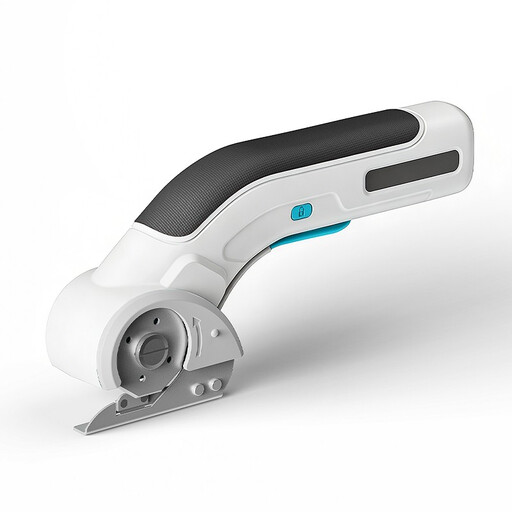
Why it's a great fit: Ideal for DIYers who need a versatile tool for various projects, from cutting fabric for sewing to trimming carpet remnants or felt. The round blade is excellent for long, straight cuts.
The common pitfall of a quickly draining battery is addressed here with a runtime of up to 2 hours. The powerful motor prevents jamming on common materials.
The combination of a high motor speed of 11,000 RPM and a long battery life enables efficient, uninterrupted work across a variety of materials.
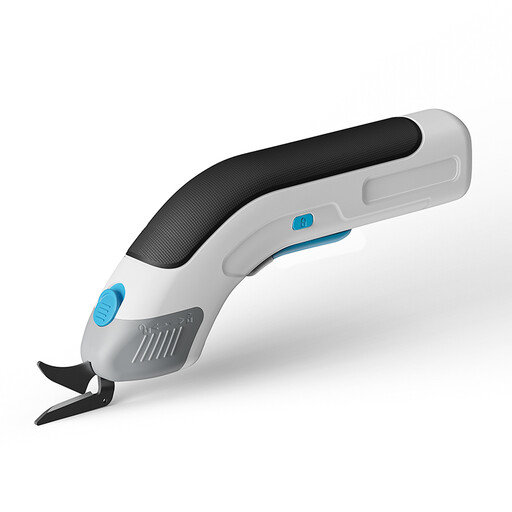
Why it's a great fit: Perfect for creatives cutting intricate shapes from cardboard, leather, or thick fabrics. The pointed blade allows for exact control on curves and in corners, which is essential for craftwork and detailed patterns.
This model addresses the problem of quickly dulling blades with a blade made of tungsten steel. According to the manufacturer, it has been tested for over 2 million cuts and offers high rust resistance.
The very low weight of just 0.2 kg and the pointed blade ensure maximum manoeuvrability and control, reducing fatigue during detailed work and increasing precision.
We have compiled a complete, up-to-date list of products that fully meet these strict selection criteria and rigorous safety standards.
An electric fabric cutter is highly versatile. Typical materials include:
The maximum cutting thickness depends on the motor's power and the blade's sharpness. Please refer to the specifications provided by the respective manufacturer.
Modern devices are equipped with safety mechanisms to minimise the risk of injury. The most important feature is the safety lock, which prevents the blade from starting accidentally. Nevertheless, it is a sharp cutting tool. Always keep hands and fingers away from the blade area and guide the tool away from your body. When working with particularly tough materials, wearing protective gloves may be advisable.
For consistently good cutting performance, the blade should be cleaned of material residue and fibres after each use. Some blades are described as self-sharpening, which reduces maintenance. The lifespan of a blade depends heavily on the material being cut and the quality of the blade steel. A blade made of tungsten steel will last significantly longer than a standard steel blade. On most modern devices, blade replacement is tool-free and can be done in a few simple steps.