
Lieferung heute & morgen

Qualitätsgarantie

Willkommens-Angebote freischalten: KOSTENLOSE Lieferung | Bis zu 80 % RABATT | Kostenlose 30-Tage-JoyPlus-Testphase
App herunterladen
Anyone looking to buy creatine powder will find a wide range of creatine monohydrate, flavoured options and combination products. At first glance, many offers appear similar. However, differences become clear when you look at the actual amount of creatine per serving, the ingredients list, pack size and practical use.
As a Joybuy Product Recommendation Officer, I filter relevant product details and assess them according to specific everyday situations. This helps you avoid paying for marketing terms that offer no additional benefit for your personal supplement routine.
The serving weight alone is not what matters. The key factor is the stated amount of pure creatine. For example, a product may recommend 4.5 g of powder but contain only 3 g of creatine monohydrate. Acidity regulators, flavourings and sweeteners increase the serving weight, but not the amount of creatine.
If you are looking for creatine to support muscle building or short-term, high-intensity exercise, you should therefore check the nutrition table rather than relying solely on the front of the packaging.
Micronised creatine refers to a finer powder structure. This can make it easier to mix into water or a shake. However, the term alone does not tell you whether a product also contains flavourings, sweeteners or colourings.
For users who want to combine unflavoured creatine flexibly with whey, juice or a recovery drink, checking the full ingredients list is more important than the marketing statement on the packaging.
Pre-workout products or protein bundles may contain creatine, but they do not always provide the amount users plan to take each day. For example, Jack3d Advanced Pre-workout lists 1 g of creatine monohydrate per 7 g serving. This should not be equated with a pure creatine supplement containing 3 g of creatine per serving.
Combination products can be practical, but you should check all the active ingredients they contain as well as the recommended daily amount.
Creatine monohydrate is a clearly declared form of creatine and is often the only source of creatine in the products featured. Pure powder makes it easier to calculate your daily amount. According to the product information, Nutri+ Creatine Powder Vegan 1000 g contains only creatine monohydrate. No fillers, sweeteners, colourings or preservatives are listed.
According to the stated information, BEST BODY NUTRITION Creatine Monohydrate Powder also contains magnesium oxide and 2.89 g of creatine monohydrate per 3 g serving. If you prefer products with as few ingredients as possible, compare this formulation with pure monohydrate products.
A stated amount of 3 g of creatine per serving makes your daily routine easier. For products with a larger serving weight, you should check how much of it is actually creatine:
The directions for use on the relevant packaging are always decisive. Kitchen scales can be more accurate than the measuring scoop provided, unless the serving size is already clearly stated.
Unflavoured creatine usually contains fewer additional ingredients and can be stirred into water, protein shakes or other drinks. Flavoured creatine, on the other hand, provides a ready-made flavour. The Optimum Nutrition products are available in flavours including Orange, Fruit Punch and Blue Raspberry. According to the product information, these options contain sweeteners and acidity regulators.
Micronised creatine may disperse more finely. However, solubility also depends on the amount and temperature of the liquid, as well as thorough stirring or shaking. A claim such as “sugar-free” does not automatically mean “free from sweeteners”.
A 1,000 g pack of pure creatine will, mathematically, last considerably longer at a daily serving of 3.4 g than a 187 g or 247.5 g pack. Smaller packs are more suitable for trying a flavour or for occasional use. Frequent users should compare the price per serving and the number of servings, rather than just the total price.
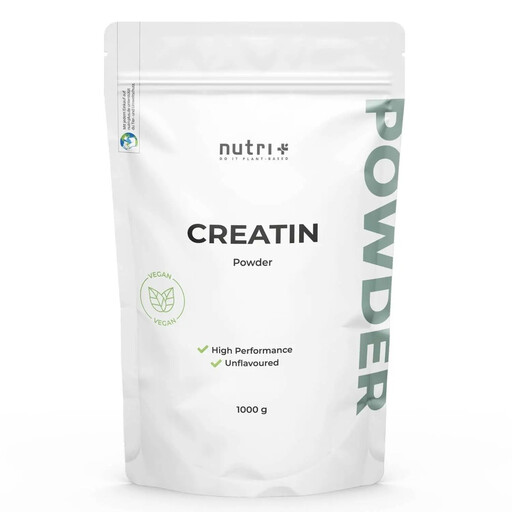
Why this product suits the profile: The large pack is aimed at adults who use creatine regularly and prefer a vegan, unflavoured option without additional flavourings.
According to the product information, the ingredients list contains only creatine monohydrate. This removes the need to compare hidden flavourings or sweeteners.
1,000 g pack size, 3 g of creatine per recommended serving and suitability for vegans according to the product description.
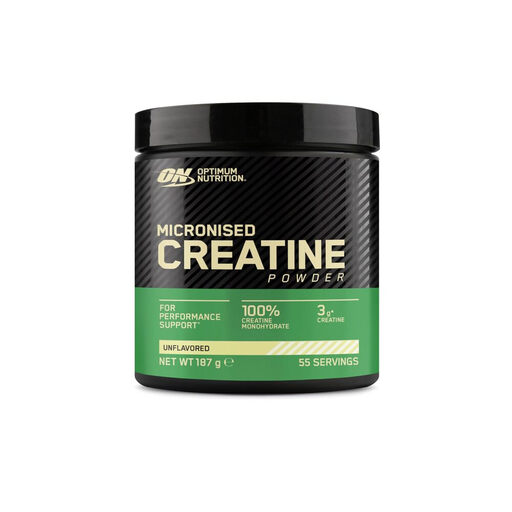
Why this product suits the profile: The unflavoured option is suitable for users who prefer clearly declared ingredients and flexible use in a shake.
The product information distinguishes between 3.4 g of creatine monohydrate and 3 g of creatine. This makes the actual amount per serving easy to verify.
Micronised, unflavoured creatine monohydrate; according to the stated information, approximately 55 servings per 187 g pack.
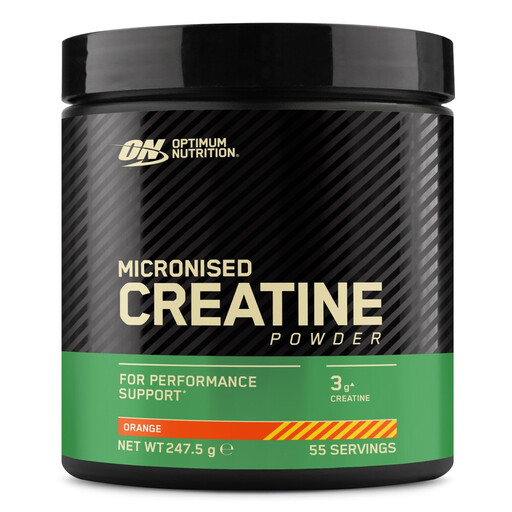
Why this product suits the profile: The flavoured option is intended for adults who want to incorporate creatine for athletes into a ready-to-drink beverage with an orange flavour.
The information clearly states that 4.5 g of powder provides 3 g of creatine. Additional ingredients such as sweeteners and acidity regulators are listed transparently.
Micronised creatine monohydrate, 3 g of creatine per serving and around 55 servings in the 247.5 g pack.
We have put together a complete, regularly updated list of products that fully meet these strict selection criteria and the safety regulations applicable in the EU.
The products featured are intended for adults. Always follow the directions for use, ingredients list and warnings on the packaging. Food supplements are not a substitute for a varied diet or a healthy lifestyle. Do not exceed the recommended daily amount.
If you have an existing medical condition, take medication, or are pregnant or breastfeeding, it is advisable to consult a doctor. Store products in a dry, cool, sealed place and out of the reach of children.
Several of the products featured state 3 g of creatine per daily serving. The serving weight may be higher depending on the formulation. The specific manufacturer’s instructions on the relevant product are what matter, not a generic comparison of measuring scoops.
Both options can fit into a daily routine. Unflavoured creatine can be combined with protein powder or other drinks and often contains fewer additional ingredients. Flavoured creatine, on the other hand, provides a ready-made flavour, but depending on the product it may contain sweeteners, acidity regulators or colourings.
This depends on the pack size and serving weight. A 187 g pack with around 55 servings will last approximately 55 days when taken daily. A 1,000 g pack with 3.4 g of powder per serving will, mathematically, last considerably longer. For comparing costs, the price per serving is more informative than the pack price alone.