
Lieferung heute & morgen

Qualitätsgarantie

Willkommens-Angebote freischalten: KOSTENLOSE Lieferung | Bis zu 80 % RABATT | Kostenlose 30-Tage-JoyPlus-Testphase
App herunterladen
From the Joybuy Product Recommendation Officer
If you’re looking to buy crispbread and crackers, you’ll find a huge selection online. However, organic crispbread, gluten-free varieties, rice cakes, rice crackers, salt crackers and sweet biscuits differ significantly in terms of ingredients, nutritional values and allergens. An attractive packet or the word “light” on the label simply isn’t enough to go on.
Gluten-free products are suitable for people who need or want to avoid gluten. But that doesn’t automatically mean they’re free from all allergens. Gluten-free biscuits, for example, can still contain egg, milk, soya or other ingredients. If you have coeliac disease, it’s essential to check the specific labelling on the packet, including any “may contain” warnings for traces.
An organic certification applies to the certified ingredients used, but it doesn’t replace a proper look at the ingredients list. With wholegrain crispbread, you should check which flour is listed first and what the actual wholegrain content is. A product with seeds featured on the front can still be mostly made from flour.
Savoury snacks like salt crackers or seasoned rice crackers can vary significantly in salt and fat content depending on the variety. For flavoured products, it’s worth checking the full ingredients list. Claims like “with seaweed”, “garlic” or “caviar flavour” don’t necessarily mean that ingredient is present in large quantities.
For a vegan crispbread, you need to rule out milk, egg and animal-derived flavourings. An explicit vegan label makes selection much easier. According to the product information, the Alnatura Organic Sesame Crispbread contains wholegrain rye flour, sesame and sea salt, and is described as vegan. However, it does contain gluten and sesame.
With rice cakes and corn cakes, the ingredients list is often shorter. The Alnatura Organic Plain Corn Cakes are stated to be made from 100 percent puffed organic corn and are labelled as gluten-free and vegan. The note “May contain traces of soya” is still relevant, though.
Always compare energy, fat, sugar, protein, fibre and salt per 100 grams. This makes it easier to assess products with different packet sizes. For example, the Alnatura Sesame Crispbread has 357 kcal, 16 g of fibre and 1.50 g of salt per 100 g. The Wasa Round Crispbread Roasted Garlic & Sea Salt contains 396 kcal, 9.8 g of fibre and 2.3 g of salt per 100 g, according to the product data.
For sweet products, the sugar content is a key comparison point. Schär Gluten-Free Ladyfingers Biscuits contain 32 g of sugar per 100 g, making them more suited to desserts, coffee or tea than as a neutral bread substitute.
Common allergens in this category include gluten, sesame, milk, egg and soya. The Wasa Sesame & Flaxseed Crispbread contains rye and wheat, and may contain traces of milk and sesame. Bin Bin Rice Cracker Seaweed Flavour lists soya and wheat in its ingredients and may contain traces of egg, milk, celery, mustard and sesame, among others.
Crispbread, salt crackers and rice crackers should be stored in a dry place, protected from moisture. Once opened, a tightly sealed container or carefully resealing the original packaging is recommended. This keeps them crunchy, but doesn’t automatically extend the best-before date. The date on the packet is what counts.

Why this product fits: A simple base for both sweet and savoury toppings, such as spreads, dairy-free cream cheese or fruit.
The ingredients list is short; organic quality, vegan and gluten-free are all clearly stated. The possible soya trace warning should be noted.
100 percent puffed organic corn; 377 kcal and 0.01 g salt per 100 g according to product information.
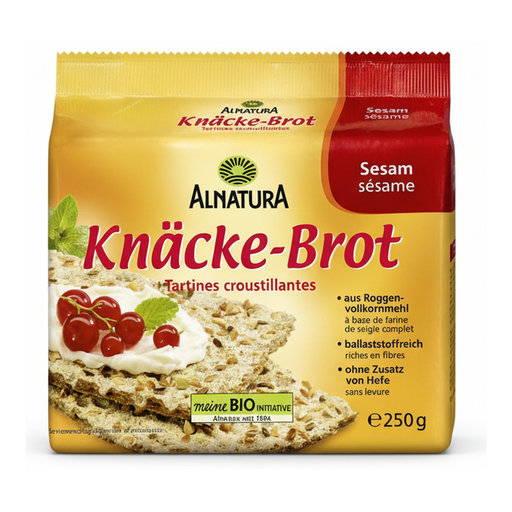
Why this product fits: A classic bread alternative with a savoury flavour, ideal as a base for vegetables, hummus or plant-based spreads.
The advertised sesame content is listed as 10 percent in the ingredients. Gluten and sesame allergies are therefore transparently identifiable.
84 percent wholegrain rye flour, 10 percent sesame, vegan; 16 g fibre per 100 g according to product information.
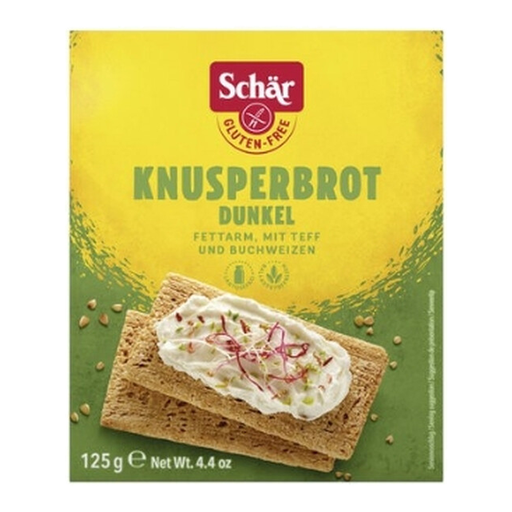
Why this product fits: For anyone looking for a gluten-free and vegan crispbread with a neutral base for sweet or savoury toppings.
The product data lists no major allergens and notes possible traces of soya. If you have coeliac disease, you should also check the current packet labelling.
20 percent teff flour, 10 percent buckwheat flour, 0 g sugar and 6 g fibre per 100 g according to product information.
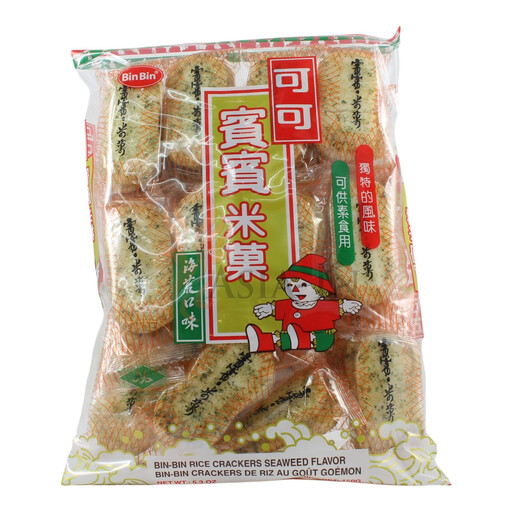
Why this product fits: A great option for social snacking, tea time and fans of Asian flavours with a seaweed twist.
The seasoning and rice content are clearly shown in the product data. At the same time, soya, wheat and possible other traces are explicitly listed.
150 g pack; 64.8 percent rice; 488 kcal and 0.6 g salt per 100 g according to product information.
For a classic taste, you could also consider Wasa Sesame & Flaxseed Crispbread, Wasa Round Crispbread Sesame & Sea Salt or the garlic variety. If you’re looking for gluten-free crackers, you can check out Schär Saltí Salted Crackers. According to the product description, they are made without milk, egg and lactose, and are described as suitable for a vegan diet; however, soya and possible traces of lupin should be noted.
Sweet alternatives include Schär Gluten-Free Ladyfingers Biscuits and Schär Gluten-Free Petit Beurre Butter Biscuits. Both products contain ingredients such as egg or milk, so they are not automatically vegan. For a selection of crispbread to buy online, rice cakes, salt crackers and gluten-free snacks, it’s worth comparing the ingredients list, pack size and best-before date directly.
Compare a regularly updated selection of gluten-free crackers and related snacks by ingredients, allergens and dietary profiles.
Keep them dry, cool and protected from direct moisture. A well-sealed packet or an airtight container will stop the products from going soft quickly. This step is especially important for seasoned rice crackers.
This depends on the product, packaging and storage conditions. Unopened products can have a shelf life of at least 50, 70, 80 or 91 days, depending on the specific item. The actual best-before date on the packet takes priority.
The ingredients list, allergen warnings and the “gluten-free” label all need to be considered together. If you have coeliac disease, you should check the packaging before every purchase, as recipes and trace warnings can change. Gluten-free products can also contain milk, egg, soya or sesame.