
Lieferung heute & morgen

Qualitätsgarantie

Willkommens-Angebote freischalten: KOSTENLOSE Lieferung | Bis zu 80 % RABATT | Kostenlose 30-Tage-JoyPlus-Testphase
App herunterladen
As a dog owner, your four-legged friend's well-being is your top priority. Nutrition plays a central role in this. However, anyone looking to buy dog food online is often confronted with an overwhelming selection and bold advertising claims. This makes the decision for the right food unnecessarily difficult. This guide will help you separate marketing hype from facts and make an informed choice for your dog.
Many well-intentioned purchases turn out to be unsuitable in hindsight. This is often due to common purchasing traps that are important to know:
To make a good decision, you should focus on objective criteria. The following three points provide a solid basis for your evaluation when you buy dog food.
The ingredients list is the heart of any food. It is ordered by weight in descending order. Look for an open declaration, where all components are named individually and precisely.
Both types of food have their specific characteristics. The choice depends on your dog's needs, as well as practical considerations.
A combination of both food types is also a common feeding method.
A dog's nutritional requirements change throughout its life.
Additionally, there is special food for small dogs (smaller kibble), for active dogs (higher energy content), or for dogs with sensitive stomachs.
Based on the criteria mentioned, we have compiled some products for different requirements.
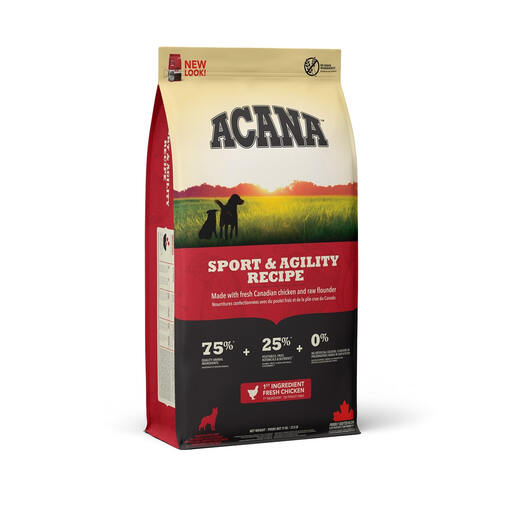
Why this product is a good fit: Designed for dogs with high energy needs, such as those in dog sports or with high daily activity levels. The high protein (33%) and fat (19%) content supports endurance and performance.
The declaration is transparent: Fresh free-range chicken is listed first, supplemented by other animal ingredients. The manufacturer specifies a 75% share of quality animal ingredients, which bypasses the trap of unclear meat content.
The recipe follows the "WholePrey" principle, processing meat, organs, and cartilage in natural ratios. It is also grain-free.
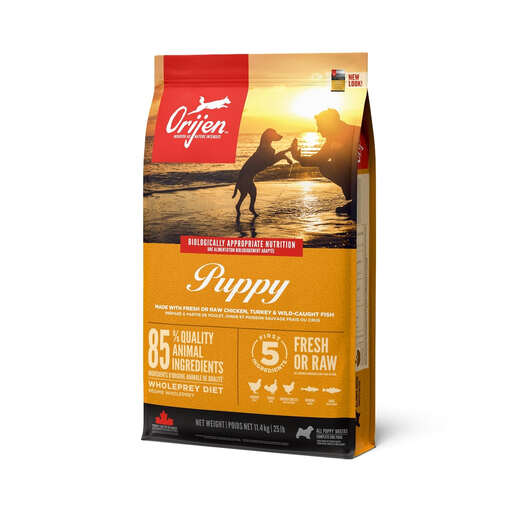
Why this product is a good fit: Specifically designed for the growth phase of puppies. With 38% crude protein and a balanced mineral content, it supports the development of muscles and bones.
The ingredients list is very specific, listing fresh chicken, fresh turkey, and various types of fish in the top positions. The manufacturer states an 85% share of animal ingredients, ensuring maximum transparency.
According to the manufacturer, the high content of DHA and EPA from fish supports brain and vision development. The grain-free recipe is also suitable for sensitive puppies.
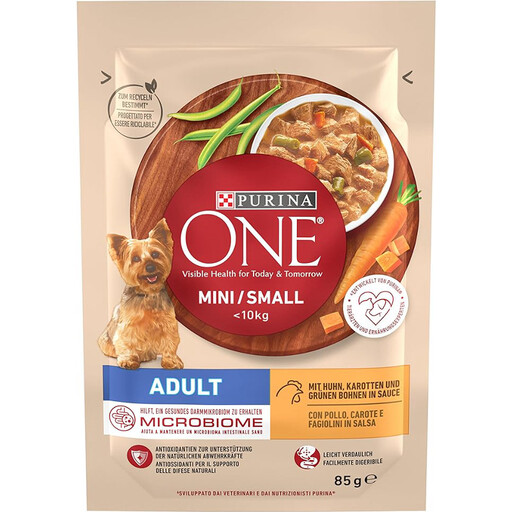
Why this product is a good fit: Specially developed for the needs of small dog breeds (up to 10 kg). The tender pieces in gravy are easy to eat, and the high moisture content supports hydration.
Although the declaration uses "Meat and animal by-products," it is specified with the note "(of which 4% is chicken)". This provides a basic orientation within a closed declaration.
The formula contains inulin (chicory fibre), which the manufacturer states can help support a healthy gut microbiome. It is free from added artificial colours, flavours, and preservatives.
We have compiled a comprehensive, up-to-date list of products that fully meet these strict selection criteria and all relevant regulations.
A food transition should always be done gradually to avoid digestive issues. Over a period of 7 to 10 days, mix the new food into the old food in steadily increasing amounts until you have completely replaced it.
Look at the position of the meat ingredient in the list. An ingredient like "chicken meal" or "dried duck protein" listed first indicates a high proportion of processed, water-reduced protein. If "fresh meat" is listed first, check which protein sources follow it to better assess the total protein content.
Yes, absolutely. Dog treats contain calories and should be considered part of the total daily food allowance. To prevent obesity, the amount of the main food should be reduced accordingly if you regularly give treats. Also, look for high-quality ingredients in treats, without unnecessary fillers or sugar.