
Lieferung heute & morgen

Qualitätsgarantie

Willkommens-Angebote freischalten: KOSTENLOSE Lieferung | Bis zu 80 % RABATT | Kostenlose 30-Tage-JoyPlus-Testphase
App herunterladen
A doormat should trap dirt, moisture and sand at the door. In households with children or pets, as well as in offices and commercial premises with high footfall, it must also stay firmly in place and be easy to clean. The choice may seem straightforward at first, but some product claims can quickly lead to the wrong purchase.
Patterns, colours and an attractive texture reveal little about how well a doormat absorbs moisture or coarse dirt. The decisive factors are the material, pile or weave, and the construction of the surface. A very thin mat may look suitable, but it can offer limited absorption capacity and be more prone to slipping.
A non-slip doormat needs a suitable backing and an appropriate, clean surface underneath. Rubber or PVC can improve grip, but dust, moisture, uneven floors and creases all affect stability. Before buying, you should therefore check the backing material, mat thickness and intended use.
Not every dirt-trapping mat is suitable for machine washing. Some models can only be vacuumed or cleaned with a damp cloth. If you are looking for a mat for a busy entrance, a pet-owning household or a rented property, check the cleaning method before buying.
Polypropylene is commonly used for doormats. It can be used as a woven or tufted surface and is described as moisture- and mould-resistant in the models presented here. An absorbent doormat should not simply spread water across the surface; it should be able to capture it within its structure.
The vidaXL Washable Doormat is specified as having an absorption capacity of around 2,5 l/m². This figure helps with comparison, but it should always be considered in relation to the mat’s surface area. A smaller mat may be sufficient for a covered entrance, while a larger absorption area is often more practical in places with heavier footfall.
A non-slip doormat should have a flexible rubber or PVC backing. The surface underneath must also be dry, clean and as level as possible. A suitable backing can perform well on smooth tiles, while dust or small uneven areas can reduce its grip.
The edge height is also relevant: a low-profile mat is easier to walk over and is more likely to fit beneath doors. The vidaXL Rectangular Tufted Doormat is described as having a total height of 5,5 mm. The vidaXL Washable Doormat has a total thickness of 9 mm and a pile height of 7 mm. Before use, check that there is enough clearance between the floor and the door leaf.
The size 60x90 cm provides a larger stepping area than a compact format and is suitable for many entrances, offices or hallways. A 60x90-cm doormat can be a sensible choice when several people enter one after another or shoes need to be wiped thoroughly.
For smaller entrances or areas with limited space, a 40x60-cm mat is easier to accommodate. There are also differences between indoor and outdoor use: in a sheltered outdoor area, the mat should be suitable for exposure to moisture. Indoors, a low profile and easy care are also important.
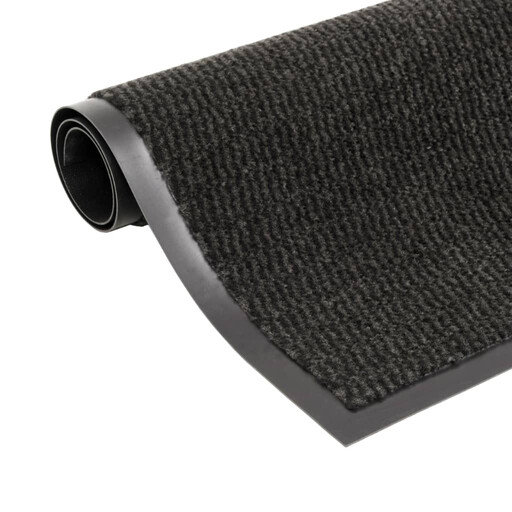
Why this product suits this profile: The 60x90-cm woven doormat provides generous space for everyday use, while its black colour helps disguise everyday dirt.
The product description specifies a flexible anti-slip rubber backing, a robust woven structure and cleaning for the entire mat.
100% polypropylene, a surface weight of 1.960 g/m², a black colour and a size suitable for many entrances.
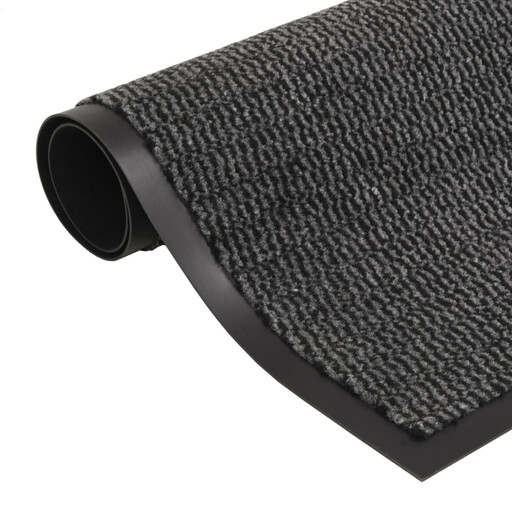
Why this product suits this profile: The tufted surface, weight of 1.960 g/m² and understated anthracite colour are well suited to entrances where functionality and discreet styling need to work together.
The low height of 5,5 mm reduces the risk of doors catching on the mat. The specified anti-slip rubber backing helps prevent it from moving across the floor.
Tufted polypropylene, 60x90 cm, an anthracite-coloured surface and stated resistance to moisture and mould.
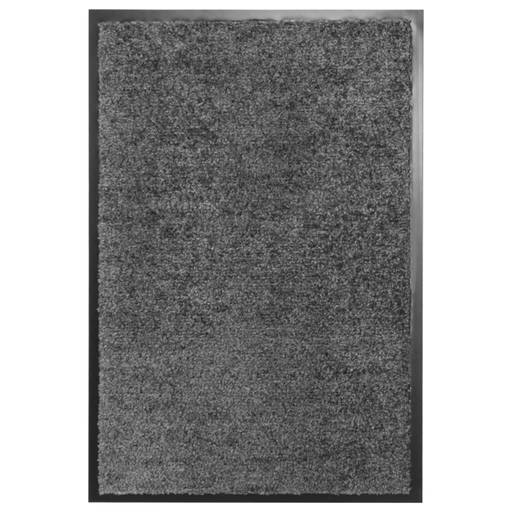
Why this product suits this profile: This washable doormat is described as suitable for indoor and outdoor use, making it a good choice for households with pets or children, or anyone who needs to clean their mat frequently.
Its stated machine-washable design means cleaning is not limited to vacuuming. However, the PVC backing and 9-mm thickness should still be suitable for the floor and door clearance.
Polyamide pile, stated absorption capacity of around 2,5 l/m², a surface weight of 2.900 g/m² and a rollable design for transport or storage.
We have put together a complete, regularly updated list of products that fully meet these strict selection criteria and the safety regulations applicable in the EU.
To keep a doormat working effectively for as long as possible, vacuum it regularly or clean it according to the manufacturer’s instructions. Coarse sand acts like an abrasive and can put strain on both fibres and flooring. With a washable doormat, you should also follow the recommended washing temperature, spin cycle and drying instructions.
There are a few practical ground rules for positioning:
A 60x90-cm doormat provides enough space when several people use the entrance or shoes need to be wiped thoroughly. A 40x60-cm mat may be a better fit for narrow hallways and smaller doors. The key factors are the door width, available floor space and clearance between the floor and door leaf.
Place the mat on a level, dry and dust-free surface. A rubber or PVC backing can help improve grip. Once laid out, check that the edges lie flat and that the mat does not move when stepped on. Particularly smooth floors may require an additional suitable underlay.
That depends on how heavily it is used. In a private household, regular vacuuming followed by more thorough cleaning when needed is often sufficient. In offices, apartment buildings or shops with heavy footfall, the mat should be cleaned more frequently. Washable models offer a practical advantage here, provided the manufacturer’s care instructions are followed.