
Lieferung heute & morgen

Qualitätsgarantie

Willkommens-Angebote freischalten: KOSTENLOSE Lieferung | Bis zu 80 % RABATT | Kostenlose 30-Tage-JoyPlus-Testphase
App herunterladen
If you want to buy electrical appliances online, you'll find a huge selection for the home, mobile power supply, solar energy and urban mobility. But price alone isn't enough to make a decision. What really matters is the actual performance, the right connections, safety features, what's included in the box, and whether the product is suitable for your intended use.
With a power station, an inverter or an electric vehicle, several power ratings may be listed. A 3000W inverter, for example, might show a continuous power output of 3000 watts and a peak power of 6000 watts. The peak power is only available for short bursts and isn't suitable for continuous operation.
The same goes for steam irons: a claim of "up to 3000 watts" doesn't automatically mean a constant power draw of 3000 watts. Buyers should distinguish between rated power, maximum power and the actual operating mode.
With an electric vehicle or a mobile power supply, the range or running time depends on several factors: load, speed, temperature, terrain, tyre pressure and connected devices. A stated range of up to 80 or 115 kilometres is therefore a guide figure, not a guaranteed everyday range.
With solar products, you should also check whether the capacity figure refers to the battery, the inverter or the whole bundle.
A ceramic hob needs the right built-in dimensions, adequate ventilation and, in many cases, installation by a qualified professional. When buying an electric motorcycle, you'll also need to factor in registration, third-party insurance, a driving licence and possibly final assembly.
When buying household appliances online, you should also check what's included in the box, the mains voltage, plug type, warranty and guarantee information, and the returns policy.
For every appliance, compare the power consumption in watts with your existing circuit and your planned use. A 3000-watt appliance can put a heavy electrical load on a standard 230-volt connection. With a 3000-watt ceramic hob, the stated fuse rating of 16 A is an important thing to check.
With a power station, it's not just watts that count, but also the capacity in watt-hours (Wh). A battery with 1,024 Wh can theoretically power a 100-watt device for around ten hours. In practice, conversion losses and the device's own power consumption reduce the usable time.
A solar storage system must be compatible with the solar panels, inverter and monitoring system. Check the input voltage, output power, plug types and whether the system can be expanded. With a 3000W inverter, it's also important whether it delivers a pure sine wave. This output form is better suited to many sensitive electronic devices than a modified waveform.
With a steam iron, the water tank, steam output and care functions are key. A larger tank capacity can reduce refilling; anti-drip, anti-scale and self-cleaning functions make maintenance easier, but they don't replace the care instructions in the user manual.
Before buying a built-in appliance, the external dimensions and cut-out dimensions must match. According to the product details, the Ciarra CRGDBCH302T ceramic hob requires a cut-out of 260 × 490 mm and features, among other things, a residual heat indicator, child lock, automatic pan detection and overheat protection.
With a road-legal electric motorcycle, you need to check the vehicle class, COC document, vehicle identification number (VIN) and number of permitted seats. An L3e-A1 model is not an electric bicycle and not a moped. For use on public roads in Germany, registration, number plates, third-party insurance, the appropriate driving licence and protective clothing may be required.
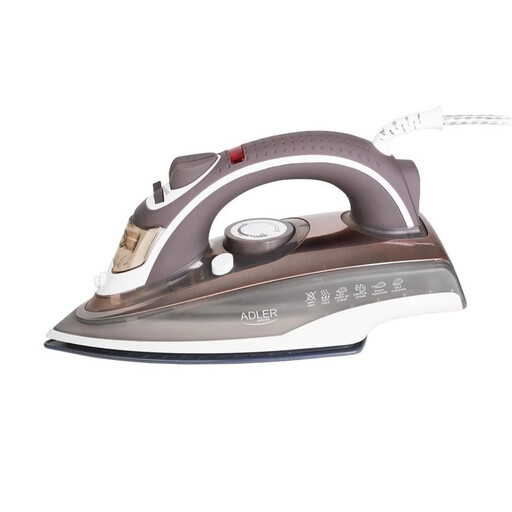
Why this product fits the profile: This steam iron features a ceramic soleplate, a 310 ml water tank and a stated maximum power of 3000 watts for regular household use.
The specifications distinguish between 1800–2200 watts rated power and a maximum of 3000 watts. Anti-drip, anti-scale and self-cleaning functions are explicitly listed.
20 g/min continuous steam, 310 ml water tank, plus spray function and ceramic soleplate.
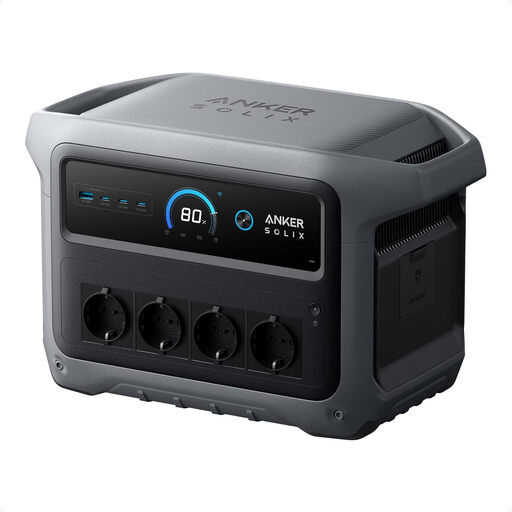
Why this product fits the profile: This power station is designed for backup power, camping and mobile power supply, combining 1,024 Wh battery capacity with a stated output power of 2,000 watts.
Capacity and output power are listed separately. This makes it easier to match the expected running time with the power consumption of connected devices.
LiFePO4 battery with 1,024 Wh and 2,000 W output power for various mobile applications.
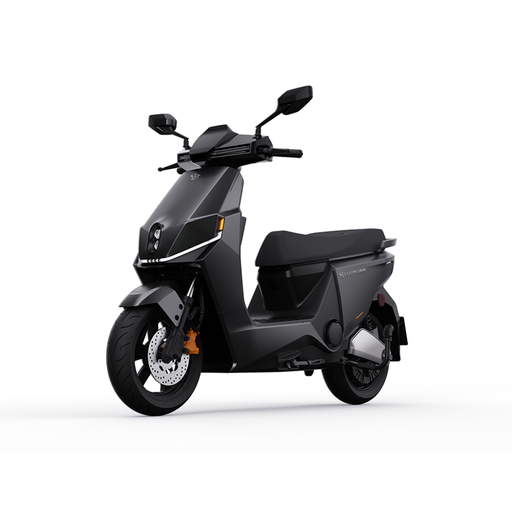
Why this product fits the profile: According to the product details, this electric motorcycle is classified as L3e-A1, reaches up to 80 km/h and has two designated seats.
The product information states the vehicle class, COC, VIN and the steps required for registration, insurance and driving licence in Germany.
3.0 kW 15/30-minute power, up to 80 km stated range and original COC included.
We've put together a full, regularly updated list of products that fully meet these strict selection criteria and the safety regulations in force in the EU.
Depending on your needs, other models might also be of interest:
First, check the intended use, mains voltage, power consumption, dimensions and what's included in the box. For devices with a rechargeable battery or disposable battery, also check the capacity, charging time and whether the battery is replaceable. For built-in appliances, the external dimensions and cut-out dimensions must be compared separately.
Divide the capacity in watt-hours by the power consumption of the device you're powering. With 1,024 Wh and 100 watts, you get a theoretical running time of about 10.24 hours. Conversion losses, the power station's own consumption and safety margins will reduce the practical value.
Pay attention to the vehicle class, a matching COC, that the VIN matches on the vehicle and in the documents, and the requirements for registration, number plates, third-party insurance and driving licence. Before buying, you should check the current regulations with the relevant authority or your insurer.