
Lieferung heute & morgen

Qualitätsgarantie

Willkommens-Angebote freischalten: KOSTENLOSE Lieferung | Bis zu 80 % RABATT | Kostenlose 30-Tage-JoyPlus-Testphase
App herunterladen
Anyone looking to buy electronics and household appliances online will find a wide range of products for the home, mobility, personal care and entertainment. However, product pages often list numerous technical specifications, and their importance in everyday use can vary considerably. A high wattage, long battery life or large capacity alone says little about whether a product is right for your needs.
Claims such as “up to 60 minutes’ runtime”, “55 kPa suction power” or “110,000 revolutions per minute” generally refer to specific operating modes or test conditions. For example, a cordless vacuum cleaner’s runtime drops significantly in maximum mode. With a hairdryer, performance depends not only on motor power, but also on the combination of temperature settings, airflow and attachments.
You should therefore always check:
A Type 2 11 kW EV charging cable will not automatically fit every electric vehicle. The connector type, the output of the on-board charger and the cable length are all important. Similarly, an iPhone screen protector may not be suitable for a different model, even if the screen sizes are similar. With an iPad keyboard case, you need to check the exact model number on the back of the tablet.
Before buying a washing machine, you should consider the available space, door opening, connections and weight. For storage baskets and waste bins, the internal dimensions, opening size and load capacity are important. Ceramic bowls require secure packaging and should be checked for cracks or chips before first use.
For household appliances, capacity and consumption are often more meaningful than a high rated power. For example, the Samsung WW7000D washing machine offers 11 kg capacity, 1,400 revolutions per minute and an A energy efficiency class. Its stated weighted energy consumption is 42 kWh per 100 wash cycles. You should also consider its dimensions of 600 × 850 × 600 mm and a spin noise level of 72 dB(A).
With a cordless vacuum cleaner, you should distinguish between suction power, dust container capacity, filter maintenance and battery life. A large dust container means it needs emptying less often, while a HEPA filter system must be cleaned regularly and allowed to dry completely.
For a Type 2 11 kW EV charging cable, 16 A, three-phase charging and vehicle compatibility are important criteria. According to the product information, the GONEO cable is designed for Type 2 and CCS2 vehicles, as well as plug-in hybrids. It is not compatible with J1772, CCS1 or CHAdeMO. The stated IP54 protection rating describes protection against dust and splashing water, but does not replace dry, appropriate storage.
When choosing vehicle lighting, you should check its approval status. According to the product information, the OSRAM NIGHT BREAKER LED SMART ECE H11 is homologated under ECE R37 and designed for H11 sockets in 12-volt vehicles. Before fitting, the socket, voltage and vehicle specifications must match. You can find more information in the selection of H11 bulbs.
A smartphone gimbal should be suitable for the size and weight of the smartphone you use. The maximum load may be exceeded if the phone itself is heavy or additional accessories are attached. The gimbal must not be switched on without a smartphone mounted, as this can place unnecessary strain on the motors and axes.
When choosing ANC Bluetooth headphones, you should consider battery life, Bluetooth version, wearing style and protection rating in addition to noise cancellation. According to the product information, the EarFun Air Pro 4i offer Bluetooth 5.4, up to 40 hours of total playback with the charging case, IP55 and multipoint connectivity. Actual battery life depends, among other things, on volume, codec and whether noise cancellation is enabled.
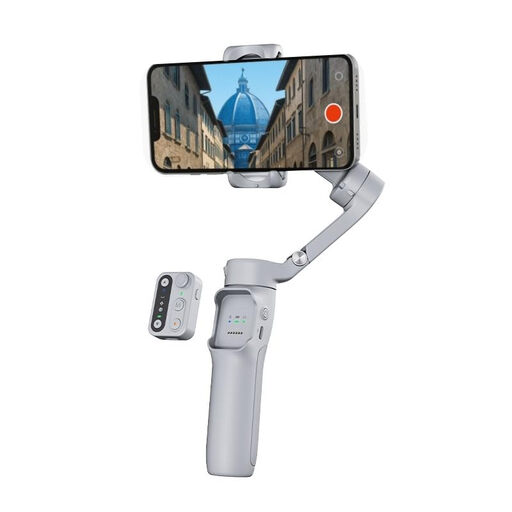
Why this product suits this profile: This foldable 3-axis gimbal is designed for users who want to stabilise smartphone videos while out and about, without taking larger camera equipment with them.
The specifications state an 11-hour battery life, a detachable remote control and a device weight of 361 grams. You should check the maximum load capacity before use.
3-axis stabilisation, foldable design, Bluetooth remote control and support for both portrait and landscape orientation.
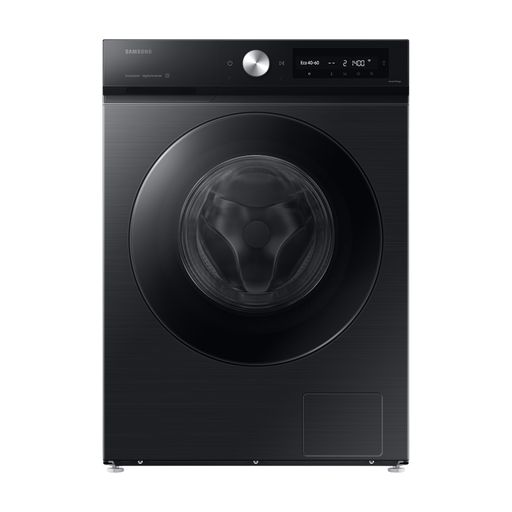
Why this product suits this profile: For households that regularly wash large loads, capacity, programmes, consumption and noise levels are useful points for comparison.
Alongside smart features, specific figures such as 11 kg capacity, 42 kWh per 100 cycles and 72 dB(A) are provided. The dimensions and water connection still need to be checked before purchase.
A energy efficiency class, 11 kg drum, 1,400 rpm, Wi-Fi control and several selectable washing programmes.
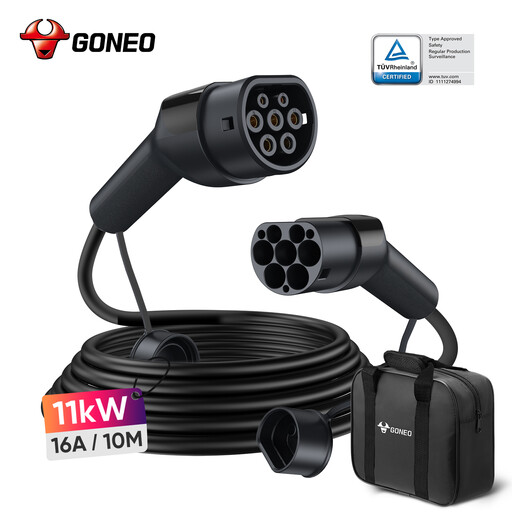
Why this product suits this profile: The 10-metre version offers extra flexibility when the charging point and vehicle are not parked directly next to each other.
The connector type, current, 11 kW design and exclusions are specified. According to the product description, the cable does not support vehicles with a 7 kW on-board charger.
Type 2 to Type 2, 16 A, three-phase charging, IP54, carry bag and a temperature range from -40 °C to +50 °C.
We have put together a complete, regularly updated list of products that fully meet these strict selection criteria and the safety regulations applicable in the EU.
Before completing your purchase, tick off the following points:
Start by comparing the data relevant to your intended use: compatibility, dimensions, energy consumption, capacity, connection type and contents. Marketing terms should only be assessed afterwards. Product reviews can provide additional insights, but they do not replace the manufacturer’s technical specifications.
Lifespan depends on the design, usage, care and availability of spare parts. A washing machine should not be overloaded on a permanent basis. With a cordless vacuum cleaner, the operating mode, charging habits and filter cleaning all affect how long it remains in use. Batteries are wear parts and may not be easily replaceable, depending on the product.
For washing machines, energy consumption per 100 cycles, water consumption and how often programmes are run are key factors. With battery-powered devices, the main running cost is the electricity used for charging; practical runtime depends on the selected power level. For charging accessories, the vehicle, charging point, electricity tariff and on-board charger determine the actual costs and charging speed.