
Lieferung heute & morgen

Qualitätsgarantie

Willkommens-Angebote freischalten: KOSTENLOSE Lieferung | Bis zu 80 % RABATT | Kostenlose 30-Tage-JoyPlus-Testphase
App herunterladen
When you want to buy a freezer, you will often compare the price and capacity first. However, other details are important for making the right choice in the long term: will the appliance fit through doors and into alcoves? Is it approved for an unheated cellar or garage? How much energy does it use per year, and how demanding is maintenance?
Three common purchasing misconceptions can lead to unnecessary costs:
For single-person households or as an additional appliance, a small freezer with around 60 litres is often sufficient. A mini freezer such as the COMFEE' RCU40WH2(E) offers 31 litres and is suitable for limited floor space, offices or individual supplies. For several people, a 200-litre freezer or larger may be a sensible choice.
A freestanding freezer needs sufficient clearance on all sides for air circulation. Before buying, check the appliance’s width, height and depth, as well as the dimensions of doors, stairways and the installation area. In a small kitchen, a slim design can make all the difference. A fridge freezer or fridge with freezer compartment, on the other hand, saves you from needing a separate appliance, but often provides less dedicated freezer space.
A No Frost freezer actively removes humid air from the interior. This is designed to prevent ice from forming in the freezer compartment, meaning that manual defrosting is not required for these models according to the product specifications. Low Frost systems reduce ice formation, but do not eliminate the need for defrosting entirely.
A fast-freeze function, also known as a Super Freeze function, temporarily lowers the temperature further when larger quantities of fresh food are added. It is useful after a big food shop, but should be switched off again after the recommended period unless the appliance does this automatically.
Also look for the 4-star rating. On freezers, this indicates a storage temperature of at least −18 °C and is relevant for storing frozen food over longer periods.
The EU energy efficiency scale runs from A to G. A freezer with energy efficiency class E is not automatically unsuitable. Also compare the stated annual consumption in kWh and the capacity. A larger appliance may use more electricity despite having the same rating.
A quiet freezer often produces around 36 to 40 dB(A). This value is particularly relevant for open-plan kitchens, living areas or offices. For a freezer intended for the garage, you must pay particular attention to the climate class as well as the noise level. Some models are designed for unheated rooms down to specific sub-zero temperatures, while others require an ambient temperature of at least 16 °C at all times.

Why this product suits this profile: Its compact 60-litre design is suitable for single-person households, small households or use as a second appliance where space is limited.
Three separate compartments make organisation easier. The reversible door and adjustable feet help you adapt the appliance to its location.
4-star freezing performance, three storage compartments and mechanical temperature control in a compact design.
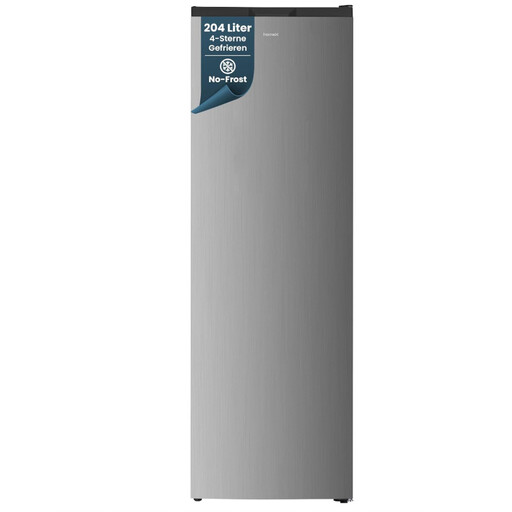
Why this product suits this profile: With 204 litres of usable capacity, No Frost and a Super Freeze function, it is ideal for households that regularly store larger quantities and want to reduce maintenance.
According to the product description, No Frost prevents ice build-up. The stated consumption of 222 kWh per year enables you to assess running costs more precisely.
204 litres of usable capacity, 39 dB(A), six storage compartments and a reversible door with energy efficiency class E.
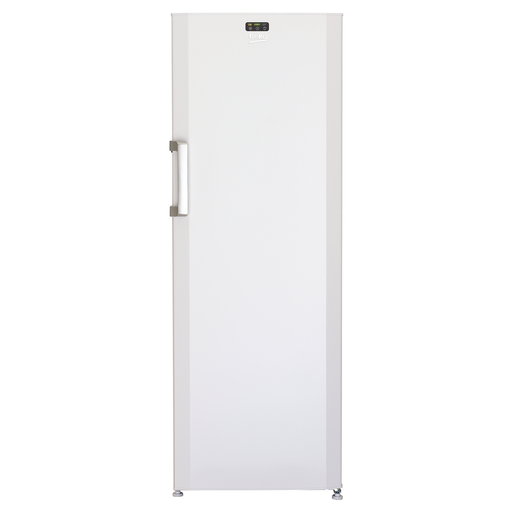
Why this product suits this profile: Its large capacity is designed for storing supplies. According to the product specifications, the appliance can be used in unheated rooms down to −15 °C.
The temperature warning alerts you when the internal temperature rises. MinFrost is designed to reduce ice formation, but does not replace checking and maintaining the appliance when required.
244 litres, five drawers, two flap compartments, fast-freeze function and 36 dB(A), according to the product specifications.
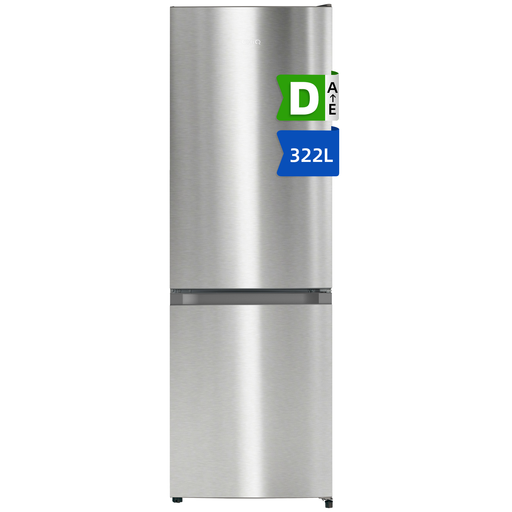
Why this product suits this profile: The combination of 226 litres of fridge space and 96 litres of freezer space covers everyday chilling needs and additional frozen-food storage in one appliance.
Check the dimensions before buying: 59.5 cm wide, 185.5 cm high and 63.5 cm deep. The stated climate class covers 10 to 43 °C.
Total No Frost, annual consumption of 196 kWh according to the product data, 37 dB(A), energy efficiency class D and a fast-freeze function.
We have put together a complete, regularly updated list of products that fully meet these strict selection criteria and the safety regulations applicable in the EU.
Place the appliance on a level, stable surface and observe the ventilation clearances specified in the instructions. Direct heat sources, radiators and strong sunlight can increase energy consumption. In a garage, you should also check whether the appliance’s minimum ambient temperature is compatible with the actual room temperature.
For a rough cost calculation, multiply the annual consumption in kWh by your personal electricity tariff. Actual costs depend on factors including room temperature, how full the appliance is, how often the door is opened and the condition of the door seal. Hot food should be allowed to cool before freezing. A well-filled, clearly organised drawer layout reduces the time the door needs to remain open.
This depends on your shopping habits and how much food you store. For one person or as an additional appliance, 31 to 60 litres may be sufficient. Couples and small families often choose medium-sized models. If you regularly batch-cook or store larger quantities, you should compare models from around 200 litres upwards.
Only if the manufacturer’s specifications permit it. Check the climate class and ambient temperature range. According to the product data, appliances such as the Beko FS127940N are designed for unheated rooms down to −15 °C. Other models require a minimum temperature of 10 or 16 °C and are not suitable for a cold garage.
Its lifespan depends on usage, ventilation, maintenance, and the quality of the seals and compressor. A single fixed number of years is not a reliable guide. Check the warranty conditions and availability of spare parts, and clean the appliance regularly. If you notice unusual noises, damaged seals or significant ice build-up, investigate the cause promptly.