
Lieferung heute & morgen

Qualitätsgarantie

Willkommens-Angebote freischalten: KOSTENLOSE Lieferung | Bis zu 80 % RABATT | Kostenlose 30-Tage-JoyPlus-Testphase
App herunterladen
A freezer provides extra space for frozen food, supplies and home-frozen ingredients. The range extends from compact mini freezers for single-person households to upright freezers with more than 200 litres of usable capacity. Chest freezers and fridge freezers may also be suitable, depending on your living situation.
As a Joybuy Product Recommendation Officer, I filter product information according to clear, verifiable criteria. Some purchasing decisions may seem practical at first glance, but can lead to unnecessary effort or higher running costs in everyday use.
A large litre figure on the packaging does not always describe the storage space actually available. The key figure is the net capacity. A freezer with 200 litres of usable capacity may be sufficient for a multi-person household, while a smaller appliance is more suitable as an additional freezer.
An inconvenient interior layout can also reduce the available space. A freezer with drawers makes sorting easier, but may be less flexible for very tall or bulky packaging. Flap compartments and removable baskets offer different ways to organise your food.
A No Frost freezer prevents ice from forming inside the appliance through technical air circulation. This can significantly reduce the need for manual defrosting, or make it unnecessary with a genuine Total No Frost system. Low Frost and MinFrost systems, on the other hand, only reduce ice formation. Depending on the appliance, occasional defrosting may still be required.
Before buying, check the exact description in the technical specifications: No Frost, Low Frost and MinFrost do not mean the same thing.
The energy efficiency class alone, on a scale from A to G, is not enough for comparing costs. The annual consumption in kilowatt hours shown on the energy label is more relevant when it comes to running costs. A larger class E appliance may use more electricity than a smaller model in the same class.
For a rough estimate:
Annual consumption in kWh × your electricity price per kWh = approximate annual electricity costs
Actual consumption depends on factors including the ambient temperature, how full the appliance is, how often the door is opened and the temperature setting.
A freestanding freezer can be positioned flexibly in the kitchen, cellar, utility room or office. Before ordering, measure the width, depth and height, as well as the clearance required for ventilation. You should also take the door opening into account. A reversible door is particularly useful where space is limited.
A chest freezer usually provides a spacious interior and is suitable for storing larger quantities. However, you will often need to lean over the chest to access the contents. Baskets help with organisation, but do not replace a clear sorting system.
As a rough guide:
A freezer with drawers provides quick access to meat, vegetables, ready meals and ice cream. Transparent fronts make it easier to see what is inside. With a chest freezer, on the other hand, the internal dimensions and number of removable baskets are key considerations.
For kitchens, open-plan layouts or offices, a quiet freezer rated at around 36 to 40 dB(A) may be more comfortable than a considerably louder model. Always compare the stated figure with the specific product data sheet.
If you plan to install the appliance in a garage or unheated cellar, the climate class and permitted ambient temperature range are important. Not every appliance is suitable for cold rooms. According to the product information, for example, the Beko model in this selection is designed for unheated rooms down to −15 °C. Other appliances require an ambient temperature of at least 10 °C or 16 °C.
The following recommendations group the available models according to space requirements, features and typical use. Product data such as capacity, noise level and energy efficiency class are based on the information provided by the respective suppliers.
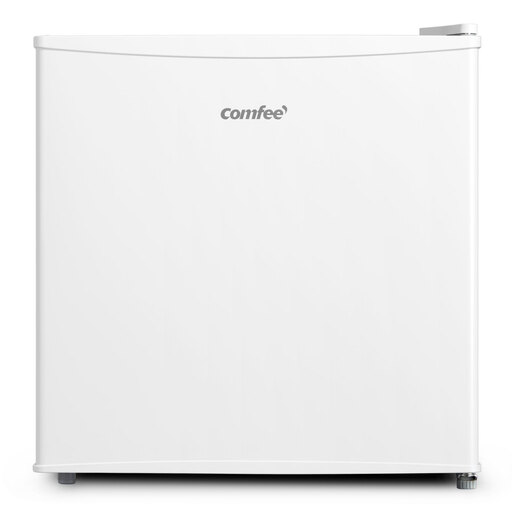
Why this product suits the profile: This compact appliance is suitable for single-person households, small flats, offices or as additional freezer space where floor space is limited.
Its small footprint makes the dimensions easy to manage. The reversible door prevents an awkward hinge position from further restricting the available space.
31 litres of usable capacity, energy efficiency class E, 41 dB and annual consumption of up to 147 kWh according to the product information.
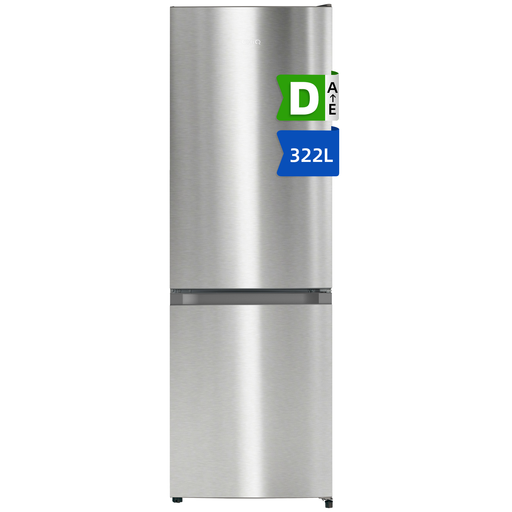
Why this product suits the profile: The combination of fridge and freezer space is appealing to households looking for one integrated appliance with a No Frost system and a low stated noise level.
The Total No Frost designation distinguishes this model from Low Frost appliances. The stated temperature range of 10 to 43 °C makes it easier to assess whether it is suitable for particular utility rooms.
322 litres total capacity, energy efficiency class D, annual consumption of 196 kWh and 37 dB according to the stated specifications.
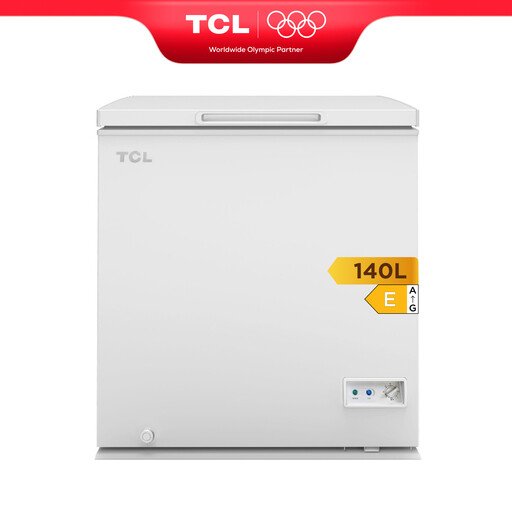
Why this product suits the profile: This chest freezer is aimed at users who store larger quantities and may want to move the appliance to a different location when required.
A removable basket helps keep smaller items accessible, while the balanced lid makes it easier to reach inside. Castors and a water drain support repositioning and cleaning.
140 litres of capacity, mechanical temperature control, storage basket and adjustable feet according to the product description.
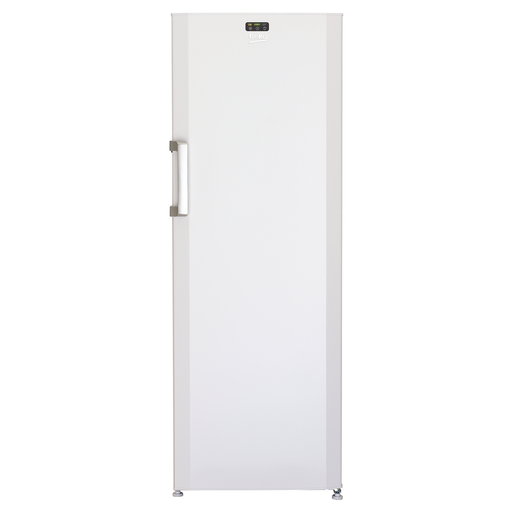
Why this product suits the profile: Its usable capacity is above the 200-litre size frequently sought by shoppers and provides organised storage for larger households.
Five drawers and two flap compartments make it easier to divide up the contents. The MinFrost system reduces ice formation, but according to the specifications does not eliminate the need for manual defrosting altogether.
244 litres of usable capacity, 36 dB, energy efficiency class E, fast-freeze function and reversible door.
We have put together a complete, regularly updated list of products that fully meet these strict selection criteria and the safety regulations applicable in the EU.
For single-person households, 30 to 70 litres may be sufficient. Couples and small households often look for between 90 and 170 litres. Families will often benefit from 200 litres or more. The key factor is not just the number of people, but also whether you regularly cook, batch-cook or shop in larger quantities.
A model rated at around 36 to 40 dB(A) is generally perceived as comparatively quiet in living areas. The actual impression depends on the room, flooring and operating condition. If the appliance is near a bedroom or in an open-plan kitchen, compare the stated noise level and airborne acoustical noise emission class.
Its service life depends on the model, how it is used, ventilation, location and maintenance. Correct installation, a clean door seal and keeping the ventilation openings clear all help ensure reliable operation. For appliances that require manual defrosting, ice should be removed as soon as it visibly affects the storage space or cooling performance.