
Lieferung heute & morgen

Qualitätsgarantie

Willkommens-Angebote freischalten: KOSTENLOSE Lieferung | Bis zu 80 % RABATT | Kostenlose 30-Tage-JoyPlus-Testphase
App herunterladen
Anyone looking to buy a freezer will often compare capacity and price first. However, that is not always enough. A model may offer plenty of storage space on paper but still be unsuitable for the intended location. Terms such as No Frost, energy efficiency and “quiet operation” should also be assessed using specific data.
A large freezer requires more than sufficient width and height. Depth, door-opening angle and the distance from the wall must also be taken into account. In a small kitchen or narrow utility room, a deep appliance can make it difficult to access drawers.
Before buying, measure the space where the freezer will stand and check the route it will take to get there: door widths, staircases and turning areas can be crucial when moving tall upright freezers.
A No Frost freezer circulates cold air and reduces or prevents ice build-up inside the appliance. Low Frost or MinFrost models, on the other hand, may still develop a thin layer of ice. These systems reduce the effort involved in defrosting, but do not necessarily eliminate the need for manual defrosting.
Always check the manufacturer’s precise specification: “No Frost” is not the same as “Low Frost” or “MinFrost”.
The energy efficiency scale runs from A to G. For a realistic assessment, the annual energy consumption in kWh is also important. A large class D appliance may use more electricity than a considerably smaller class E model. Wherever possible, compare appliances with a similar net capacity and take your household’s electricity price into account.
The stated net capacity indicates the storage space that is actually available. For singles or couples, a small freezer with around 60 to 100 litres may be sufficient. Families or households that regularly batch-cook will often need considerably more space.
Drawers make sorting easier, while flaps and removable shelves can accommodate larger packages. Transparent fronts help you find food more quickly and keep the door open for less time.
A noise level of around 34 to 40 dB is often perceived as relatively unobtrusive. In an open-plan kitchen, living area or next to a bedroom, this figure may be more important than having an additional drawer.
For a freezer for the garage or an unheated cellar, the climate class is crucial. According to the product information, some models in the selection are suitable for ambient temperatures as low as -15 °C. This does not automatically apply to every upright freezer. Therefore, check the permitted ambient temperature carefully.
A freezer with a fast-freezing function can lower the temperature more quickly after larger quantities of food have been added. This function should only be used as described in the operating instructions and should not be left on continuously.
A freezer with a reversible door hinge offers greater flexibility when positioning the appliance. Check whether you are allowed to change the hinge yourself and whether there is enough space beside the appliance to do so. A temperature or door alarm can indicate a possible interruption to the cold chain in the event of a power cut or if the door has not been closed fully.
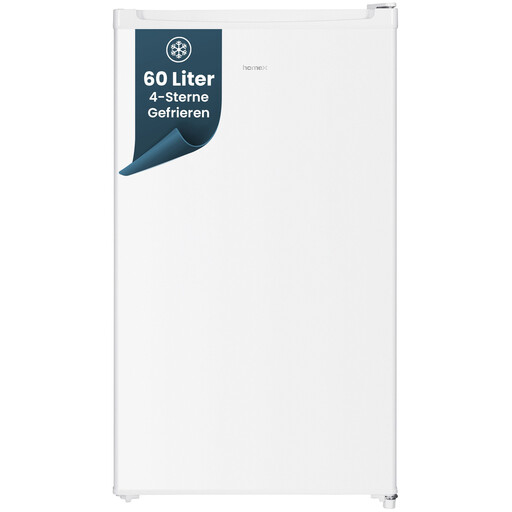
Why this product suits this profile: With a 60-litre net capacity, a height of 85 cm and mechanical temperature control, this model is suitable for singles, couples or as additional freezer space.
The compact design reduces the risk of allocating too much floor space to storage you will not use. The reversible door hinge makes positioning easier.
60-litre net capacity, 4-star classification, freezing capacity of 2.8 kg per 24 hours and a noise level of 40 dB.

Why this product suits this profile: This appliance combines a generous net capacity with No Frost, digital controls and a stated noise level of 34 dB.
No Frost eliminates the need for regular manual defrosting. Its suitability for unheated rooms down to -15 °C expands the range of possible installation locations.
286-litre net capacity, energy efficiency class D, freezing capacity of 17 kg per 24 hours, No Frost and a reversible door hinge.
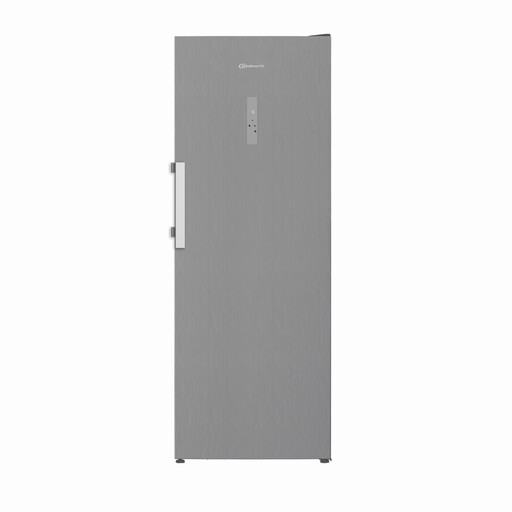
Why this product suits this profile: Its generous net capacity is designed for households with substantial supplies, frequent batch cooking or significant freezer requirements.
The six drawers keep large supplies organised. No Frost reduces maintenance, while the door alarm alerts you if the door has not been closed.
404-litre capacity, freezing capacity of 19 kg per 24 hours, 38 dB, Fast Freeze and switchable cooling or freezing mode.
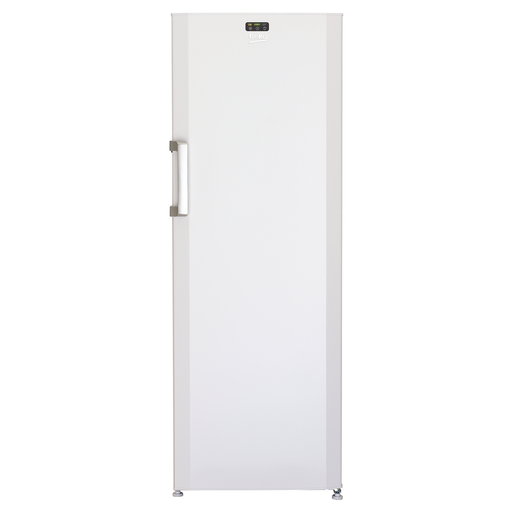
Why this product suits this profile: Five drawers and two flap compartments provide organised storage for family supplies, while the 36 dB noise level makes it suitable for use close to living areas.
The MinFrost system is clearly different from No Frost, but according to the product information it reduces ice build-up. A temperature alarm reports possible deviations.
244-litre net capacity, 36 dB, fast-freezing function, reversible door hinge and operation in unheated rooms down to -15 °C.
We have put together a complete, regularly updated list of products that fully meet these strict selection criteria and the safety regulations applicable in the EU.
Place the freezer on a level, stable surface. The clearances required by the manufacturer for ventilation must be observed. After transport, the appliance should remain upright for several hours, as specified in the operating instructions, before it is connected.
For many freezers, the optimum storage temperature is around -18 °C. Hot food should be allowed to cool before being stored. In the event of a power cut, keep the door closed wherever possible. The stated holding time depends on the model and is not a substitute for a consistently reliable power supply.
For a one- or two-person household, 60 to 180 litres may be sufficient. Families and households that like to keep food supplies often choose 200 litres or more. The key factors are how regularly you shop, batch-cook and freeze food.
No Frost reduces ice build-up and the need for manual maintenance. However, energy consumption depends on the design, net capacity, energy efficiency class, ambient temperature and usage. Therefore, compare the stated annual consumption in kWh.
That depends on the stated climate class and the permitted ambient temperature. Models that, according to the product data, are suitable down to -15 °C may be suitable for unheated rooms. Appliances without this specification should not automatically be operated in a cold garage.