
Lieferung heute & morgen

Qualitätsgarantie

Willkommens-Angebote freischalten: KOSTENLOSE Lieferung | Bis zu 80 % RABATT | Kostenlose 30-Tage-JoyPlus-Testphase
App herunterladen
If you want to buy a freezer, you should look beyond capacity and price. Floor space, ease of use, noise level, energy consumption and the intended installation location are also important. A mini freezer with 31 or 60 litres may be enough for single-person households, while families often benefit from an upright freezer or chest freezer with 200 to 300 litres.
The stated litre capacity describes the available interior space, but not necessarily how practical it is to use. A 100-litre freezer can usually be organised more clearly with drawers than a chest freezer of the same size. A chest freezer can accommodate larger packages flexibly, but smaller items are more likely to disappear beneath other frozen food.
Before buying, you should consider:
The energy efficiency classes on the EU label range from A to G. A device in energy efficiency class E should therefore be compared based on its actual annual consumption. Two models in the same class may use different amounts of electricity depending on their size, technology and usage.
Look out for:
A larger appliance with more capacity may use more electricity than a compact model, even if both have the same energy efficiency class. Annual consumption is therefore a more meaningful guide to ongoing costs than the efficiency class alone.
The description quiet freezer is of limited use without a measured value. For example, the models in our selection range from 37 to 40 dB. This value can be relevant for an open-plan kitchen, office or flat. In a cellar or garage, noise levels are usually less important.
A fast-freeze function should also be assessed according to your needs. Depending on the model, it can lower the temperature more quickly for newly added food, but may temporarily increase energy consumption. After freezing larger quantities, the function should be switched off again in accordance with the operating instructions.
An upright freezer takes up less floor space in terms of width and offers a quick overview thanks to its drawers. Models with NoFrost technology reduce ice formation and can eliminate the need for manual defrosting. However, they are often taller and require sufficient clearance above the appliance.
A chest freezer makes flexible use of the interior and is well suited to larger quantities, seasonal supplies or bulk packs. Check the available floor space, the lid opening height and access within the room beforehand. Wheels, baskets and a drain outlet make cleaning and repositioning easier.
Freezing performance is often stated in kilograms per 24 hours. It indicates how much fresh food can be frozen within this period. The four-star marking indicates a freezer compartment suitable for long-term storage at temperatures of at least -18 °C.
As a general guide:
A freezer for a garage or cellar must be suitable for the temperatures found there. Not every appliance may be operated in an unheated room. The climate class provides an indication of the permitted ambient temperature range. For cold cellars, choose a model specifically approved for low temperatures.
Also observe the ventilation clearances specified by the manufacturer. Insufficient air circulation can increase energy consumption and impair cooling performance. The appliance must stand securely and level, and be connected to a correctly earthed socket.
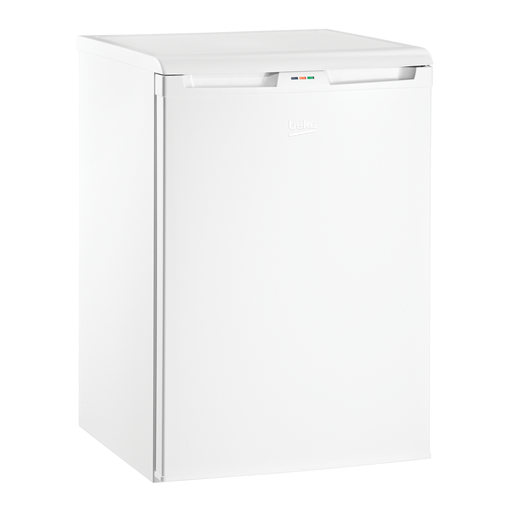
Why this product suits the profile: This freestanding tabletop freezer offers 95 litres of net capacity, making it suitable for small households or as an additional freezing solution.
The product details specify 37 dB, two drawers and a compartment with a transparent flap. This makes the capacity and noise level easy to assess.
95 litres of net capacity, MinFrost system, reversible door and energy efficiency class E.
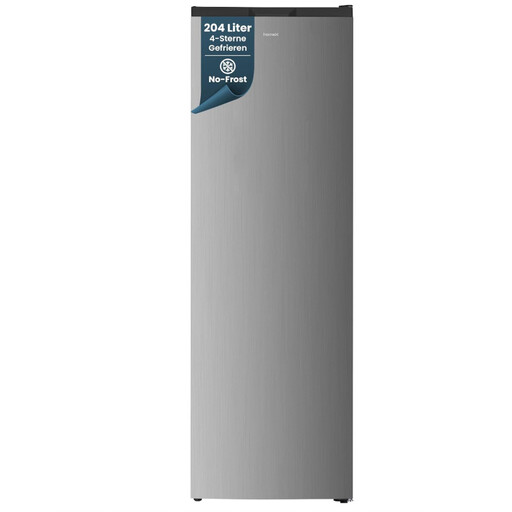
Why this product suits the profile: This upright freezer combines 204 litres of net capacity with NoFrost, a Super Freeze function and six compartments for well-organised food storage.
The specific noise level of 39 dB and stated annual consumption of 222 kWh make it easier to assess objectively rather than relying on a blanket advertising claim.
NoFrost, 204 litres of net capacity, reversible door and Super Freeze function.
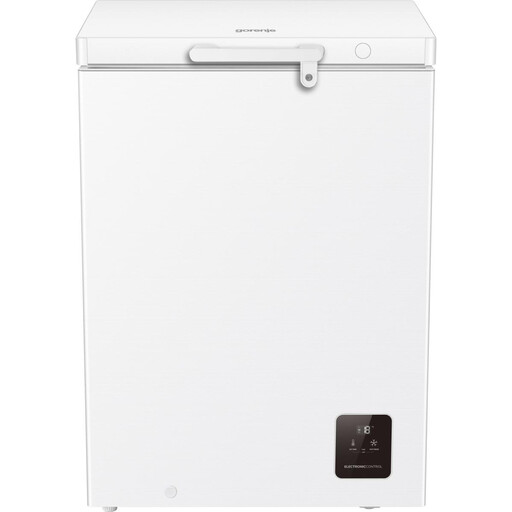
Why this product suits the profile: This chest freezer is an interesting option for households needing additional storage, as well as suitable cellar and garage areas.
The SN-T climate class specifies a range of 10 to 43 °C. This allows you to check whether the intended room is suitable before installation.
141 litres, 8 kg freezing capacity per 24 hours, 37 dB, fast-freeze function and up to 13 hours of storage during a power cut, according to the product details.
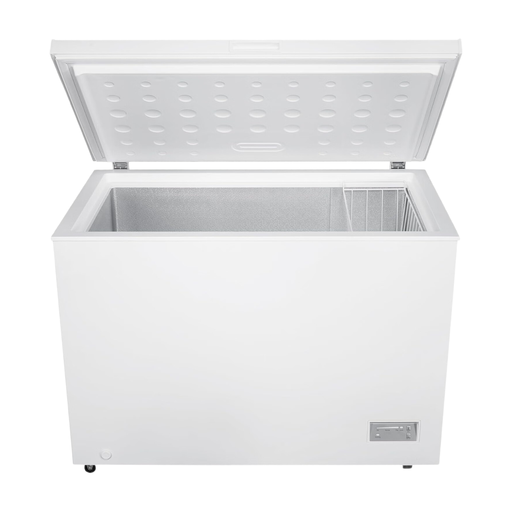
Why this product suits the profile: The spacious interior is ideal for families, larger supplies and households that regularly buy in bulk.
The product data specifies 308 litres, 40 dB, four wheels and a temperature alarm. This makes the space required, mobility and monitoring easier to assess.
308 litres of net capacity, temperature alarm, LED display, four wheels and energy efficiency class E.
We have put together a complete, regularly updated list of products that fully meet these strict selection criteria and the safety regulations applicable in the EU.
For one person or a couple, 60 to 100 litres may be sufficient if you only store small quantities. Families that regularly stock up should plan for around 150 to 300 litres. The key factors are how often you shop, the size of your household and the available floor space.
NoFrost reduces ice formation and can eliminate the need for manual defrosting. This is particularly convenient for a frequently used upright freezer. Nevertheless, check the stated annual consumption, noise level and interior layout, as NoFrost alone says nothing about total running costs or whether the appliance is suitable.
This depends on the climate class and the manufacturer’s approval. Unheated rooms can become very cold in winter. Check the permitted ambient temperature range, observe the ventilation clearances and position the appliance in a dry, stable location protected from direct heat or sunlight.