
Lieferung heute & morgen

Qualitätsgarantie

Willkommens-Angebote freischalten: KOSTENLOSE Lieferung | Bis zu 80 % RABATT | Kostenlose 30-Tage-JoyPlus-Testphase
App herunterladen
Anyone looking to buy a freezer should not be guided solely by capacity, special offers or keywords such as “No Frost”. For UK households, the right dimensions, actual usable capacity and intended ambient temperature are especially important. A model may offer plenty of storage space on paper, but still be impractical in a small kitchen or unheated garage.
The most important figure is the net or usable capacity. This describes the space actually available for food. Drawers, flaps and interior walls reduce the usable room. A freestanding freezer with 177 litres of usable capacity may therefore feel quite different in everyday use from a model with a similar gross capacity.
For single-person households or students, a small freezer with around 60 to 100 litres is often sufficient. Families storing supplies, frozen meals or home-frozen food will frequently need 170 to 250 litres. The number of litres is not the only consideration: the layout of the drawers and compartments is important too.
A freezer with No Frost reduces ice build-up through circulating-air cooling. This can significantly reduce the need for manual defrosting. Low-Frost or MinFrost systems also reduce ice formation, but they do not necessarily eliminate the need to defrost when required. The exact features should therefore be checked in the product specifications and user manual.
The EU energy label ranges from A to G. However, the rating alone does not indicate how high the running costs will be. The stated annual consumption in kilowatt hours and your individual electricity tariff are also relevant. A larger appliance may use more energy than a more compact model, even if they have the same rating.
A simple guide:
A freezer with drawers makes it easier to organise different types of food. Transparent fronts allow you to check the contents at a glance, while flaps may be suitable for larger or irregularly shaped packs. A mini freezer with just a few compartments saves floor space, but is less flexible for storing larger supplies.
Before ordering, measure the appliance’s height, width and depth, as well as the route it will need to take during delivery. The door also needs sufficient clearance to open fully. A freezer with a reversible door can be adapted more easily to the layout of the room. Adjustable feet help you level the appliance on a floor that is not completely even.
For an integrated fridge with a freezer compartment or a fridge freezer, you should also take the kitchen unit’s niche dimensions, door fitting and ventilation into account. A freestanding freezer, on the other hand, requires the manufacturer’s specified clearance around the appliance or at the back to allow heat to dissipate.
A freezer for the garage is only suitable if the manufacturer explicitly states that it can operate at the temperatures expected there. According to some product specifications, certain models can be used in unheated rooms at ambient temperatures as low as -15 °C. The climate class also indicates the ambient temperature range for which the appliance is designed.
Noise levels are also relevant. Figures of around 36 to 40 dB may be appealing for open-plan living areas, offices or bedrooms. However, the perceived noise level also depends on the floor, distance from the wall and room acoustics.
Freezing capacity is generally specified in kilograms per 24 hours. A fast-freeze function lowers the temperature further for a limited period when larger quantities of fresh food are added. It should be used in accordance with the instructions and switched off afterwards, unless it ends automatically.
A temperature alarm can alert you if the door is open or the temperature rises. This is particularly useful when storing larger quantities of food. The four-star rating indicates a storage temperature of at least -18 °C and should not be confused with small refrigerator compartments, which are only suitable for frozen food to a limited extent.

Why this product suits the profile: With 60 litres of usable capacity, this compact upright freezer is ideal for single-person households, students, offices or small kitchens. Its dimensions of 47.5 × 44.5 × 84.5 cm make it easy to position beneath a worktop.
The three separate compartments prevent loose, disorganised storage. The reversible door hinge also reduces the risk of the door being unable to open fully in confined spaces.
Four-star freezing performance, adjustable thermostat, freezing capacity of 6 kg per 24 hours and adjustable front feet.
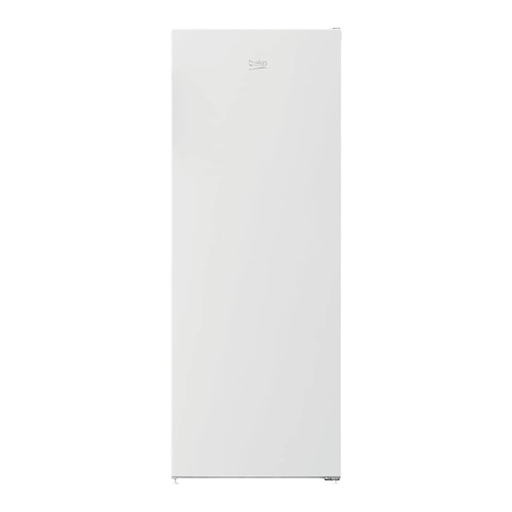
Why this product suits the profile: This freestanding freezer combines 177 litres of usable capacity with No Frost, three drawers and two additional compartments. It is well suited to households that want to keep their supplies organised on a regular basis.
The No Frost feature addresses the common expectation of reduced ice build-up. The temperature alarm highlights possible power interruptions or an incompletely closed door.
No Frost, fast-freeze function, reversible door hinge, 40 dB and operation in unheated rooms down to -15 °C according to the product specifications.
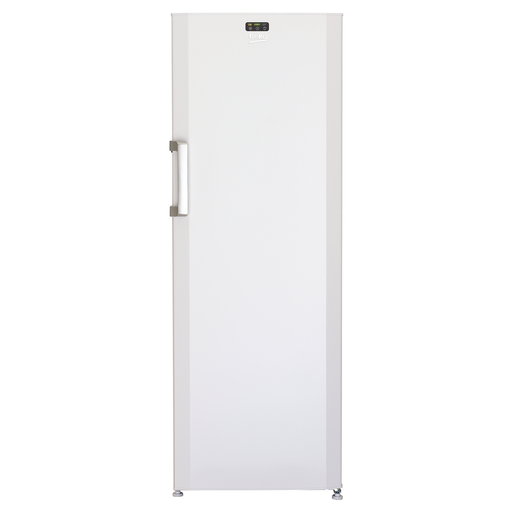
Why this product suits the profile: With a net capacity of 244 litres, this model is aimed at families or households with larger supplies. Five drawers and two flaps support organised, separate storage.
The transparent interior layout makes it easier to keep track of the contents and can prevent lengthy searching when the freezer is opened frequently. According to the product specifications, MinFrost reduces ice build-up, but the interior still needs to be checked.
244 litres of usable capacity, 36 dB, fast-freeze function, temperature alarm and reversible door hinge.
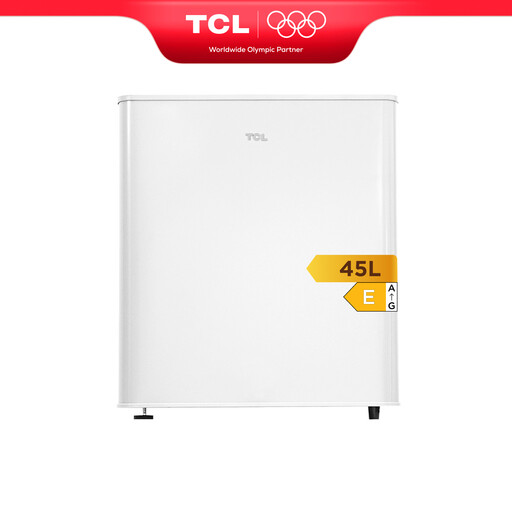
Why this product suits the profile: This compact cooling appliance with a small freezer compartment is suitable for bedrooms, offices, holiday flats or student rooms when only a small amount of frozen food is needed.
The separate figures of 42 litres of fridge capacity and 3 litres of freezer capacity make it clear that the small freezer compartment should not be mistaken for a full-size freezer.
45 litres of total capacity, compact dimensions of 44.9 × 48.5 × 51.2 cm, mechanical thermostat and a noise level of 40 dB.
We have put together a complete, regularly updated list of products that fully meet these strict selection criteria and the safety regulations applicable in the EU.
For a single-person household or a small secondary appliance, around 60 to 100 litres may be sufficient. Families or people who regularly batch-cook and store supplies will often benefit from 170 litres or more. The right size depends on how often you shop, the size of your household and the available space.
This depends on the climate class and the explicitly stated minimum ambient temperature. An appliance cannot automatically be used in an unheated garage. Before buying, compare the temperature range, humidity, ventilation and frost protection at the installation location with the manufacturer’s specifications.
The service life depends on factors including usage, care, location, door seal and ventilation. Regular cleaning, correct levelling, unobstructed ventilation paths and avoiding unnecessarily long door openings all help support trouble-free operation. If you notice unusual noises, damaged cables or a continuously rising internal temperature, switch the appliance off and contact customer services.