
Lieferung heute & morgen

Qualitätsgarantie

Willkommens-Angebote freischalten: KOSTENLOSE Lieferung | Bis zu 80 % RABATT | Kostenlose 30-Tage-JoyPlus-Testphase
App herunterladen
For many coffee lovers, the French press—also known as a plunger pot or coffee press—is the epitome of pure, unadulterated coffee enjoyment. The manual brewing process is a cherished ritual that promises full-bodied, aromatic coffee without paper filters or capsule waste. However, buying a French press comes with a few pitfalls that can quickly lead to frustration: grounds in your cup, fragile glass, or an unstable design.
As your Joybuy Product Recommendation Officer, I'm here to help you navigate these traps. This guide focuses on the objective features that distinguish a reliable coffee press from a poor one, ensuring your investment is a lasting one.
Marketing promises can often mask functional flaws. Pay close attention to these three weak points to avoid making a bad purchase:
To make an informed decision, you should focus on verifiable product characteristics. The following three parameters are crucial for the longevity and functionality of your coffee maker.
A key quality indicator is the use of heat-resistant borosilicate glass. Unlike conventional glass, this material can withstand sudden temperature changes. This means you don't have to worry about cracks or fractures when you fill the carafe with boiling water. A glass French press should always meet this standard to ensure safe, long-lasting use. Stainless steel alternatives offer greater durability and better heat insulation but alter the classic aesthetic.
A high-quality filter assembly consists of three parts: a spiral plate, a fine metal mesh screen, and a lower cross plate. The spiral plate must fit snugly against the carafe's inner wall to prevent coffee grounds from being pushed past the edge. The screen itself should be fine enough to retain sediment but not so fine that it clogs. Models from established brands like Bodum or Bialetti often feature precisely engineered filter assemblies that ensure a clean brew.
The size specification in "cups" is often misleading. One "cup" typically corresponds to only about 120 ml (4 oz). Therefore, a 3-cup French press usually has a capacity of just 350 ml, which is enough for a single large mug of coffee. If you want to make coffee for several people or to last the whole morning, a 1-litre French press (often labelled as an 8-cup model) is the more practical choice. Always check the capacity in millilitres or litres to find the right size for your needs.
Based on these objective criteria, we have identified a few models suitable for different user profiles.
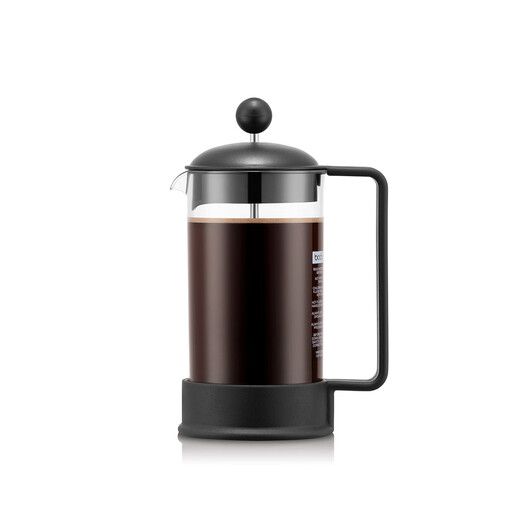
Why it's a good fit: Ideal for beginners or individuals looking for a reliable and straightforward plunger pot for their daily cup of coffee. The 350 ml size is perfectly dimensioned for one large mug.
The carafe is made of heat-resistant borosilicate glass, and the BPA-free plastic frame provides solid protection. The proven Bodum filter system ensures a clean brew with minimal sediment.
Offers proven brand quality and functional reliability at a very accessible price point. All parts can be disassembled for easy cleaning.
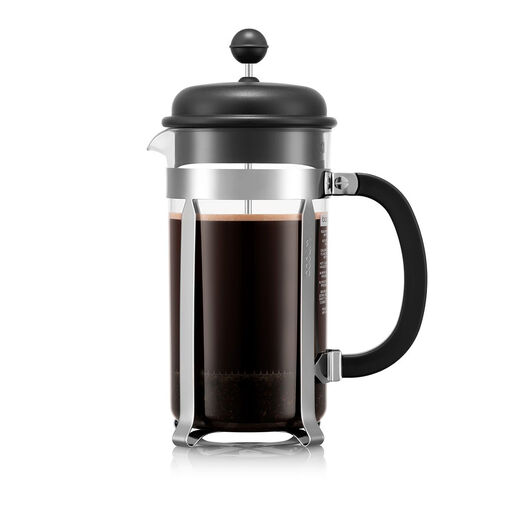
Why it's a good fit: With a 1-litre capacity, this coffee maker is ideal for families, the home office, or for serving guests. Its classic design is both functional and time-tested.
The robust, chrome-plated steel frame effectively protects the glass carafe from bumps and ensures a stable base. The construction is designed for durability with frequent use.
Large volume for preparing up to 1 litre of coffee. The glass carafe is dishwasher-safe, which simplifies daily cleaning.
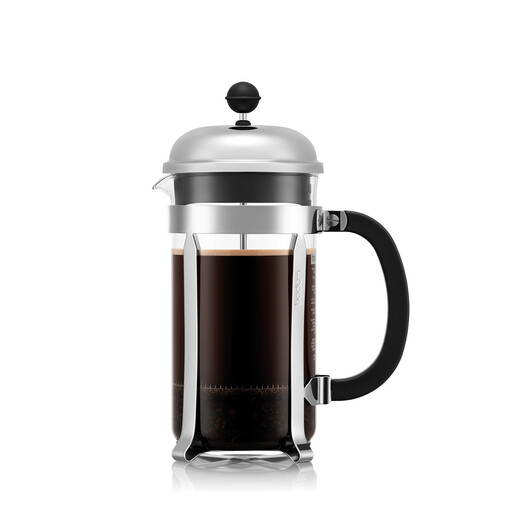
Why it's a good fit: The Chambord is the design icon among French press coffee makers. It's the right choice for anyone who values superior craftsmanship and a timeless aesthetic that makes a statement in any kitchen.
No compromises are made on materials here. The steel frame and lid undergo multiple chrome-plating processes for a durable, shiny finish that won't peel. The fit and finish of all parts are excellent.
Outstanding build quality and an iconic design that has been proven for decades. Bodum provides long-term availability of replacement parts (e.g., glass carafes) for this model.
We have compiled a complete, up-to-date list of products that fully meet these strict selection criteria and relevant safety standards.
The key is a combination of the right grind size and proper technique. Use a coarse, even grind (similar to the texture of coarse sea salt). Pour the water in slowly, and after the brewing time, press the plunger down slowly and steadily. Plunging too quickly stirs up the coffee grounds and forces fine particles through the screen.
A coarse grind is essential. Fine coffee powder, like that used for espresso machines, will clog the metal filter and lead to over-extraction, which makes the coffee taste bitter. If you grind your own coffee, choose the coarsest setting on your coffee grinder.
Remove the coarse coffee grounds with a spoon or spatula and dispose of them in your compost or bin (do not rinse them down the drain, as this can cause clogs). Rinse the carafe with warm water. Then, unscrew the filter assembly from the plunger and clean all parts thoroughly with water, using a soft brush and a little dish soap if needed. Most glass carafes are dishwasher-safe, but always check the manufacturer's instructions for the frame and lid.