
Lieferung heute & morgen

Qualitätsgarantie

Willkommens-Angebote freischalten: KOSTENLOSE Lieferung | Bis zu 80 % RABATT | Kostenlose 30-Tage-JoyPlus-Testphase
App herunterladen
Anyone looking to buy French wine online will find a wide selection of red wine, white wine and multi-bottle cases. However, comparing them is not always straightforward: terms such as Bordeaux, organic or “dry” each reveal only part of a wine’s character. The key factors are origin, grape variety, alcohol content, pack size and the information on the product label.
This buying guide from the Joybuy Product Recommendation Officer explains what shoppers in Germany should look out for and which wines suit different preferences.
A French brand name does not automatically mean that every stage of processing or bottling takes place in France. Look for information such as country of origin, region, IGP, AOC/AOP, as well as the responsible producer or bottler.
For example, Grand Sud Chardonnay Zero is described as a non-alcoholic Chardonnay with 0.0 % Vol., but the official product country is listed as Spain. It is therefore suitable as a non-alcoholic alternative, but should not be classified as French wine.
The flavour description dry mainly refers to residual sugar, rather than the overall taste experience alone. A dry French white wine can taste fresh because of its acidity, while a red wine can seem soft thanks to its fruit aromas. If you are looking for a sweet red wine, pay particular attention to the description “sweet” and the sugar content.
A 6-bottle case of wine contains six bottles of the same variety. This can be practical for celebrations, regular meals or keeping a supply at home. For beginners, however, a larger quantity is less suitable if they are not yet familiar with the flavour profile. You should also check the storage conditions, closure type and shelf life after opening.
The region provides initial clues about the style:
The grape variety helps with the initial selection, but is not a complete assessment of quality:
Before placing your order, read the information about sweetness, acidity, alcohol content and recommended serving temperature. These details are usually more useful when choosing a wine than general marketing claims.
The alcohol content should suit the occasion. In the products reviewed, the stated figures range from 0.0 % Vol. for a dealcoholised Chardonnay to 15.0 % Vol. for a red wine from La Clape. Non-alcoholic wine can be an option for driving, professional occasions or guests who specifically request it. Bear in mind that its taste, ingredients and nutritional values may differ from those of alcoholic wines.
For wine, the statement “contains sulphites” is also often relevant. If you are looking for organic wine, check for a control body number such as FR-BIO-01 or DE-ÖKO-039. This type of labelling refers to certified organic production and should be distinguished from general sustainability claims.
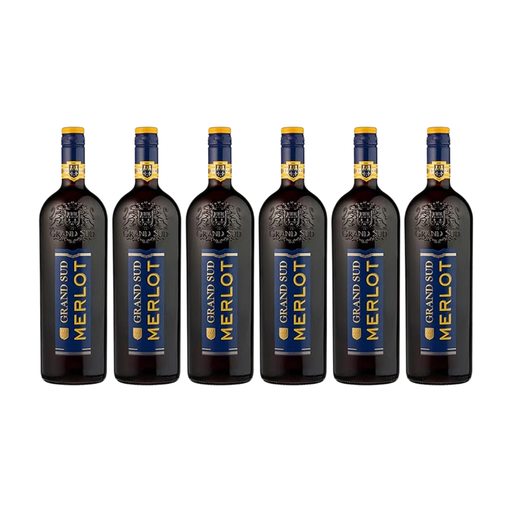
Why this product suits this profile: The case contains six 1-litre bottles, making it suitable for keeping in reserve and serving larger groups. The dry Merlot from French Languedoc-Roussillon is listed at 13 % Vol.
The region, grape variety, pack size, alcohol content and serving temperature are clearly stated. This makes it easier to compare the case with your needs before buying.
Six 1-litre bottles, a dry flavour and Merlot as the clearly specified grape variety.
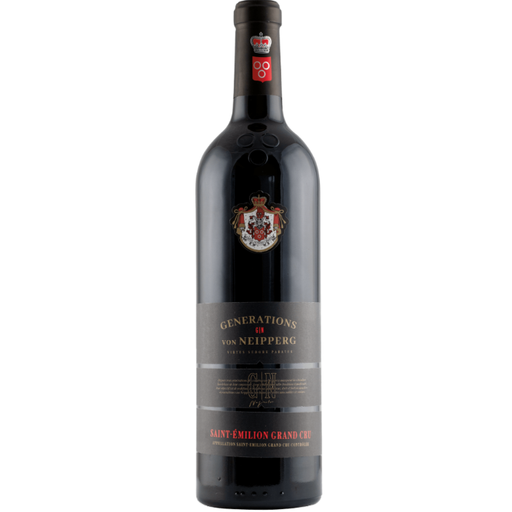
Why this product suits this profile: Its Saint-Émilion origin on Bordeaux’s right bank, the Cabernet Franc and Merlot blend, and the stated serving temperature of 18 °C provide clear guidance for a dinner.
The selection is based on verifiable information about the region, grape varieties, style and alcohol content, rather than unsubstantiated comparisons.
A dry, velvety and full-bodied style; listed as organic wine.
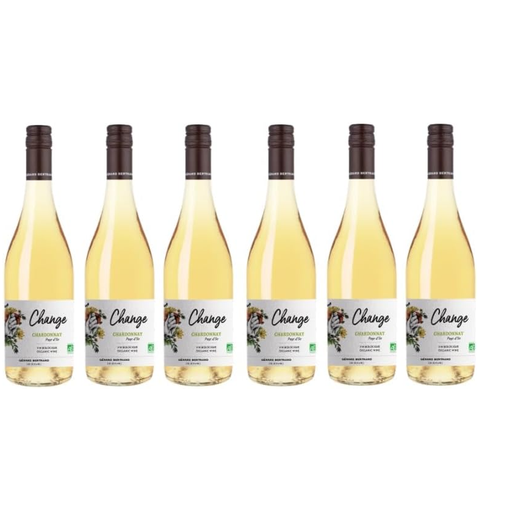
Why this product suits this profile: This French Chardonnay from Pays d’Oc is sold in a 6-bottle case and carries the organic control number FR-BIO-01. At 14 % Vol., it suits shoppers looking for a clearly certified organic option.
The organic certification is supported by a specific control number. The origin, closure and alcohol content are also listed.
Chardonnay grape variety, French origin and 6 × 0.75 litres per case.
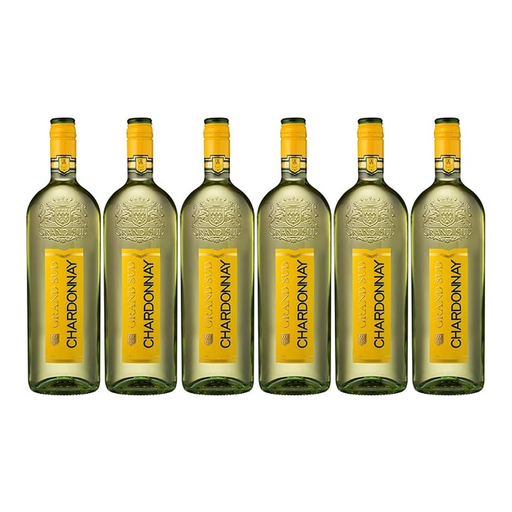
Why this product suits this profile: This dealcoholised Chardonnay is listed at 0.0 % Vol. and supplied in six 1-litre bottles. This makes it an appealing choice for non-alcoholic occasions and larger groups.
The product is not presented as being of French origin: the product details list Spain as the country. Its alcohol content and ingredients list should be checked carefully.
0.0 % Vol., Chardonnay grape variety, 6 × 1 litre and a stated serving temperature of 10–12 °C.
For a menu featuring grilled meat, product details suggest choosing dry Bordeaux red wines or a Merlot served at between 16 and 18 °C. Fresh white wines such as Sauvignon Blanc or a blend from Gascony often pair well with fish, seafood, vegetable dishes or light quiches.
A sweet red wine such as Le Sweet Filou Rouge can be served with desserts or mild cheese. The product details state 12 % Vol. and 4,6 g of sugar per 100 ml. If you prefer a dry wine, make sure you do not overlook this information.
You should also check the following before placing your order:
We have compiled a complete, regularly updated list of products that fully meet these strict selection criteria and the safety regulations applicable in the EU.
Unopened bottles should be stored somewhere cool and dry, protected from direct sunlight. Once opened, white wine should be kept in the fridge. The specific recommendation may vary depending on the product, so always follow the information on the label.
This depends on the type of wine, the closure and how it is stored. Many product details recommend consuming opened bottles within two to five days. Red wine should not be left open in a warm place for extended periods either.
No. Organic wine refers to certified organic production, not the alcohol content. Organic wines can also contain sulphites. For non-alcoholic alternatives, the alcohol content must explicitly be stated as 0.0 % Vol., or the product must be described accordingly.