
Lieferung heute & morgen

Qualitätsgarantie

Willkommens-Angebote freischalten: KOSTENLOSE Lieferung | Bis zu 80 % RABATT | Kostenlose 30-Tage-JoyPlus-Testphase
App herunterladen
If you want to buy fruit juice and fruit drinks online, you’ll find a huge selection: multi-fruit juice, berry juice, vitamin drinks, juice boxes, shots and practical bulk packs. However, comparing them isn’t always straightforward. Terms like “with vitamins”, “100% juice” or “fruity” don’t automatically mean the same thing.
To make shopping straightforward for families, busy professionals and active people, it’s worth focusing on a few key details. The most important factors are fruit content, sugar content, portion size, packaging and intended use.
A fruit juice can be made from direct juice or from concentrate. A fruit drink, on the other hand, often contains water, sugar, acidity regulators and a set proportion of fruit juice. You should always check the fruit content in the product description or ingredients list.
For example, a drink with 4.5% sour cherry juice, 4.4% apple juice and 1% pomegranate juice may taste fruity, but it’s not the same as a 100% juice.
A fruit juice with vitamins may have added vitamins, while another juice only contains vitamins from the ingredients themselves. What matters are the amounts per 100 ml and – if available – per portion.
Even a vitamin drink can contain sugar or fructose. Checking the nutrition table prevents a small portion size from hiding the actual energy and sugar content of the whole bottle.
A bulk pack of fruit juice, a 6-pack of fruit juice or a 12-pack can make shopping easier. However, once opened, many 1-litre bottles need to be refrigerated and consumed within three to four days. For a small household, a bulk pack only makes sense if you can realistically use it up.
The ingredients list shows whether it’s direct juice, juice from concentrate, nectar or a soft drink. With a multi-fruit juice, also pay attention to the order of the fruits: ingredients are usually listed in descending order by quantity.
If you’re specifically looking for berry juice, cranberry juice, blueberry juice or grape juice, check the exact percentage. A product with at least 19 or 20% blueberry juice will taste quite different from a drink where blueberry only appears as flavouring.
Don’t just rely on claims like “low sugar”. The real figures are in the nutrition table. Some fruit juices contain around 10 to 16 g of sugar per 100 ml, while reduced-calorie vitamin soft drinks can be significantly lower.
With a 1-litre juice, a value of 10 g of sugar per 100 ml works out to about 100 g of sugar per pack. That doesn’t mean the product is unsuitable, but it does make portion planning clearer.
For lunchboxes, the office or on the go, 200 ml bottles and pouches are practical. Families often choose 1-litre bottles or cartons. A juice box with several individual portions reduces the need to repeatedly open a large bottle, but creates more individual packaging.
Before you buy, also check:
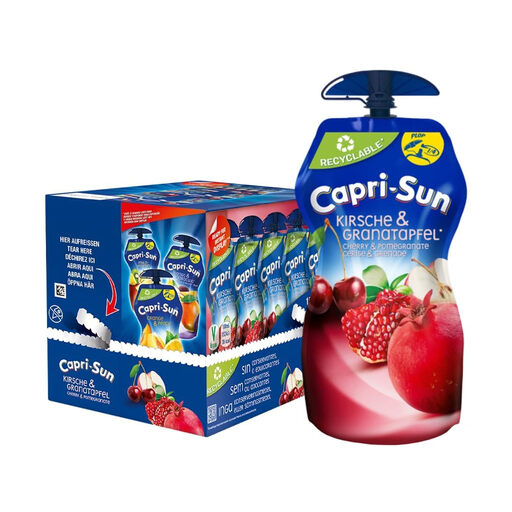
Why this product fits the profile: The bulk pack contains 15 individual portions of 330 ml each, making it ideal for families, lunchboxes or occasional drinks on the go.
The portion size and total volume are clearly stated, making it easier to plan your stock than with an unclear large bottle.
330 ml pouches, 4.95 litres total volume and vitamin C according to product information; 43 kcal and 10 g sugar per 100 ml.
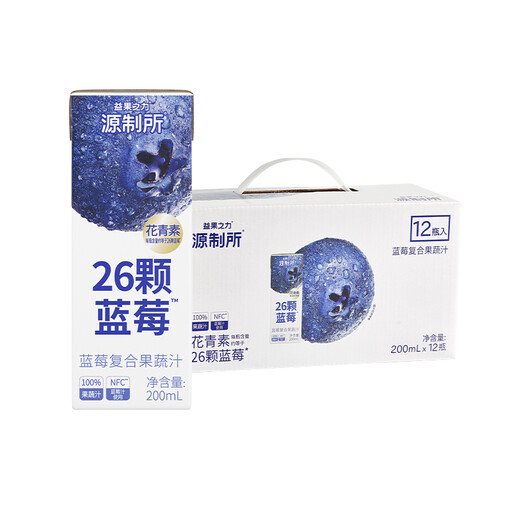
Why this product fits the profile: The blend of six fruits and vegetables appeals to buyers who want a clearly stated total fruit and vegetable content.
The declared blueberry juice content of at least 20% and the total content of 100% fruit and vegetable juice are clearly stated.
Twelve individual portions of 200 ml, 41 kcal per 100 ml and, according to product information, 0 g fat, protein and salt.
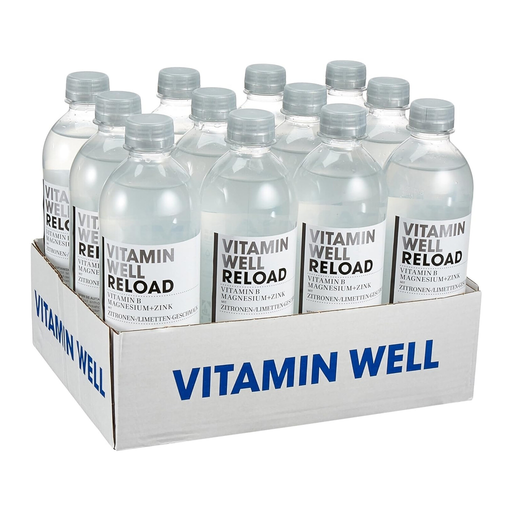
Why this product fits the profile: The 500 ml bottles are ideal for the office, commuting or stocking up the fridge. According to product information, the drink is vegan and still.
With 17 kcal and 4.2 g sugar per 100 ml, the nutritional values are clearly shown and can be compared with classic juices.
6 litres total volume, 12 bottles and a declared vitamin and mineral blend according to the product description.
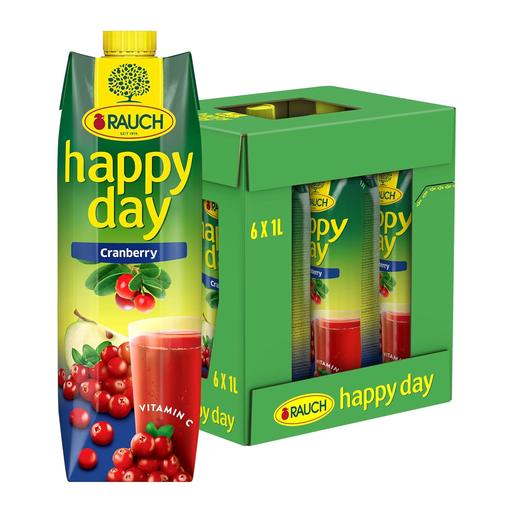
Why this product fits the profile: The 6-pack of 1-litre cartons is suitable for households that use juice regularly and need a storable bulk size.
The cranberry content is stated at 25%; the drink also contains 5% apple juice. This makes it easy to assess the flavour profile objectively.
6 litres total volume, according to product information vegan and lactose-free, 49 kcal and 11.5 g sugar per 100 ml.
We’ve put together a full, regularly updated list of products that meet these strict selection criteria and comply fully with EU safety regulations.
For daily family needs, 1-litre bottles or 6-packs are usually more manageable than lots of small individual portions. For on the go, 200 to 500 ml units are ideal. If you want to cut down on sugar, look specifically for low-sugar soft drinks and compare the values per 100 ml with classic juice.
With functional products like a ginger shot, immunity shot or aloe vera drink, the portion size is especially important. A shot is often consumed in small amounts, while an aloe vera drink like TBEST Aloe Vera Drink Original comes in a 1.5-litre bottle. With such products, you should consider the ingredients, sugar content, storage and consumption recommendations separately. Claims about supporting the immune system or other health benefits should only be assessed based on authorised and clearly substantiated information on the packaging.
No. The sugar content depends on the fruits used, any added sugar and the recipe. Compare the nutritional values per 100 ml. A drink with several fruits can contain just as much or more sugar than a pure grape juice or apple juice.
It depends on the product. Many 1-litre juices should be refrigerated after opening and consumed within three to four days. Different timeframes may apply for shots or small bottles. Always follow the instructions on the packaging.
A bulk pack can be practical for families, offices or regular consumption. Before ordering, check the total volume, the price per litre and how much you expect to use. For single households with low consumption, smaller packs are often easier to finish.