
Lieferung heute & morgen

Qualitätsgarantie

Willkommens-Angebote freischalten: KOSTENLOSE Lieferung | Bis zu 80 % RABATT | Kostenlose 30-Tage-JoyPlus-Testphase
App herunterladen
Author: Joybuy Product Recommendation Officer
Anyone looking to buy groceries online will quickly find an extensive selection, ranging from breakfast cereals and oat flakes to pulses, spices, nuts and snack foods. Online shopping saves time and makes it easier to plan your pantry. At the same time, product images and short promotional descriptions are not always enough to assess pack size, ingredients or storage conditions accurately.
For budget-conscious households, families, professionals, and vegetarian or vegan consumers, it is therefore worth taking a closer look at the actual product details.
A 500 g or 1 kg pack may appear advantageous at first glance. However, the key figure is the unit price per 100 g or per kilogram. Small packs are common for spices, while oat flakes, rice and dried beans and lentils are often sold in larger sizes.
Also check whether the stated weight refers to the drained weight or the total weight. With canned goods, the liquid may account for a significant proportion of the stated quantity.
Terms such as “Crispy”, “Crunchy” or “Spicy” primarily describe flavour and texture. They reveal little about sugar, salt or fat content. Breakfast cereals may contain considerably more sugar than expected. For snacks, allergens such as peanuts, gluten, milk and sesame also need to be taken into account.
Anyone shopping for vegan products should look beyond the front of the packaging and check the complete ingredients and allergen information.
Pantry staples do not remain suitable for storage indefinitely. Dry products such as oat flakes, lentils, spices and buckwheat should be kept in a cool, dry place away from light. Once opened, some products should be transferred to an airtight container to preserve their flavour and crispness.
Canned goods and pickled vegetables often require different treatment after opening: they should be refrigerated and consumed within the period stated on the label.
Pay close attention to the exact ingredients list. Kühne Crispy Fried Onions 100 g, for example, lists onions, palm oil, wheat flour and salt. The product therefore contains gluten-containing cereals. The product description also states that it should be refrigerated after opening and consumed promptly.
For peanut products such as Lorenz NicNac's Spicy Coated Peanuts 170 g, the declared peanut content is relevant. According to the product information, the peanuts account for 51%; the coating, sunflower oil and seasoning must also be taken into consideration.
Compare the nutritional information per 100 g. Kellogg's Crunchy Nut Honey & Nut Cornflakes 500 g are listed as containing 35 g of sugar and 0.75 g of salt per 100 g. According to the product description, Nestlé Cini Minis contain 33.7% whole-wheat flour; sugar and serving information on the packaging should also be taken into account.
Realistic quantity planning is particularly helpful for snacks. A larger pack may offer a lower price per gram, but it may also be consumed more quickly.
The right size depends on your consumption habits. A 500 g bag of oat flakes is suitable for regular breakfasts, baking or smoothies. For households that use these products frequently, 1 kg of roasted buckwheat or larger packs of dried pulses may be a practical choice.
Always check the best-before date shown on the packaging. The remaining shelf lives listed in the product information are minimum values and may vary depending on the current batch.
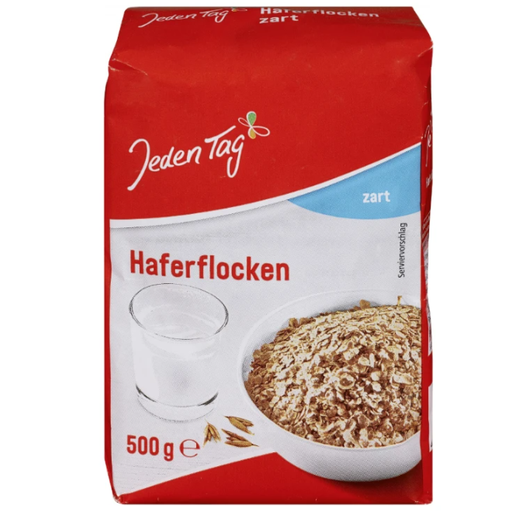
Why it fits: The 500 g pack works well for breakfast, baking and smoothies, making it a practical choice for a predictable pantry staple.
The ingredients list states 100% whole-grain oat flour. Before purchasing, check the gluten information and whether traces of mustard or lupin may be present.
500 g contents; according to the product data, 14 g of protein and 10 g of fibre per 100 g; versatile in use.
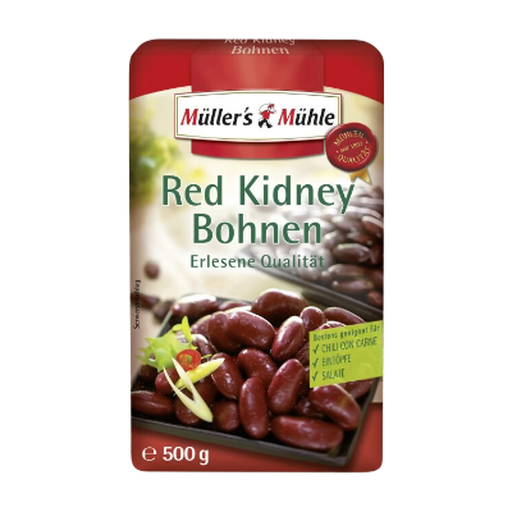
Why it fits: Dried kidney beans are ideal for chilli, soups, salads and vegetarian dishes, while also being easy to keep in stock.
The pack contains kidney beans only. Important: dried beans must be soaked and thoroughly cooked; they are not suitable for consumption raw or insufficiently cooked.
500 g contents; no declared allergens; according to the data, 21 g of protein per 100 g in the uncooked product.
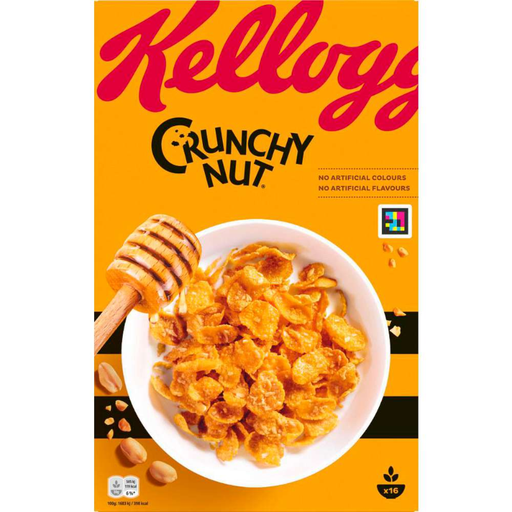
Why it fits: The cornflakes are ready to eat with milk or yoghurt, with no preparation required, and can also be portioned and enjoyed dry.
The nutritional information lists 35 g of sugar per 100 g. The product also contains peanuts and gluten-containing cereals, which is relevant for anyone with allergies or intolerances.
500 g pack; ready to eat; according to the product data, fortified with iron, vitamin D and several B vitamins.
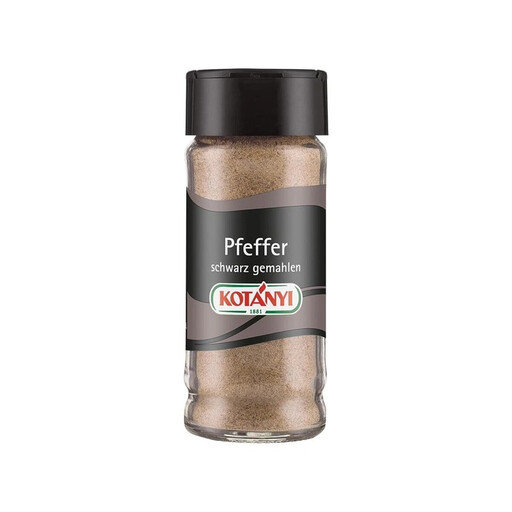
Why it fits: Ground pepper can be measured out instantly and adds depth to soups, sauces, vegetable, fish and meat dishes.
The ingredients information lists 100% ground black pepper. To preserve its aroma and ensure easy dosing, keep the jar tightly sealed and store it in a dry place after opening.
36 g contents; ready to use; according to the product information, no declared allergens.
Depending on your shopping plan, the following products may also be worth considering:
The complete, up-to-date product selection makes it easier to compare pack sizes, ingredients, storage conditions and intended uses.
Dry oat flakes, lentils, beans, spices, buckwheat, nuts and unopened canned goods are among the most common shelf-stable foods. Choose pack sizes according to your actual consumption and check the best-before date when your order arrives.
Compare sugar, salt, fat, serving size and allergens per 100 g. For peanuts, milk, gluten and sesame, the ingredients list is the decisive reference. Once opened, cereals and snack foods should ideally be sealed in an airtight container.
That depends on the unit price, pack size, shipping costs and actual consumption. A lower price per item is only worthwhile if the product is used in full. A basket built around regularly needed pantry staples can make an order more economical than several smaller individual purchases.