
Lieferung heute & morgen

Qualitätsgarantie

Willkommens-Angebote freischalten: KOSTENLOSE Lieferung | Bis zu 80 % RABATT | Kostenlose 30-Tage-JoyPlus-Testphase
App herunterladen
The decision to modernise a vehicle's lighting is often about more than just aesthetics. A headlight upgrade to LED technology can significantly improve night-time visibility and, consequently, driving safety. However, the aftermarket parts market is confusing and full of pitfalls that can quickly lead to bad investments or even legal trouble. This guide highlights what you need to look for to make the right choice and avoid common mistakes.
Many vehicle owners invest in new lighting, only to be confronted with problems shortly after. Three sources of error are particularly common:
To avoid these problems, you should carefully check three technical aspects before buying. These criteria are crucial for the function, legality, and longevity of your new lighting system.
The most important feature for legal car tuning lights under local road traffic regulations is the E-mark. This symbol on the headlight lens or housing (an "E" in a circle, followed by a number) confirms that the component has been tested according to European standards and is approved for road use. This applies equally if you want to retrofit LED taillights or daytime running lights. Without this mark, you risk not only fines and points on your license but also your insurance coverage.
The way light is cast onto the road has a major impact on the quality of illumination.
The lifespan of an LED depends directly on its operating temperature. An effective cooling design is therefore essential. Look for solid aluminium heat sinks or even active fans on particularly high-performance models. This is especially important for off-road auxiliary lights, which are designed for high light output and must dissipate a corresponding amount of heat. A robust construction also protects the electronics from vibrations and moisture.
Choosing the right headlight depends heavily on the vehicle type and the intended use. Here are some recommendations tailored to specific user profiles.
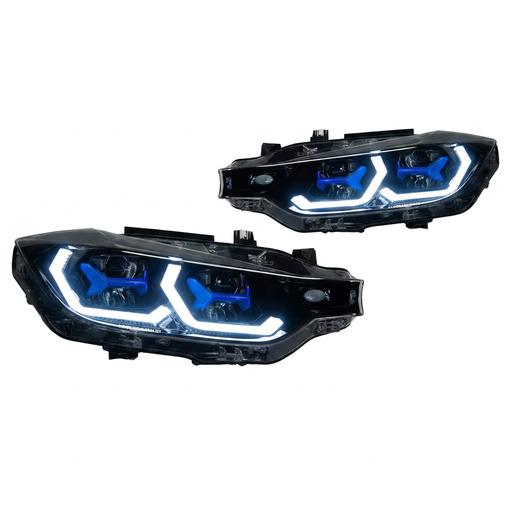
Why This Fits Their Persona: Ideal for owners of a BMW F30 who want a visual upgrade in the style of newer models without altering the original design lines. The integration of daytime running lights and projector technology modernises the appearance and improves light output.
As a vehicle-specific complete kit, it is matched to the F30's on-board electronics, which prevents CAN bus error messages. The direct-replacement fit for the factory headlights avoids installation complications.
Precise fit for the BMW 3 Series (F30, 2015–2018). Integrated LED daytime running lights for a modern look.

Why This Fits Their Persona: Perfect for Golf 7 drivers who want to give their vehicle a custom and dynamic look. The combination of projector lenses, daytime running lights, and dynamic turn signals is highly sought after in the tuning scene.
By being designed specifically for the Golf 7 (MK7), compatibility with the vehicle's electronics is ensured, preventing CAN bus errors. This is a crucial advantage over universal tuning lights.
Integrated dynamic turn signal (Dynamic Signal). Projector technology for improved and clearly defined illumination.
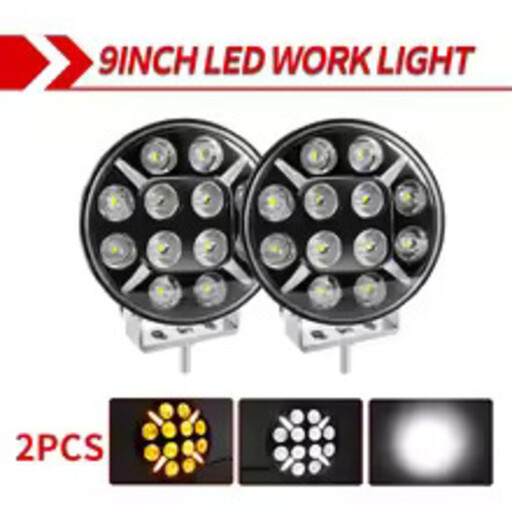
Why This Fits Their Persona: Engineered for heavy-duty use on SUVs, ATVs, and utility vehicles. The focus here is on maximum light output and extreme durability to provide daylight-like illumination even in rugged terrain.
The IP68 certification ensures protection against water and dust. The robust construction is designed for longevity under harsh conditions, directly addressing the problem of premature failure due to environmental factors and vibrations.
High power output of 120W. Universally applicable for 12V and 24V systems. Waterproof and dustproof to IP68 standard.
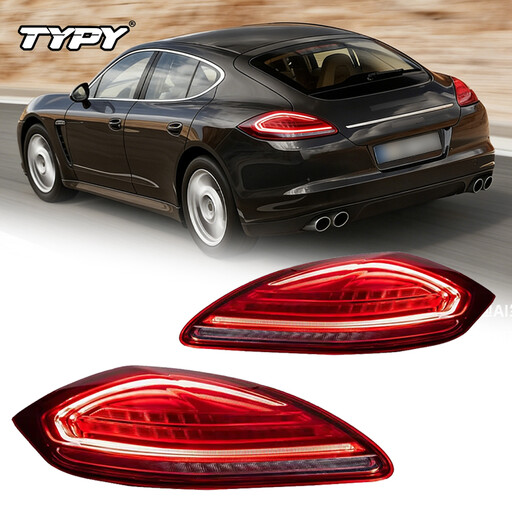
Why This Fits Their Persona: For owners of a first-generation Panamera (970.1) who want to update the rear of their vehicle to match the look of later models. These LED taillights offer a targeted and stylish modernisation.
The exact fit for the 970.1 model ensures a hassle-free installation and electrical compatibility. This prevents the typical fitment and electronic issues that arise when adapting universal parts to premium vehicles.
Vehicle-specific design for seamless integration. Modernises the rear view with current LED technology.
We have compiled a complete, up-to-date list of products that fully meet these strict selection criteria and European regulations.
It depends on the product. Headlights that carry an E-mark are generally exempt from special registration, as they already have a pan-European type approval. It is recommended to keep the relevant documents in the vehicle. Products without this mark are not permitted for road use and would require a costly and often unsuccessful individual vehicle approval.
For many vehicle-specific retrofit kits, the installation is designed to be "Plug-and-Play" and can be done by technically savvy individuals. However, a basic understanding of vehicle electronics is a prerequisite. In particular, the correct alignment of the beam is crucial to avoid dazzling oncoming traffic. If in doubt, the installation and adjustment should always be carried out by a professional workshop.
The CAN bus system is the electronic network in modern vehicles that controls and monitors components like the lighting system. Because LEDs have a lower power consumption (and thus a different electrical resistance) than halogen lamps, the system can misinterpret this as a defect and issue a warning message. "CAN bus compatible" headlights have integrated resistors or control units that simulate a correct value for the system, thus ensuring error-free operation.