
Lieferung heute & morgen

Qualitätsgarantie

Willkommens-Angebote freischalten: KOSTENLOSE Lieferung | Bis zu 80 % RABATT | Kostenlose 30-Tage-JoyPlus-Testphase
App herunterladen
If you're looking to buy honey online, you'll find a wide selection of blossom honey, forest honey, organic honey and specialities such as Manuka honey. The differences go beyond just taste. Origin, variety name, consistency, fill quantity and packaging all determine whether a jar is suitable for breakfast, tea, baking or everyday use.
Names such as summer blossom honey, forest honey or acacia honey primarily describe the type of honey or the predominant nectar source. They are not automatically an indication of a specific region. With blended honeys, you should also check whether the honey comes from EU and non-EU countries.
Take the Langnese Summer Blossom Honey 500 g, for example: according to the product information, it is packed in Germany and consists of a blend of honeys from EU and non-EU countries. If you're looking for German honey from a beekeeper, you should therefore pay close attention to the origin information rather than relying solely on the brand name.
Liquid honey is easy to stir into tea, yoghurt or batter. Creamy honey, on the other hand, works well as a spread because it is less likely to drip off your bread. The consistency alone says nothing about the quality. Honey can crystallise over time; this is a natural change and not automatically a sign of a defect.
If your honey has crystallised, it is best to warm it gently in a water bath. High temperatures can alter the natural properties of the food. Always follow the specific recommendation on the label.
A jar of honey 500 g can be practical for families and heavy users. If you only use honey occasionally, you may be better off with honey 250 g, because the jar will be used up more quickly and takes up less space. For price comparison, always look at the unit price per 100 g. The type of packaging also matters: a squeezy bottle allows for precise dosing, whereas a jar is often preferred for the classic spread.
The term "natural sweetener" is understandable in everyday use, but should not be equated with a calorie-free or low-sugar product. Honey naturally contains sugar and should be dosed accordingly.
For pure honey, the ingredients list should state 100 % honey or the specific honey variety. Additives such as syrup or flavourings have no place in an unadulterated honey product. For organic honey, look for the EU organic logo and the inspection body number, such as DE-ÖKO-001 or DE-ÖKO-005.
The organic certification refers to compliance with the applicable organic production regulations. It is not a blanket promise of a particular taste. Even with organic products, it is worth checking the origin, fill quantity and consistency.
Honey should be stored in a dry place, tightly sealed and protected from direct sunlight. Refrigeration is generally not necessary. The flavour and consistency can change with temperature fluctuations.
Important: honey is not suitable for children under twelve months of age. This age warning applies regardless of variety, brand or organic status. For allergies to bee products, please follow the instructions on the packaging.
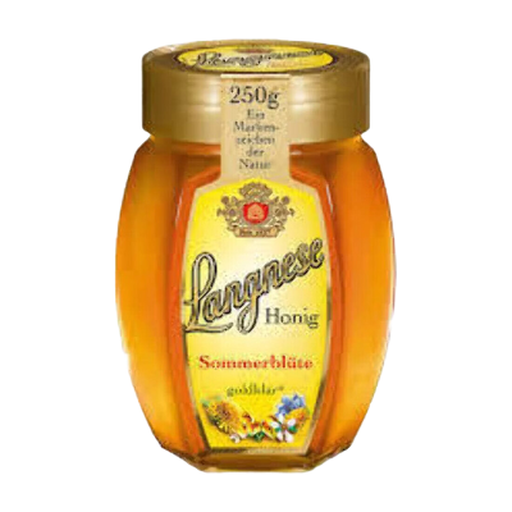
Why this product fits the profile: The 250 g size is ideal for individuals, smaller households or anyone wanting to try a variety in everyday use first. The liquid consistency works well with tea, muesli and bread.
The smaller fill quantity reduces the risk of keeping a large jar open for too long if honey is only used occasionally.
100 % honey according to product information; 250 g content; liquid texture for drinks and mueslis.
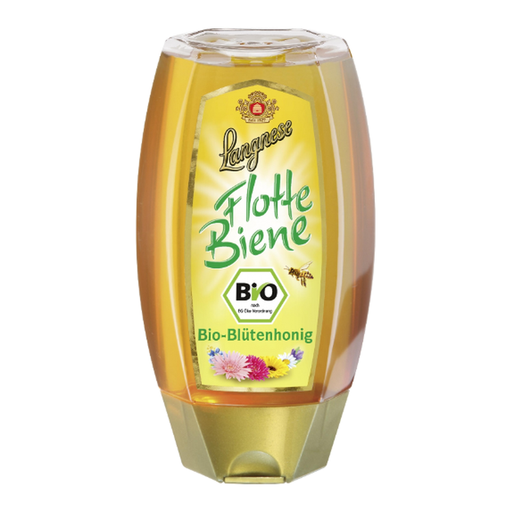
Why this product fits the profile: The organic certification DE-ÖKO-005 and the ingredient declaration "100 % organic blossom honey" provide traceable guidance for buyers who want to consider ecological standards.
The official inspection body number is more concrete than general terms like "natural" or "sustainable" without additional certification.
Organic certified according to product information; mild blossom honey; 250 g content for manageable consumption.
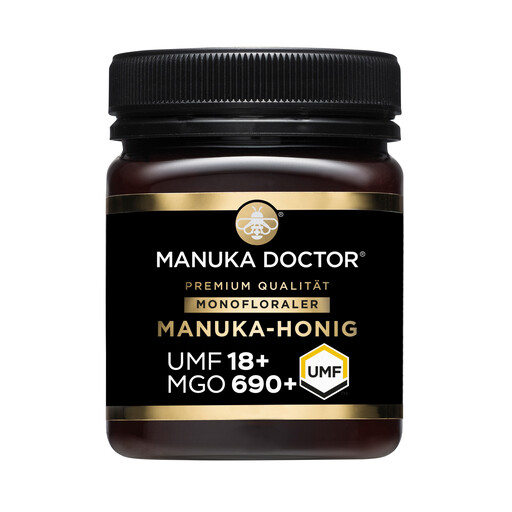
Why this product fits the profile: The monofloral Manuka variety is aimed at buyers looking for a clearly labelled speciality from New Zealand who value UMF 18+ or MGO 690+.
The stated ratings and the reference to independent UMF testing make it easier to assess compared to products that only advertise with Manuka in general terms.
100 % monofloral Manuka honey according to product information; 250 g content; UMF 18+ and MGO 690+ stated.
For families who use honey regularly, 500 g variants are also worth considering. These include the Langnese Summer Blossom Honey 500g, the Alnatura Organic Multiflower Honey 500g and the Bihophar Creamy Traditional Beekeeper Honey 500g. For a creamy texture, the Langnese Landhonig Creamy Flower Honey 500g and the Alnatura Organic German Blossom Honey 500g are also suitable.
We have put together a complete, regularly updated list of products that fully meet these strict selection criteria and the safety regulations in force in the EU.
For tea, mild varieties such as blossom honey or acacia honey are often chosen. If you prefer a stronger flavour, you can use forest honey. Honey should not be heated excessively; for specific products, follow the manufacturer's instructions.
When stored in a dry place, protected from light and tightly sealed, honey keeps for a long time. The best-before date on the jar remains the deciding factor. Crystallisation is a natural phenomenon and can be gently reversed in a water bath if needed.
Ordering honey online can be a good idea if certain varieties, organic certifications, brands or pack sizes are not available in your local shops. Before buying, compare the fill quantity, unit price, origin, ingredients list, consistency and age warning.