
Lieferung heute & morgen

Qualitätsgarantie

Willkommens-Angebote freischalten: KOSTENLOSE Lieferung | Bis zu 80 % RABATT | Kostenlose 30-Tage-JoyPlus-Testphase
App herunterladen
If you want to buy honey online, you'll quickly find countless varieties, brands and pack sizes. However, blossom honey, forest honey, organic honey and special products like Manuka honey differ significantly in taste, texture, origin and price. A targeted selection helps you to properly assess marketing claims and find a honey for breakfast, drinks, desserts or cooking.
A summer blossom honey, forest honey or lime blossom honey initially describes the plant source or the characteristic variety type. This does not automatically mean that the honey comes entirely from a specific German region. With blends, the origin can consist of EU and non-EU countries. That's why it's worth checking the label.
Honey is fundamentally a natural food product. However, the term organic honey requires certification according to current regulations. Look for the EU organic logo and the inspection body number, for example DE-ÖKO-001 or DE-ÖKO-005. Statements like 'natural' or 'pure' do not replace an organic certification.
Creamy honey spreads easily on bread, while runny honey is practical for sweetening tea, yoghurt, dressings and marinades. A squeezy bottle makes dosing easier, but may require careful cleaning if the lid gets sticky. The quantity should also match your consumption: a jar of honey 500 g is more economical for regular use than several small packs, while mini sizes are suitable for on-the-go or guest breakfasts.
For the products presented here, the ingredients list states honey or the specific honey variety indicated. A short ingredients list is clear for consumers. Blossom honey usually tastes mild to aromatic, summer blossom honey is often balanced and floral. Forest honey often has a darker colour and a stronger flavour profile. Lime blossom honey can have a distinctive, slightly minty note.
The origin information should match your personal buying decision. 'Made in Germany' does not necessarily mean that all the honeys used come from Germany. For example, the Langnese Summer Blossom Honey 500 g states a blend of EU and non-EU honeys. The Alnatura Organic Multiflower Honey 500 g is certified according to the EU organic standard according to the product information. Such details are more meaningful than general quality claims.
Honey is generally stored at room temperature, in a dry place and protected from direct light. Natural crystallisation is not a sign of a spoiled product. If needed, the jar can be gently warmed in a warm water bath. Excessive heat should be avoided.
The nutritional values are similar for many honey varieties: the product data provided states approximately 302 to 305 kcal and around 75 g of sugar per 100 g. Honey is therefore a natural sweetener, but remains a sugar-rich food. It should be used in moderation accordingly.
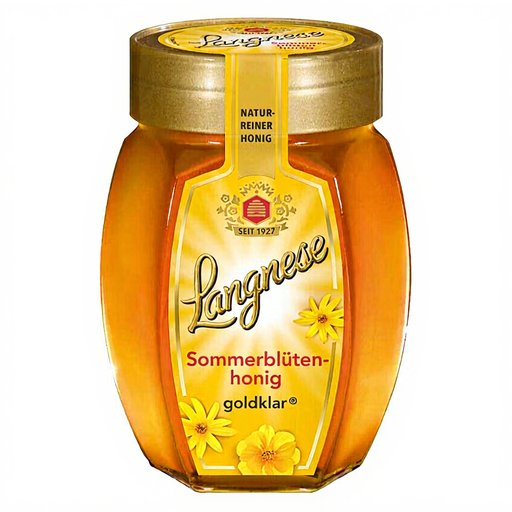
Why this product fits the profile: The 500 g quantity is suitable for households that use honey regularly on bread, in muesli or for sweetening tea. The ingredients list states 100 % honey.
The clear origin information indicates a blend of EU and non-EU honeys and prevents false expectations of an exclusively German origin.
500 g content, described as runny-clear and versatile for bread, drinks, muesli and pancakes.
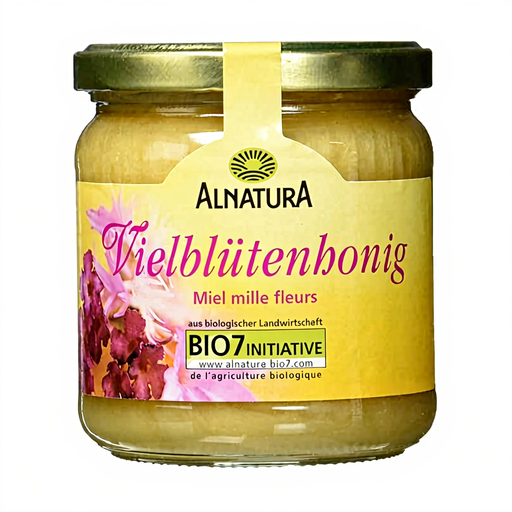
Why this product fits the profile: The product information states 100 % organic blossom honey and certification according to the EU organic standard. This allows you to make your selection based on verifiable labelling.
The organic certification provides concrete guidance and replaces vague sustainability claims with verifiable labelling.
500 g content, organic blossom honey and versatile use in cold dishes, baked goods, coffee, tea and on bread.
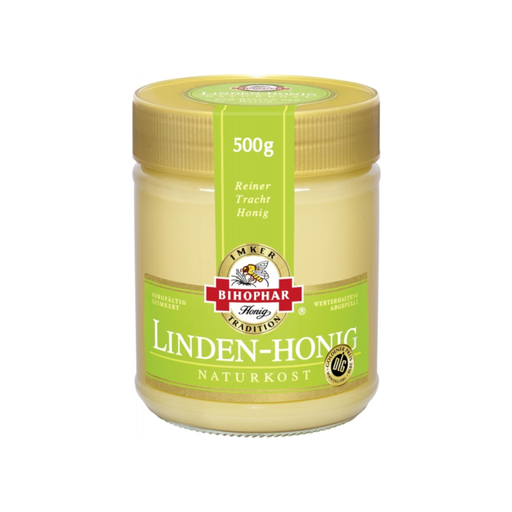
Why this product fits the profile: Lime blossom honey is aimed at buyers looking for a distinctive aroma and who use honey not just as a spread, but also for tea, yoghurt, desserts or savoury glazes.
The specific variety name makes the flavour direction recognisable, rather than just advertising with a general honey description.
100 % lime honey according to product information, 500 g content and spreadable consistency for various applications.
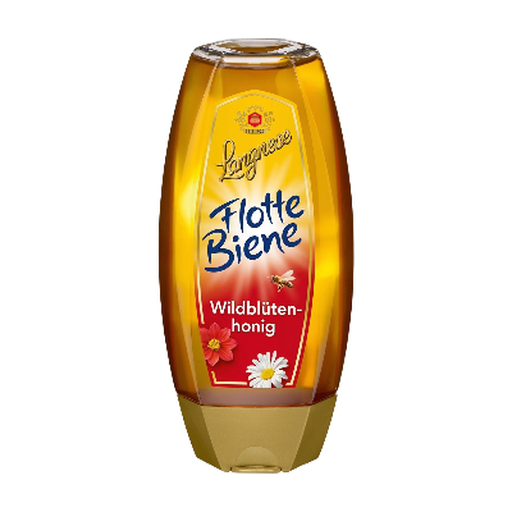
Why this product fits the profile: The squeezy bottle is practical for households that use honey frequently and want clean dosing on bread, in drinks or over muesli.
The packaging form is clearly recognisable and designed for portioned dispensing, rather than using a vague convenience claim.
500 g content, runny consistency according to the product description and practical squeezy bottle.
We have compiled a complete, regularly updated list of products that fully meet these strict selection criteria and the safety regulations in force in the EU.
Store honey in a dry, dark place at room temperature. A tightly sealed container protects against moisture and foreign odours. The fridge is usually not necessary and can accelerate crystallisation.
The best-before date on the packaging is the reference point. With proper, dry storage, honey generally remains usable for a long time. Changes in colour, aroma or consistency can occur with a natural product. If there is an unusual smell, visible mould or moisture ingress, the product should no longer be used.
Honey is not suitable for children under twelve months. This warning applies regardless of variety, brand, organic status or packaging. For older children and adults, honey should be used in moderation as part of a balanced diet due to its natural sugar content.