
Lieferung heute & morgen

Qualitätsgarantie

Willkommens-Angebote freischalten: KOSTENLOSE Lieferung | Bis zu 80 % RABATT | Kostenlose 30-Tage-JoyPlus-Testphase
App herunterladen
Anyone looking to buy hoodies online will find a wide choice of colours, cuts and materials. However, product images do not always show how thick the fabric really is, whether the fit is regular or oversized, or how much care the model needs in everyday use. A few verifiable criteria can help you avoid disappointing purchases – whether you are looking for a men’s hoodie, women’s hoodie, hooded sweatshirt or streetwear hoodie.
An oversized hoodie is designed with a wider cut and often has dropped shoulders. Simply ordering one or two sizes larger, on the other hand, can result in disproportionately long sleeves or a body that is too wide. The measurements for the specific model are therefore what matter, not just the description “oversize”.
A hooded sweatshirt can be made from lightweight jersey, medium-weight sweatshirt fabric or heavyweight terry. Terms such as “warm” or “fluffy” are no substitute for material details. A fabric weight in g/m² helps with comparisons: 300 g/m² describes a considerably heavier fabric than a lightweight summer hoodie. For fleece hoodies, you should also check whether the inside is brushed and what fibre blend it contains.
EU sizes are not identical for every cut. A men’s hoodie in size L may fit differently from a women’s hoodie in the same nominal size. For a plus-size hoodie, compare your chest, waist and hip measurements with a well-fitting garment. This makes it easier to assess whether the hooded sweatshirt is suitable for everyday wear, travelling or layering.
A cotton hoodie can feel different depending on the weave and blend ratio. Cotton is often combined with polyester to influence shape retention and care properties. A model made from 100% cotton may feel soft and breathable, but it could take longer to dry. Polyester content can reduce the weight and make everyday care easier.
For chilly days, consider brushed fleece, dense sweatshirt fabric or a heavyweight hoodie. Heavy fabric is not automatically the best choice for every situation: when travelling or dealing with changing temperatures, a lighter model may be more practical.
Fabric weight is a useful point of comparison, but it is not the only indication of quality. You should also look for:
A zip hoodie offers more options for layering. A pullover hoodie, on the other hand, keeps the front closed and often has a more compact appearance.
Many models can be washed at 30 °C. The care label determines whether tumble drying, ironing or dry cleaning is permitted. With brushed fleece and heavyweight fabrics, avoid high temperatures if this is specified by the manufacturer.
To assess the fit, ideally compare:
The fibre details and care instructions should be provided in full. For textiles sold in the EU, the applicable labelling requirements for fibre composition are also relevant.
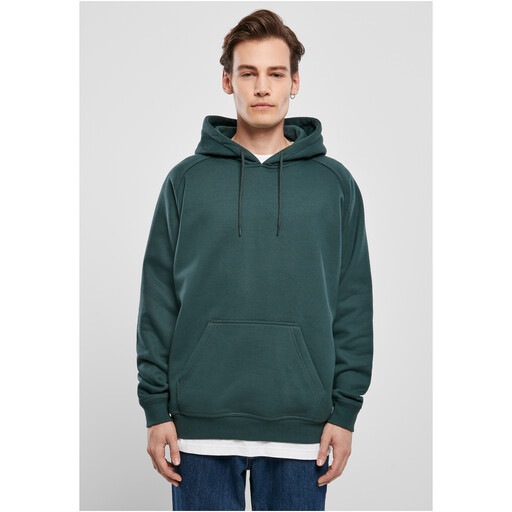
Why this product suits this profile: This classic men’s hoodie features a drawstring hood, kangaroo pocket and ribbed cuffs. Its comfortable cut makes it a versatile basic for everyday wear, leisure time and easy-to-style outfits.
The description clearly states the material blend and brushed fleece interior. The size chart ranges from XXXS to 4XL, making it easier to compare sizes before buying.
65% cotton and 35% polyester; machine washable at up to 30 °C according to the product details.
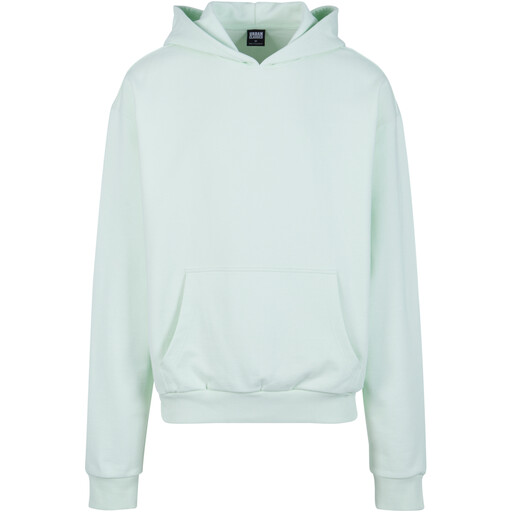
Why this product suits this profile: This oversized hoodie is designed for people specifically looking for a voluminous cut and heavyweight fabric. It can be styled with jeans, trainers or tailored trousers.
The fabric weight is stated as 460 g/m². This lets you assess the material density objectively instead of relying solely on general promises of warmth.
100% cotton, 460 g/m² terry fabric, dropped shoulders and reinforced ribbed cuffs according to the product description.
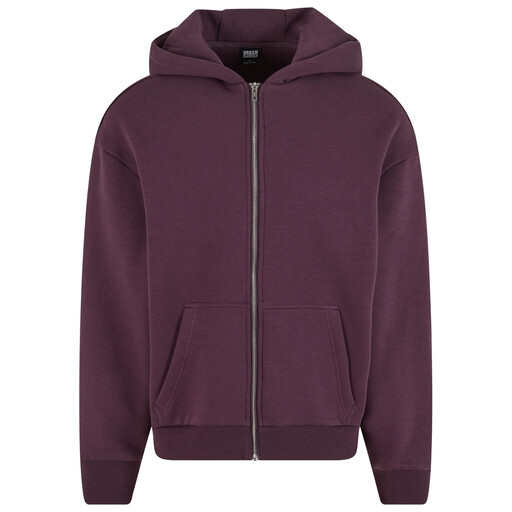
Why this product suits this profile: This zip hoodie is ideal for travelling, changing temperatures and wearing over T-shirts or long-sleeved tops. The oversized cut provides additional freedom of movement.
The full-length zip makes it easy to regulate your temperature. The material blend, oversized cut and care instructions are all listed in the product details.
70% cotton and 30% polyester; large hood, kangaroo pocket and care at 30 °C according to the manufacturer’s details.
We have put together a complete, regularly updated list of products that fully meet these strict selection criteria and the safety regulations applicable in the EU.
Use the size chart for the specific product as a guide and measure your chest, waist and, where applicable, hip circumference. For a regular fit, choose the size that matches your measurements. If a model is explicitly described as oversized, you often do not need to order an additional size up. If you are between sizes, consider the freedom of movement you want and the clothing layer you plan to wear underneath.
Its lifespan depends on the material, construction, frequency of wear and care. Wash the hoodie according to the instructions on the care label, avoid high temperatures that are not approved and, where possible, dry heavyweight models flat or on a suitable hanger. Ribbed cuffs, a solid fabric weight and the right size can all help the garment retain its fit in everyday use.
In addition to the purchase price, the main ongoing costs are washing and drying. Machine washing at 30 °C generally uses less energy than a hotter cycle. Air-drying reduces electricity consumption compared with using a tumble dryer. Whether you can use a tumble dryer, iron or special detergent always depends on the care label for the specific garment.