
Lieferung heute & morgen

Qualitätsgarantie

Willkommens-Angebote freischalten: KOSTENLOSE Lieferung | Bis zu 80 % RABATT | Kostenlose 30-Tage-JoyPlus-Testphase
App herunterladen
If you want to buy household appliances online, you will often compare the price, colour and star ratings first. However, other details are crucial for making the right choice: dimensions, energy consumption, capacity, connection requirements and the actual space needed. An appliance may look inexpensive at first glance, but high running costs or missing features can make it less suitable in the long term.
Terms such as “Quick Wash”, “Steam”, “15 Bar” or “Hygiene Wash” sound meaningful. However, they do not automatically explain how an appliance can be used in everyday life. For example, a short programme is intended for lightly soiled dishes and cannot always replace a full intensive cycle.
You should also check how the available space is divided in a No-Frost fridge-freezer. The total size is not the only important factor: what matters is how many litres are actually available for the fridge and freezer compartments.
For fridges, washing machines and dishwashers, width is not the only factor that matters. Check the following as well:
Particularly in smaller homes, an appliance that appears compact can become impractical if the door is too deep or the connection point is inconvenient.
The EU energy label provides a standardised guide, but it does not by itself show how much electricity an appliance will use in your home. Check the stated consumption per year or per 100 cycles, and take your frequency of use into account.
With an energy-efficient washing machine, load capacity, wash temperature and spin speed are also relevant. A large 10 kg model is useful for a family, but may take up unnecessary space in a single-person household.
For fridges and freezers, the usable capacity should match your shopping habits. A model with a fridge with freezer compartment is suitable for smaller households, while separate compartments with more space can be more practical for families.
Dishwasher sizes are usually stated in place settings:
Place-setting figures are standardised comparison values. Large pans and unusually shaped dishes can reduce the actual loading capacity.
Noise levels matter in open-plan kitchens, kitchen-diners or small studio flats. A fridge producing 39 dB(A) can offer a different everyday experience from a considerably louder model. However, how loud it seems also depends on the floor, distance from the wall and room acoustics.
Appliances that produce heat, steam or water require a stable, level and suitable installation location. An electric food steamer, electric cooking pot or slow cooker should not be placed directly beneath flammable materials. Ventilation openings must not be covered.
Before buying, check that the appliance is compatible with the connections available locally. In Germany, the products mentioned generally require 220–240 volts and a suitable earthed socket. For larger appliances such as washing machines and dishwashers, installation and water connections should be carried out according to the manufacturer’s instructions.
You should also look for:
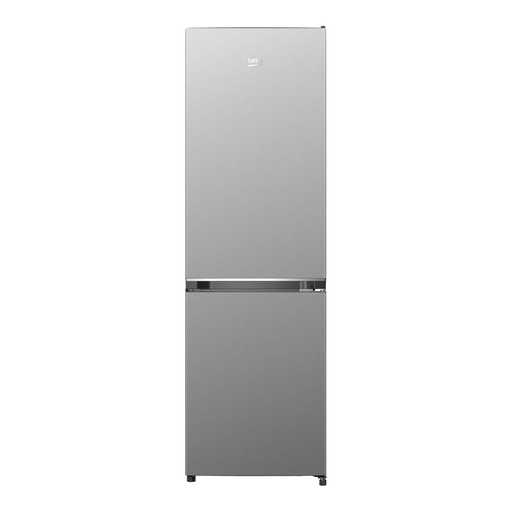
Why this product suits the profile: This freestanding combination offers 180 litres of fridge space and 70 litres of freezer space, with an appliance height of 180 cm. It is suitable for couples and smaller families looking for a straightforward all-in-one solution.
The product details state the usable capacity, dimensions, energy efficiency class D and annual consumption of 172 kWh. No-Frost reduces the need for manual defrosting, while the reversible door makes positioning easier.
250 litres of total usable capacity, 39 dB(A), external temperature control and LED lighting.
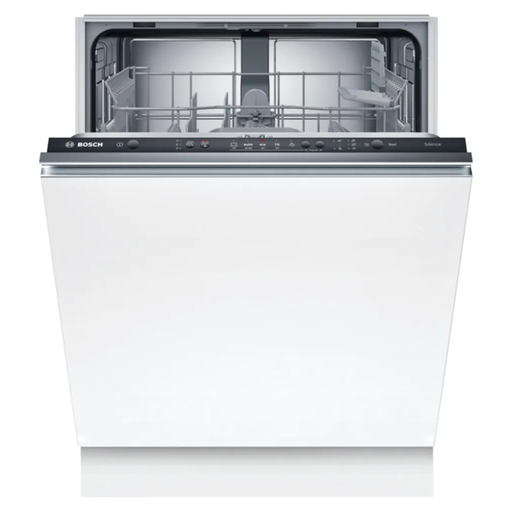
Why this product suits the profile: The fully integrated design blends into a suitable fitted kitchen. With 12 place settings and a height-adjustable upper basket, it is designed for medium-sized households with regular washing-up needs.
The technical specifications state 48 dB(A), 9.5 litres of water per Eco cycle and 92 kWh per 100 cycles. AquaStop, AquaSensor and glass protection are clearly listed features.
Five programmes, delay start, height-adjustable upper basket and heat-exchanger drying.
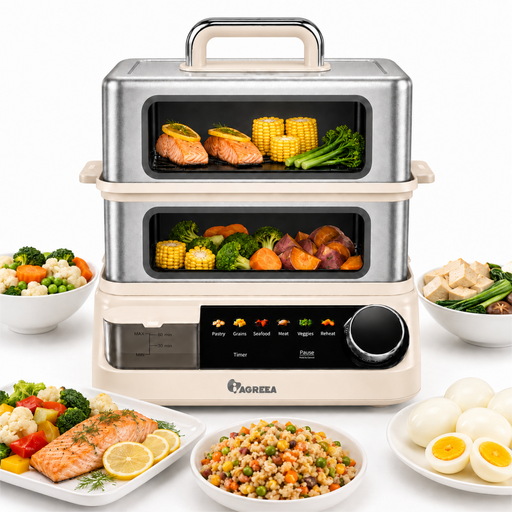
Why this product suits the profile: With two tiers and a 14-litre capacity, it is suitable for families or users who want to steam vegetables, fish and other ingredients at the same time.
The features include an external 2.5-litre water tank, a timer and six pre-set programmes. This allows you to check the water level and cooking time before starting.
2000 watts of power, two removable stainless steel containers and viewing windows for monitoring the cooking process.

Why this product suits the profile: This compact countertop dishwasher offers six place settings and an integrated 5-litre water tank. It is a practical option when a fixed water connection is not readily available.
Before buying, you can compare the required space, tank capacity and maximum dish diameter of 250 mm. The two possible water supply options are listed in the product details.
Compact dimensions of 420 × 435 × 435 mm, six programmes and energy efficiency class D.
We have put together a complete, regularly updated list of products that fully meet these strict selection criteria and the safety regulations applicable in the EU.
For everyday laundry, models with a 10 kg drum capacity, 1400 revolutions per minute and several programmes may also be suitable, depending on the size of your household. A clothes steamer with a 300 ml water tank, on the other hand, can be more practical for quick clothing touch-ups than an iron and ironing board.
For the kitchen, you can also choose an espresso machine, soy milk maker, electric cooking pot or slow cooker. With compact appliances in particular, check how easy they are to clean, the cable length, automatic switch-off and whether the capacity suits the portion sizes you require.
A portable air conditioner should be selected based on room volume, exhaust air routing, noise level and energy efficiency. “Portable” does not automatically mean that no exhaust hose or suitable window outlet is required.
Consumption depends on power, running time and usage. Refrigeration appliances run continuously, while washing machines and dishwashers mainly use energy per cycle. You should therefore compare the information on the energy label with your expected frequency of use.
There is no guaranteed standard lifespan. It depends on factors including build quality, maintenance, water hardness, loading and intensity of use. Regularly cleaning filters, seals and water tanks can help maintain the appliance’s intended performance.
Measure the installation space and transport route. Also check whether doors need to be removed, whether a water connection is available and whether the appliance can be adequately ventilated. For built-in appliances, compare the niche dimensions and the required furniture door with the manufacturer’s specifications.