
Lieferung heute & morgen

Qualitätsgarantie

Willkommens-Angebote freischalten: KOSTENLOSE Lieferung | Bis zu 80 % RABATT | Kostenlose 30-Tage-JoyPlus-Testphase
App herunterladen
Anyone looking to buy iced tea will find a wide selection of lemon, peach, apple, grape and tea-based drinks online. At first glance, many products appear similar. However, differences emerge in their sugar content, sweeteners, caffeine, pack size and type of packaging. Checking these details before buying helps you avoid unsuitable purchases and choose a ready-to-drink tea that fits your household, office or event.
A sugar-free iced tea or iced tea without sugar may be sweetened with sucralose, acesulfame K, aspartame or steviol glycosides. These ingredients are listed in the ingredients list. Products containing aspartame must also carry a statement indicating a source of phenylalanine. If you want to avoid sweeteners, do not just look at the front of the packaging—read the full ingredients list.
An iced tea multipack can contain very different total quantities depending on the format. Six 250- or 310-millilitre cans are suitable for smaller households and are easier to store. An iced tea 24-pack with 330-millilitre cans, on the other hand, contains 7.92 litres and is more suited to families, party guests or frequent drinkers. When comparing prices, the price per litre is more meaningful than the pack price alone.
Some products focus on tea extract, while others contain more fruit juice, sugar or carbonation. A sparkling iced tea also contains carbon dioxide, creating a refreshing, fizzy mouthfeel. If you prefer a still, more flavoursome cold tea, look specifically for non-carbonated varieties. Claims such as “peach-flavoured” or “with fruit” should also be assessed against the actual juice content.
The nutrition table gives the content per 100 millilitres. For everyday use, the amount per bottle or can is also relevant. A drink containing 6.7 grams of sugar per 100 millilitres provides around 22 grams of sugar in a 330-millilitre can. Drinks containing 0 grams of sugar and 0 kilocalories often use sweeteners. Both details should therefore be considered together.
Black iced tea usually has a stronger tea profile, while green iced tea often tastes lighter and more vegetal. Fruit combinations can significantly change the character:
Pay attention to the labelling of varieties containing caffeine. Black, green, jasmine and oolong tea can naturally contain caffeine. Some packaging states that the product is not recommended for children or pregnant women.
Iced tea cans are pre-portioned and cannot be resealed once opened. This makes them practical for parties and events, while PET bottles with screw caps may be more flexible for travelling or storing in the fridge. Once opened, iced tea should be chilled and consumed promptly. Unopened products should be kept in a cool, dry place and protected from direct sunlight and frost.
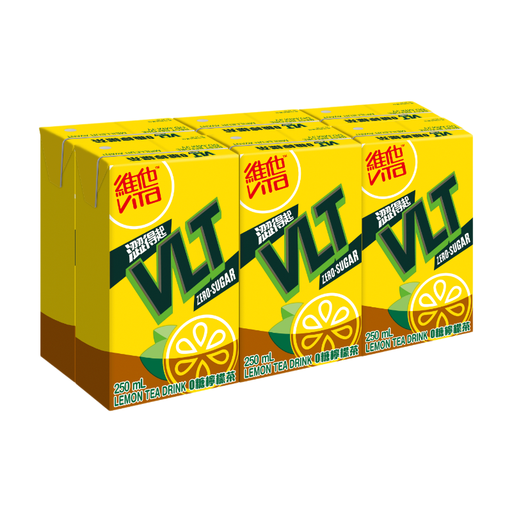
Why this product suits the profile: The six packs, each containing 250 millilitres, offer a manageable quantity for those trying iced tea for the first time. According to the product details, this variety contains 0 kilocalories and 0 grams of sugar per 100 millilitres.
The nutritional information makes it easy to distinguish between sugar-free and merely reduced-sugar products. The ingredients list also identifies any sweeteners and a source of phenylalanine.
Lemon flavour, black tea base, 1.5 litres in total and ready-to-drink individual portions.
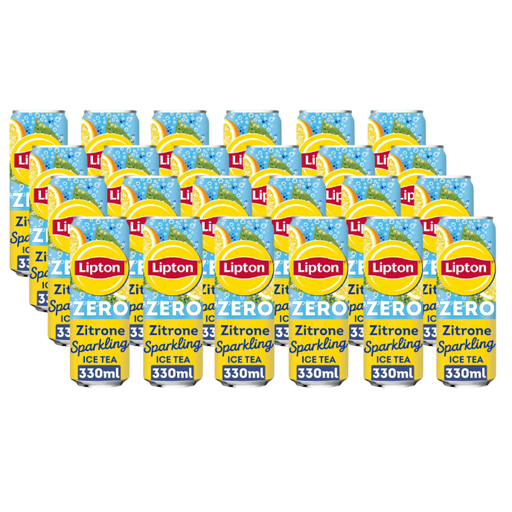
Why this product suits the profile: The 24-pack is aimed at shoppers looking for a larger supply in uniform 330-millilitre cans. According to the product details, this lemon iced tea is carbonated, sugar-free and contains 2.15 kilocalories per 100 millilitres.
The product details specify both the total quantity of 7.92 litres and the sweeteners used. This makes it easy to compare the pack size with your own consumption and the price per litre.
Refreshing carbonation, black tea extract, 24 cans and 0 grams of sugar per 100 millilitres according to the product details.
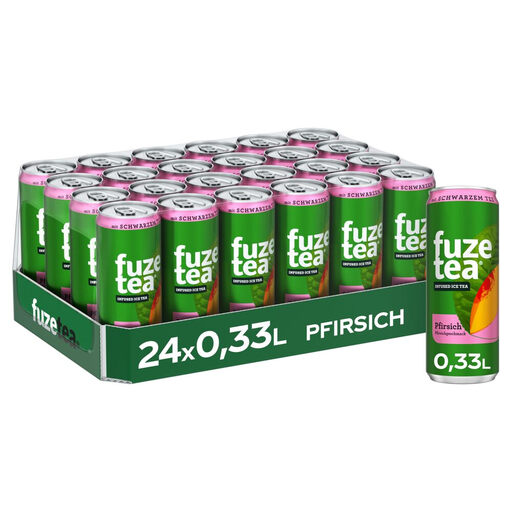
Why this product suits the profile: The 24-can multipack is designed for households, offices and celebrations. The product details specify brewed black tea, 1 per cent peach juice from concentrate and 6.5 grams of sugar per 100 millilitres.
The actual sugar content and juice percentage are clearly stated. This makes it possible to distinguish the fruity flavour from claims such as “with fruit” based on the facts.
Peach flavour, black tea base, 7.92 litres in total and portioned cans for events.
We have put together a complete, regularly updated list of products that fully meet these strict selection criteria and the safety regulations applicable in the EU.
For occasional enjoyment, a 6-pack with 250 to 310 millilitres per unit is sufficient. This size reduces the risk of opened bottles being left in the fridge for too long. Families, offices and hosts often choose 12- or 24-packs. Before placing your order, consider your storage space, best-before date and expected consumption.
An iced tea 6-pack also makes sense if you want to try several varieties. This allows you to compare lemon iced tea, peach iced tea, green iced tea or oolong tea without immediately buying a large quantity of one particular flavour.
This can only be assessed reliably by checking the nutrition table and ingredients list. Products containing 0 grams of sugar per 100 millilitres may still contain sweeteners. Claims such as “sugar-free” should therefore always be read alongside the full product labelling.
The specific recommendation will be stated on the packaging. Depending on the product, opened iced tea should be refrigerated and consumed within a few days. Cans should ideally be consumed immediately, as they cannot be resealed.
A large pack may offer a better price per litre, but this is not automatically the case. Compare the price per litre, total quantity, delivery costs and best-before date. For occasional buyers, a 6-pack may be a better fit for actual usage even if it has a higher price per litre.