
Lieferung heute & morgen

Qualitätsgarantie

Willkommens-Angebote freischalten: KOSTENLOSE Lieferung | Bis zu 80 % RABATT | Kostenlose 30-Tage-JoyPlus-Testphase
App herunterladen
Buying Japanese sweets online may seem straightforward at first: choose a product, place an order and discover new flavours. In practice, however, Japanese snacks can differ significantly in their ingredients, sweeteners, serving sizes and safety warnings. Focusing only on terms such as “Zero Calories”, “sugar-free” or “fruit flavour” can easily mean overlooking important details.
This buying guide from the Joybuy Product Recommendation Officer explains what shoppers in Germany should consider in 2026. Alongside Japanese sweets, it also covers suitable international alternatives such as fruit gummies, chewy sweets, dried fruit and fruit-and-nut mixes.
Sugar-free sweets may contain sweeteners such as erythritol, aspartame or sucralose. While some products have a very low energy content, others can still provide a significant number of calories despite containing no table sugar. The nutrition table should therefore always be checked per 100 grams and, where provided, per serving.
Sugar-free sweets may also contain polyols. According to the packaging, consuming large quantities can have a laxative effect. This is particularly important for families with children.
Terms such as “Grape”, “Mango” or “Grapefruit” often describe only the flavour profile. The ingredients list is what matters: does the product contain fruit juice, fruit purée or simply flavouring? Strong Konjac Squeeze Jelly, for example, lists a fruit content of at least 40%. According to the product information, other konjac jellies contain around 8% fruit juice.
Konjac jelly has a soft, elastic texture and is often consumed directly from small cups or stand-up pouches. Because of its slippery consistency, the safety instructions on the packaging should be followed carefully. Some products may be unsuitable for children under three; for younger children, adult supervision may be required.
For health-conscious consumers, three details are particularly relevant:
According to the product data, ORIHIRO Purun and Plus Grape contains 0 kcal and 0 grams of sugar per 100 grams. At the same time, it contains aspartame, erythritol and other sweeteners. The information on the packaging supplied with the product is authoritative.
Anyone looking for vegan sweets should consider more than just the flavour. Gelatine, milk ingredients, beeswax and precautionary allergen statements can all affect the choice. Fruit gummies and chewy sweets also warrant a close look at:
The ingredients list for the specific product takes precedence over general product images or shop translations.
Small 75- to 130-gram packs are ideal for sampling a range of Japanese snacks. Larger formats, such as 500 grams of dates or 400 grams of konjac jelly plus an additional 80 grams, make sense when several people will be sharing the product or it is consumed regularly.
Most of the products mentioned should be stored in a cool, dry place. After opening, an airtight container or tightly sealed bag can help preserve the texture. The best-before date shown on the packaging applies.
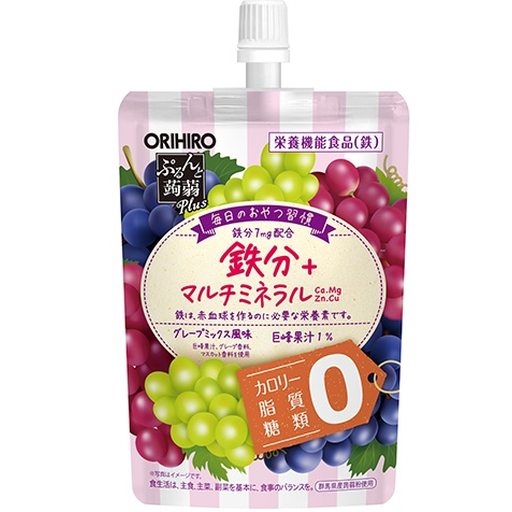
Why it suits this profile: This compact pack with grape flavour is an easy introduction to Japanese konjac snacks without committing to a larger format.
The product data lists both energy and sugar as 0 per 100 g. At the same time, aspartame and other sweeteners are declared, so these details should be checked before purchase.
130 g net weight, 8% grape juice according to the product information and a soft konjac texture.
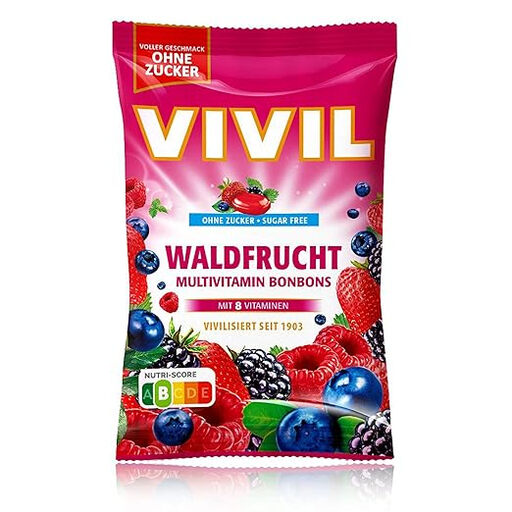
Why it suits this profile: These hard candies are convenient for on-the-go snacking and combine forest-fruit flavour with a sugar-free product claim.
The product description expressly warns that excessive consumption may have a laxative effect. The recommended quantity should therefore be taken seriously.
120 g pack, forest-fruit blend and, according to the product description, free from sugar, fat and salt.
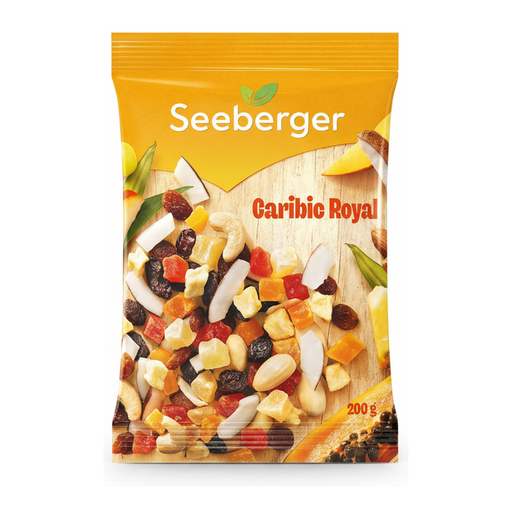
Why it suits this profile: Those looking for international snacks with varied textures get a refined blend of dried fruit, coconut chips, cashews and blanched almonds.
The ingredients and nutrition information make clear that, despite its vegan recipe, the dried fruit provides 56 g of sugar and 395 kcal per 100 g.
200 g pack, vegan and vegetarian recipe according to the product information, plus a balanced combination of fruit and nuts.
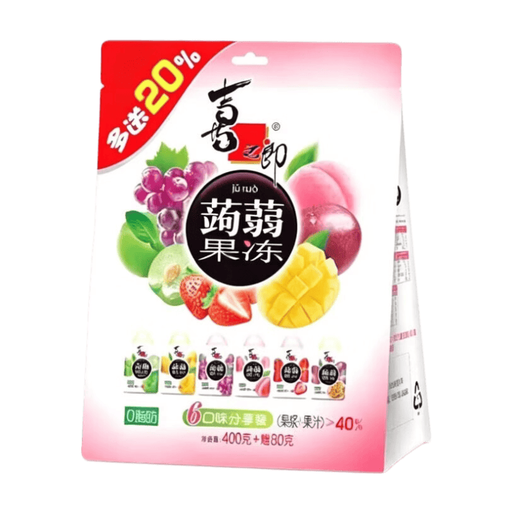
Why it suits this profile: With six flavours, this larger pack is designed for sharing, sampling together and regular enjoyment.
Depending on the flavour, the product information lists around 107 to 111 kcal and 22.2 to 24.5 g of sugar per 100 g. Despite its fruit content, the pack can therefore be assessed transparently.
Six varieties, at least 40% fruit content according to the product information and 480 g of product in total.
We have put together a current selection of products that take these selection criteria and the applicable safety requirements in Germany into account.
According to the stated nutritional values, ORIHIRO konjac jelly is offered without sugar and with a very low energy content. Sugar-free sweets may also be worth considering. However, ingredients, sweeteners and serving size should be checked before every order.
That depends on the specific product. Konjac jelly may be subject to age restrictions and supervision warnings. Hard sweets and sticky chewy sweets can also pose a choking hazard. The safety instructions on the packaging are decisive for the relevant age group.
Not necessarily. Dates, mango and fruit-and-nut mixes contain concentrated carbohydrates and can provide significantly more calories per 100 grams than konjac jelly. For an informed choice, energy content, sugar levels and serving size should be considered together.