
Lieferung heute & morgen

Qualitätsgarantie

Willkommens-Angebote freischalten: KOSTENLOSE Lieferung | Bis zu 80 % RABATT | Kostenlose 30-Tage-JoyPlus-Testphase
App herunterladen
If you want to buy kimchi, you’ll find a wide selection online: Korean kimchi made with napa cabbage, fermented radish varieties, kimchi in jars, tinned kimchi and vegan products. The differences are not limited to flavour. Ingredients, storage, allergens and pack size all determine whether a product suits your eating habits.
Depending on the product, unopened fermented kimchi can be stored in a cool, dry place or at room temperature. Once opened, however, it will often need to be refrigerated and used promptly. Frozen Hakusai Kimchi, on the other hand, must be stored at a minimum of -18 °C. Once thawed, it must not be refrozen according to the product information.
Kimchi is traditionally often made with fish sauce or prawn ingredients. If you’re looking for vegan kimchi, you should therefore check the ingredients list and allergen information. According to the product details, Sempio Canned Kimchi Original Ambient 160g is described as vegan and gluten-free and contains soya. bibigo Kimchi Ambient Vegan 150g is also described as having a plant-based recipe, with soya likewise listed as an allergen.
A small tin is handy for individual meals, but may cost more per 100 grams. A 410-gram pack such as Wang Kimchi Ambient 410g is better suited to regular use. For an occasional taste test, 100 to 160 grams is often easier to manage. Once opened, the texture gradually changes in the fridge, so it’s important to consider how much you plan to use.
For napa cabbage kimchi, napa cabbage, radish, chilli, garlic, ginger and salt usually form the basis. Some Korean side dishes also contain fish sauce, anchovies or prawn paste. Examples include Delief Sliced Napa Cabbage Kimchi 160g, Jongga KR Roasted Kimchi COI 160g and Chun Yu Fu Spicy Cabbage Kimchi 100g.
For a vegan or vegetarian option, look out for:
The letter “V” in a product name may be a helpful indication, but it does not replace checking the full product labelling.
Napa cabbage kimchi is a versatile option for rice, noodles, soups and stir-fries. Radish kimchi, including diced varieties, offers a firmer, crunchier texture. According to its product description, Delief Cubic Radish Kimchi Can 160g is intended as both a side dish and an ingredient. Chun Yu Fu Radish Kimchi 100g combines radish and cabbage and is ready to eat.
Stir-fried varieties are also worth considering for hot dishes. According to the product details, Delief Stir-fried kimchi (V) 80g is intended as a side dish, stir-fry ingredient or topping. Kimchi pancakes are not a jarred or tinned product for serving straight away, but a dish that needs heating. Saongwon Kimchi Pancake 300g is fried in a pan, while HANSS Kimchi Pancake 3x100g is stored frozen and can be prepared in a pan or oven.
Nutritional values can also help when comparing products. Salt levels vary considerably depending on the recipe. This is particularly relevant if you regularly eat kimchi or use it in larger quantities as a side dish.
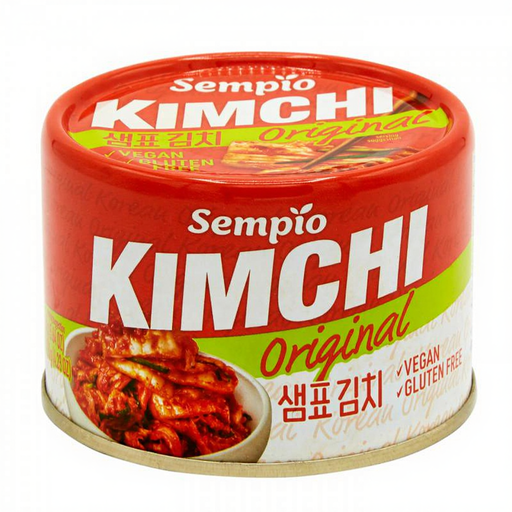
Why this product suits this profile: The 160-g tin is a manageable amount for your first few meals. It is ready to eat and, according to the product information, does not need to be refrigerated before opening.
The labelling explicitly states that it is vegan and gluten-free. This means beginners do not have to infer the recipe from the product name alone.
Bite-sized pieces, ready-to-eat convenience and room-temperature storage before opening.
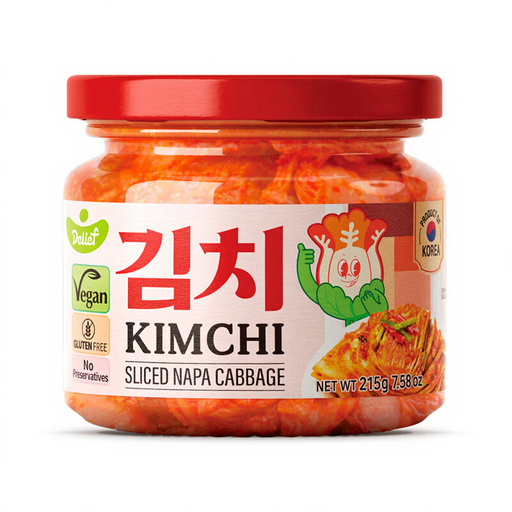
Why this product suits this profile: Sliced napa cabbage in a 215-g bottle can be portioned straight away as a Korean side dish or used as an ingredient in stews and fried rice.
The product information states how it should be stored before opening and refrigerated after opening. This makes it easier to plan how to store it in your cupboard.
215-g portion, sliced napa cabbage and versatile use with rice, noodles or as a topping.
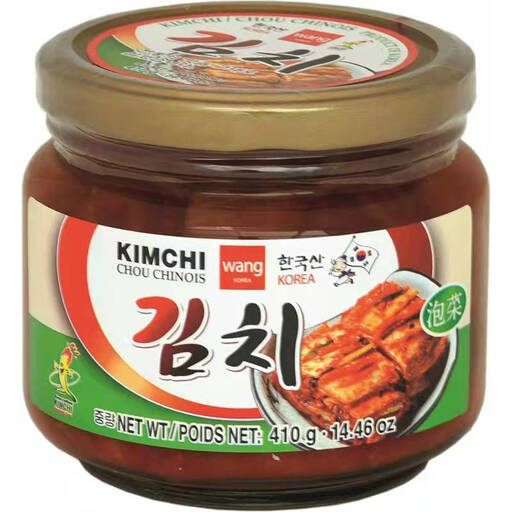
Why this product suits this profile: The 410-g pack is designed for regular use and can be served as a side dish or used in several rice, noodle and stir-fry dishes.
The larger pack reduces the need to buy several small portions separately for regular meals. However, you should still follow the storage instructions.
410-g contents, suitable for room-temperature storage and, according to the product information, ready to eat or suitable for cooked dishes.
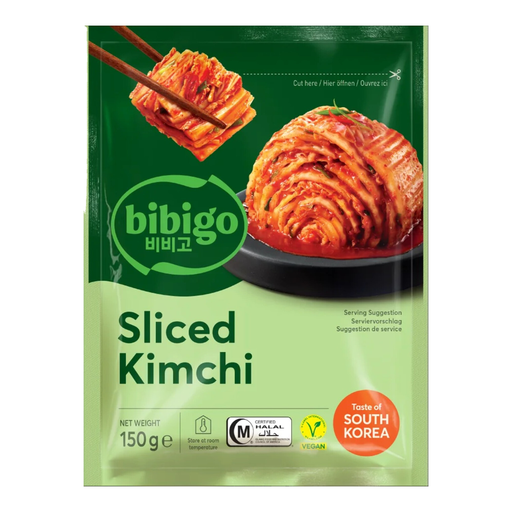
Why this product suits this profile: The product description indicates a vegan, Halal-certified recipe without fish sauce. The 150-g pack is suitable for individual meals.
The product information states the dietary type and lists soya as an allergen. This makes it easier to compare the product with your individual requirements.
150-g portion, bite-sized pieces, ready-to-eat convenience and storage without immediate refrigeration before opening.
We’ve put together a complete, regularly updated list of products that fully meet these strict selection criteria and the safety regulations applicable in the EU.
Kimchi can be served straight from the packaging as kimchi as a side dish with rice, meat alternatives, vegetables or soups. For kimchi for rice and noodles, it is usually stir-fried briefly or folded in at the end. This helps chunky varieties retain more bite. For kimchi pancakes, follow the heating instructions on the relevant pack.
Take care around delicate surfaces, as liquid may spill, and use clean utensils after opening. This helps reduce contamination and preserve the stated quality for as long as possible.
A small, ready-to-eat pack of sliced napa cabbage is usually straightforward. If you want to avoid fish and prawns, choose a product specifically labelled as vegan. For your first purchase, 100 to 160 grams is an easy-to-manage amount.
This depends on the product, packaging and storage instructions. Refrigeration and prompt consumption are often recommended after opening. The best-before date and the specific information on the packaging and product page should always be treated as authoritative.
Many tinned and jarred varieties are sold ready to eat. Even so, you should check whether the product needs to be refrigerated and whether it is a frozen variety. Kimchi pancakes, on the other hand, are generally intended to be heated.