
Lieferung heute & morgen

Qualitätsgarantie

Willkommens-Angebote freischalten: KOSTENLOSE Lieferung | Bis zu 80 % RABATT | Kostenlose 30-Tage-JoyPlus-Testphase
App herunterladen
A kitchen knife is a staple in many British households. Yet searching online can quickly lead to a bad purchase: a knife might look high quality in product images, but feel awkward in the hand or be difficult to clean. Other offers boast “extreme sharpness” without any details about blade material, dimensions or care.
If you’re looking to buy kitchen knives, a kitchen knife set or additional kitchen accessories, you should watch out for three typical pitfalls:
With a stainless steel kitchen knife, details about the type of steel used, blade length and construction are more helpful than general marketing claims. Stainless steel is practical in everyday kitchen use because the surface is less prone to rust when properly cared for. Nevertheless, the knife should be dried after washing. Acidic foods, detergent residue and prolonged soaking can affect the surface and the handle.
Ceramic blades are lightweight and are often described as particularly long-lasting in terms of sharpness. However, they can be more sensitive to impacts and lateral movements. Such a knife isn’t automatically suitable for hard foods, bones or frozen ingredients. So check the product’s specific intended use.
The shape determines everyday usability:
Pay attention to the relationship between blade length and your work surface. For a small kitchen or a narrow chopping board, a more compact model is often easier to control. With a blade length of 280 mm, as specified for the SHIBAZIZUO Cooking Cutter, buyers should check whether there is enough space.
A secure handle should feel sturdy and suit the size of your hand. Slippery surfaces, sharp transitions or poorly protected blades increase the risk during use. A supplied blade guard can offer extra protection when storing in a drawer.
Cleaning is equally important: if dishwasher suitability isn’t stated, hand washing with mild detergent and immediate drying is the safer choice. The chopping board should have a knife-friendly surface. Glass or stone boards can wear down the edge more quickly than wood or suitable plastic alternatives.
A complete kitchen knife set can make sense if you need to cover several cutting tasks. However, check whether the included pieces are actually necessary. A cheap set with unused specialist knives isn’t automatically better value than a single suitable kitchen knife.

Why this product suits the profile: This model is designed for cutting meat and vegetables as well as slicing, so it can handle several typical household tasks.
The described multi-purpose use helps avoid a set with unnecessary specialist knives. Before buying, check the blade length and handle details in the product information.
Clearly stated uses for meat, vegetables and slices; available as a single household knife without additional accessories.
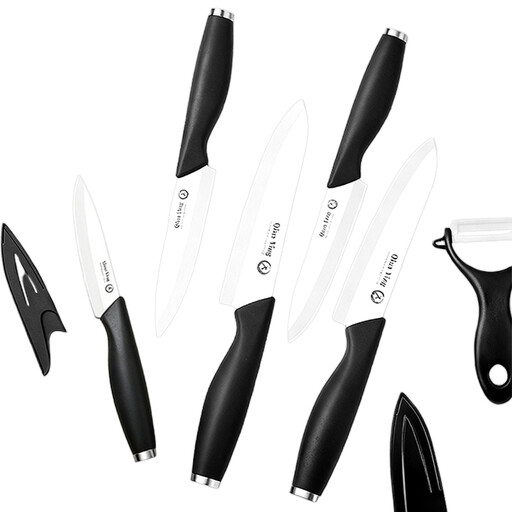
Why this product suits the profile: This kitchen knife set contains five knives and a peeler. It’s aimed at households that want to cover several cutting and peeling tasks with a coordinated set.
The number of components is clearly stated. Buyers can check in advance whether ceramic is suitable for their foods and the planned care routine.
Five knives plus peeler; covers multiple kitchen tasks in one product.
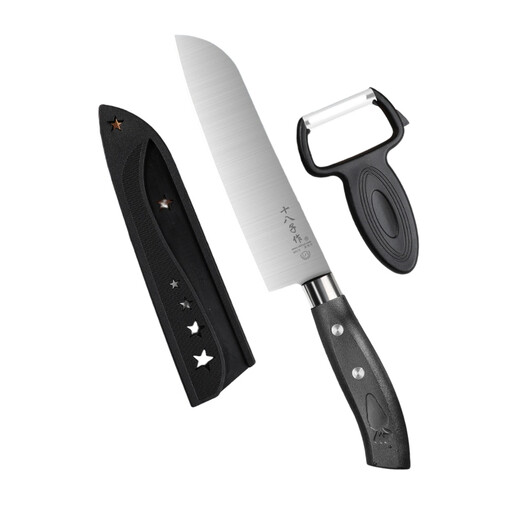
Why this product suits the profile: The combination of multi-purpose knife, melon peeler and blade guard is designed for specific fruit and vegetable tasks as well as protected storage.
The specific contents prevent you from having to buy a separate peeling tool and storage solution unexpectedly.
Three clearly named components; blade guard included.
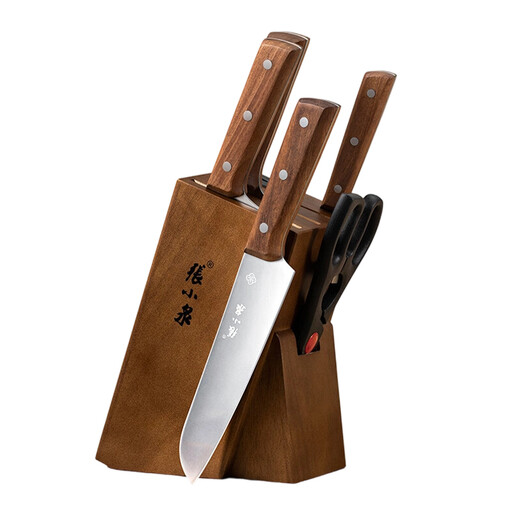
Why this product suits the profile: The wood holder with multiple tools and scissors is ideal for buyers who want to store their cooking utensils centrally and visibly.
The contents are clearly described as a holder, multiple tools and scissors. This lets you check before buying whether the set suits your existing kitchen.
Integrated wood holder; multiple kitchen tools and scissors in one set.
We’ve put together a complete, regularly updated list of products that fully meet these strict selection criteria and the safety regulations in force in the EU.
A kitchen knife only really shows its practical value when paired with the right accessories. A sufficiently large chopping board provides space and supports controlled cuts. A vegetable peeler handles thin peeling of potatoes, carrots or apples, while kitchen scissors can be suitable for herbs, packaging and certain cutting tasks.
For non-stick pans, a tool with a smooth, non-scratching contact surface is sensible. The offered bamboo turner with a 30 cm long handle is described as suitable for non-stick cookware. Nevertheless, buyers should check the care instructions and temperature limits before use.
When it comes to storage: never store knives loose among other cutlery. A blade guard, a knife block or a separate drawer insert protects the edge and reduces the risk of injury. Children should not have access to exposed knives.
For cooking beginners, a versatile kitchen knife with a manageable blade length is often more practical than an extensive specialist set. If you regularly prepare different ingredients, you can later add a vegetable knife, meat knife or a vegetable peeler.
The lifespan of the edge depends on the material, build quality, chopping board and usage. Hard surfaces, lateral levering motions and cutting through bones can dull the edge more quickly. A suitable board and proper sharpening help extend its useful life.
That depends on the manufacturer’s instructions. If dishwasher suitability isn’t stated, hand washing with mild detergent and immediate drying is recommended. Especially with knives that have wooden or delicate handle components, the dishwasher can cause material changes.