
Lieferung heute & morgen

Qualitätsgarantie

Willkommens-Angebote freischalten: KOSTENLOSE Lieferung | Bis zu 80 % RABATT | Kostenlose 30-Tage-JoyPlus-Testphase
App herunterladen
If you want to buy a kitchen machine, you will find models with high wattage ratings, extensive accessory sets and bowls in various sizes. However, the number on the rating plate is not the only factor that matters when choosing the right model. What counts is how often you prepare dough, how much you need to process and whether you will genuinely use the additional functions.
A specification such as 1200-watt kitchen machine initially describes the electrical power consumption or the motor output stated by the manufacturer. On its own, it does not indicate how well a machine handles heavy yeast dough. The gearbox, mixing system, permitted dough quantity and operating instructions are equally important.
Some models also state peak and rated power differently. For example, the monsga SM100 has a peak power of 1000 watts and a rated power of 600 watts. When comparing models, make sure you compare like-for-like figures.
A kitchen machine with a bowl that has a nominal capacity of 6 litres cannot automatically process 6 litres of dough. The permitted quantity depends on the recipe, consistency and manufacturer’s specifications. The monsga SM100, for example, is listed with a 6-litre bowl but a recommended capacity of 5 litres.
For families and home bakers, a 5-litre kitchen machine or larger may be a sensible choice. For small kitchens and occasional baking, a more compact bowl may be more practical, as it requires less worktop and storage space.
A mincer, blender attachment or integrated scale can extend the machine’s capabilities. However, if you only prepare cakes, bread and pizza, you do not necessarily need a multifunctional kitchen machine. Before buying, check:
For a kitchen machine for kneading, low speed settings and a suitable dough hook are just as relevant as the wattage. A planetary mixing system moves the tool around the bowl, allowing it to reach different areas of the mixture. Several higher speed settings and a whisk are useful for cream or egg whites; for yeast and pizza dough, a low to medium setting is usually recommended.
Also pay attention to operating and rest times. Overheating protection or automatic switch-off can provide additional safety in everyday use, but it does not replace compliance with the maximum dough quantity.
A kitchen machine with a mixing bowl made from stainless steel is resistant to many common kitchen ingredients and is usually easy to clean. Important considerations include:
A large bowl is not automatically more convenient for small quantities. When using only a few ingredients, it is important that the mixing attachment works sufficiently close to the bottom of the bowl.
A tilting motor-head design makes it easier to change the dough hook, flat beater and whisk. Non-slip feet or suction cups can improve stability. The machine must be switched off and unplugged before cleaning and before changing any accessories.
For use in Germany, check that it has the appropriate mains voltage of 220 to 240 volts, clear operating instructions and details of the responsible person in the EU. The motor housing, cable and plug must not be immersed in water.
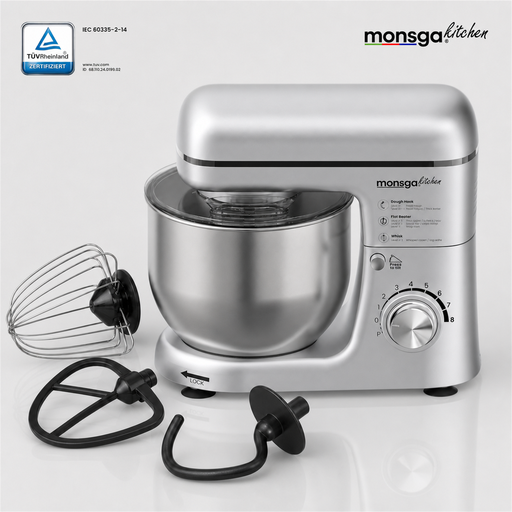
Why this product suits this profile: The 6-litre stainless-steel bowl, eight speed settings and three core attachments cover typical baking and cooking tasks.
The recommended capacity of 5 litres clearly shows the difference between bowl volume and a sensible usable quantity.
Stainless-steel bowl, tilting motor head, dough hook, flat beater and whisk; according to the product specifications, the attachments are dishwasher-safe.
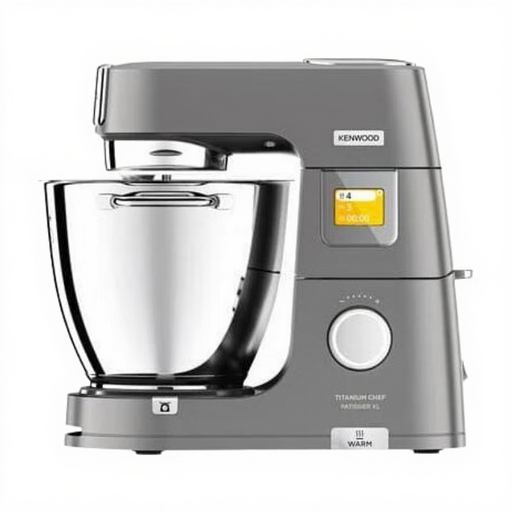
Why this product suits this profile: This model combines a 1400-watt rating with an integrated scale, timer, heating function and two bowls holding 7 and 5 litres respectively.
The equipment is clearly specified: an integrated scale, timer, EasyWarm bowl and additional mincer, rather than vague multifunction marketing.
Two bowl sizes, an integrated scale and timer, plus a 4-piece patisserie set and mincer included in the box.

Why this product suits this profile: In addition to mixing and kneading, the set includes a mincer and blender attachment for juices, sauces and purées, according to the manufacturer.
The additional functions are assigned to specific attachments. Before buying, check whether you will use the mincer and blender regularly.
6-quart stainless-steel bowl, 1300-watt maximum rating, eight speeds and a safety cut-off when the motor head is raised.
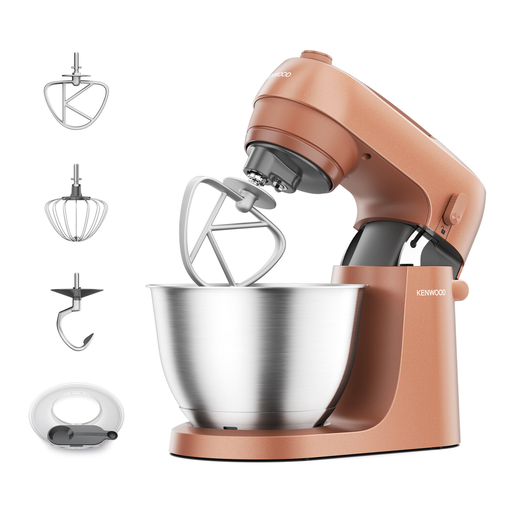
Why this product suits this profile: At 30 centimetres high, with a 4-litre bowl and front controls, this machine is designed for kitchens with limited worktop and storage space.
The compact height and stated maximum quantities make it easier to plan for a machine that suits both your kitchen and your actual needs.
800-watt motor, six speed settings, pulse function, stainless-steel bowl and three standard attachments.
We have put together a complete, regularly updated list of products that fully meet these strict selection criteria and the safety regulations applicable in the EU.
There is no fixed wattage that can be used as the sole measure of quality. For yeast dough, the motor, gearbox, mixing system and permitted dough quantity are all important. Compare rated and peak power, and observe the operating limits specified by the manufacturer.
For families, bowls holding around 5 to 7 litres are practical, provided your worktop and the maximum permitted dough quantity can accommodate them. A DuoBowl solution with 7- and 5-litre bowls can handle different recipe quantities.
Dishwasher-safe attachments, a splash guard and an integrated scale can simplify preparation and cleaning. Nevertheless, check the care instructions, as the motor unit, cable and plug should generally only be cleaned with a damp cloth.