
Lieferung heute & morgen

Qualitätsgarantie

Willkommens-Angebote freischalten: KOSTENLOSE Lieferung | Bis zu 80 % RABATT | Kostenlose 30-Tage-JoyPlus-Testphase
App herunterladen
An LED bulb doesn’t automatically make a suitable replacement for a traditional incandescent or halogen lamp. Mistakes often happen because people only look at the wattage or a low price. For British households, however, several technical specifications matter: cap type, luminous flux, colour temperature, beam angle and area of use.
With an LED bulb, the wattage primarily describes the power consumption. What really determines brightness is the luminous flux in lumens. For example, an LED lamp with 6 W and 510 lm gives a noticeably different light than one with 12 W and 1,170 lm.
As a rough guide:
The stated incandescent equivalent is only a comparison value. It doesn’t replace checking the actual lumens.
A daylight lamp 6500K produces a very cool, white light. This can be useful in work areas, cellars or utility rooms, but may feel out of place in a bedroom or living room. A neutral white LED lamp 4000K sits between warm and cool light and often works well in kitchens, hallways, studies or bathrooms not directly exposed to moisture.
For choosing, bear in mind:
The term “daylight” refers to a colour temperature and is not a medical or therapeutic claim.
A narrow beam angle can create visible light cones and darker edges. An LED lamp with a 360° beam angle distributes light all around, provided the fitting doesn’t restrict this with a shade or housing. This can be practical for open ceiling lights, floor lamps or certain pendant lights.
You also need to check that the diameter and length fit your existing light. An E27 spiral bulb 160 mm high won’t fit into every small table or wall lamp.
The LED lamp E27 has a large screw thread and is common in many ceiling, floor and table lights. The LED lamp E14 has a smaller screw thread and is often used in candle lights, small wall lamps or decorative fittings.
Before ordering, you should:
Most of the models considered here are designed for 220–240 V and indoor use. An IP20 rating is not intended for damp or wet areas.
The energy efficiency class is stated on the product data sheet and should be considered alongside wattage and lumens. Low consumption alone doesn’t tell you whether the brightness is sufficient for the room. For running costs, you can calculate roughly:
Power in kW × operating hours × electricity price = electricity cost
A 7-watt LED lamp uses around 7 kWh over 1,000 operating hours. The actual cost depends on your individual electricity tariff and how long you use it.
A long-lasting LED lamp is usually rated with a nominal lifespan in hours and a number of switching cycles. These values are technical manufacturer specifications and not a guarantee for every installation situation. Heat, poor ventilation and frequent switching can affect performance.
So look out for:
Many of the products mentioned are described as mercury-free LED lighting. This makes choosing easier compared to mercury-containing bulbs, but doesn’t replace disposal via appropriate collection points for waste electrical and electronic equipment.
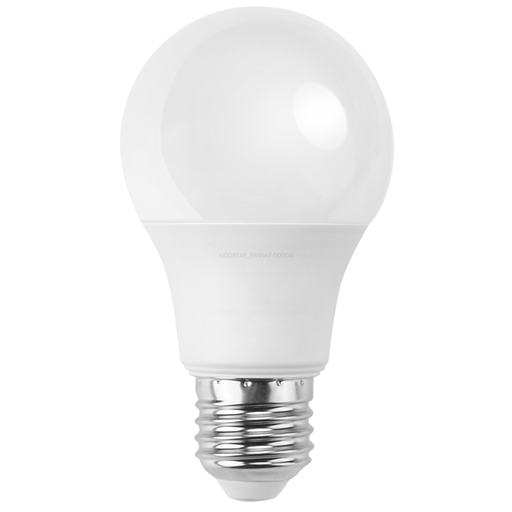
Why this product fits the profile: The E27 cap, 730 lm and 4000K make it a straightforward replacement for many standard lights in kitchens, hallways or studies.
Lumens and colour temperature are clearly stated, making it easier to match the brightness to your intended room.
8 W, 730 lm, 4000K, 190° beam angle and a stated 15,000-hour lifespan.
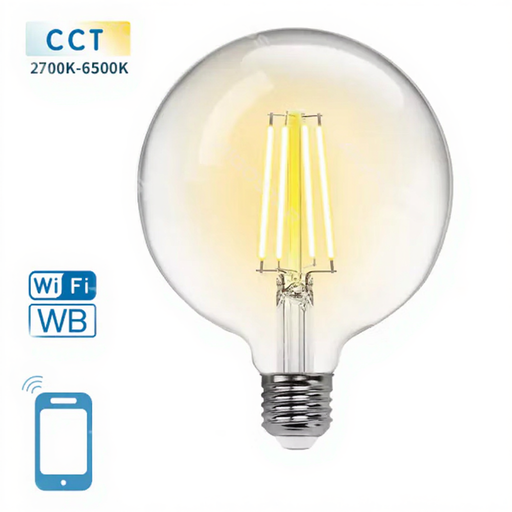
Why this product fits the profile: This smart E27 lamp combines a decorative G80 shape with adjustable colour temperature and WiFi control for different room settings.
The cap, 6 W power and range from 2700K to 6500K are clearly stated; check smart home compatibility with your system before buying.
6 W, dimmable CCT colour control, 360° lighting according to the product description, plus WiFi functionality.
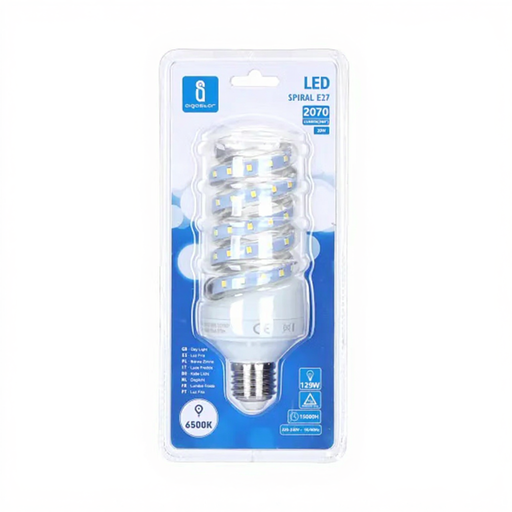
Why this product fits the profile: The high light output and stated 360° beam angle are ideal for larger indoor areas, halls or fittings where all-round light distribution is visible.
The dimensions of 61 × 160 mm and the ventilation note help you avoid choosing a fitting that is too small or enclosed.
20 W, 2,070 lm, 6500K, 360° beam angle and a stated 15,000-hour lifespan.
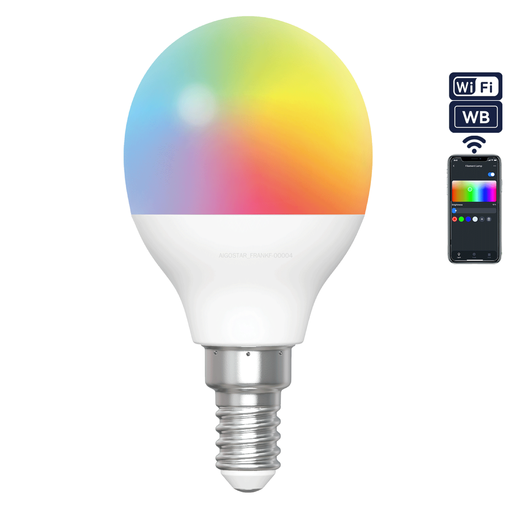
Why this product fits the profile: The E14 cap, RGB+CCT function and WiFi plus Bluetooth connectivity suit small decorative lights and adjustable lighting scenes.
Connection is via WiFi or Bluetooth; according to the product information, a 2.4 GHz WiFi network is required for setup. Only use external dimmers if they are explicitly stated as suitable.
6.5 W, 555 lm, RGB+CCT from 2700K to 6500K, 230° beam angle and Alexa compatibility according to the product data.
We’ve put together a full, regularly updated list of products that fully meet these strict selection criteria and the safety regulations in force in the EU.
A classic energy-saving LED lamp is usually used as a direct replacement: screw in the cap, switch on and use. A dimmable LED lamp, on the other hand, requires a compatible fitting or a suitable LED dimmer. Not every lamp can be controlled with an existing wall dimmer.
With a smart LED lamp, buyers should also check:
RGB+CCT lamps combine coloured light with an adjustable white light temperature. This is versatile in function, but not necessary for every fitting. For basic ambient lighting, a fixed colour temperature can be the simpler choice.
That depends on the room size, the position of the fitting and the desired brightness. For smaller lights, 400 to 600 lm can be enough. In larger rooms or with only one central light, higher values make sense. Multiple bulbs often distribute light more evenly than a single very bright one.
The product specification varies by model, for example 15,000 or 25,000 hours. This figure describes the intended nominal lifespan under the stated conditions. Heat, frequent switching and a lack of ventilation can affect the actual service life.
LED lamps often require less electrical power than traditional incandescent or halogen lamps for a comparable brightness. For a fair assessment, however, you should consider wattage, lumens, daily operating time and your electricity price together.