
Lieferung heute & morgen

Qualitätsgarantie

Willkommens-Angebote freischalten: KOSTENLOSE Lieferung | Bis zu 80 % RABATT | Kostenlose 30-Tage-JoyPlus-Testphase
App herunterladen
If you want to buy LED lamps, you will find a wide range online for bedrooms, home offices, children’s rooms, living rooms and use on the go. However, the differences are not limited to design. Brightness, power supply, light colour, controls and safety information all determine whether a lamp is genuinely practical for everyday use.
Typical poor purchases often result from three common marketing traps:
Brightness is usually specified in lumens (lm). A small reading lamp needs considerably less light than a desk lamp or a floor lamp intended to illuminate a room. It is also important to consider whether the light is directed at a specific surface or distributed throughout the room.
A dimmable lamp offers greater flexibility when it is used at different times of day or for various activities. Check whether the brightness can be adjusted in steps or continuously. With a desk lamp, an adjustable lamp head can also be useful, as it helps prevent the light from shining directly into your eyes.
Colour temperature is specified in Kelvin (K):
The colour rendering index (CRI) describes how naturally colours appear under the light. A high CRI value can be relevant when drawing, doing crafts or working with coloured documents. Manufacturer specifications such as CRI 97 should be understood as technical product information and considered alongside the other data for the particular model.
When it comes to “eye protection”, specific features are more useful: glare limitation, low-flicker lighting technology, adjustable brightness and a suitable light colour. According to the manufacturer, the Honeywell H4 has an RG0 rating, an anti-glare design and a CRI of 97. This is a product characteristic, not a medical claim.
A rechargeable lamp can be used flexibly, but it requires regular charging. You should therefore check:
For mains-powered lamps, the voltage must be compatible with the German power supply. This is particularly important with international offers. For example, the Honeywell HWL-02E Pro is specified as 110 volts. Before buying it in Germany, you should explicitly check compatibility and the required version.
Products with sturdy construction, simple controls and clear battery information are suitable for children. A children’s torch is not automatically waterproof. Instructions such as “do not immerse in water” or “do not shine directly into the eyes” should be followed in everyday family life.
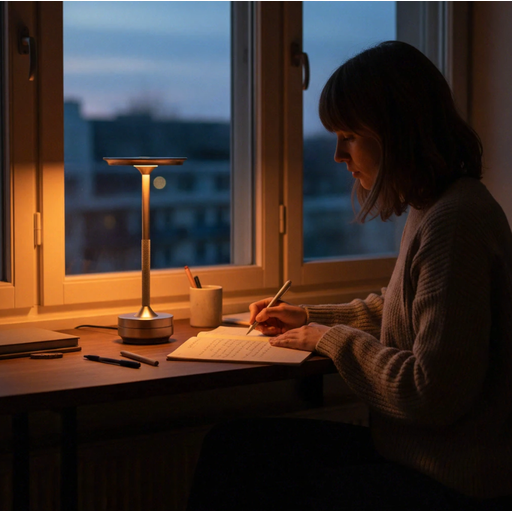
Why this product suits this profile: This cordless LED lamp can be used on a bedside table, side table or desk without installation. It offers an adjustable colour temperature from 3000 to 6500 K and a USB-C connection.
The product details specify the battery capacity, charging time, runtime and dimming range. This makes it easier to assess charging requirements before buying.
1800-mAh battery, stated operating time of up to 6 hours, USB-C charging and continuous dimming via touch controls.
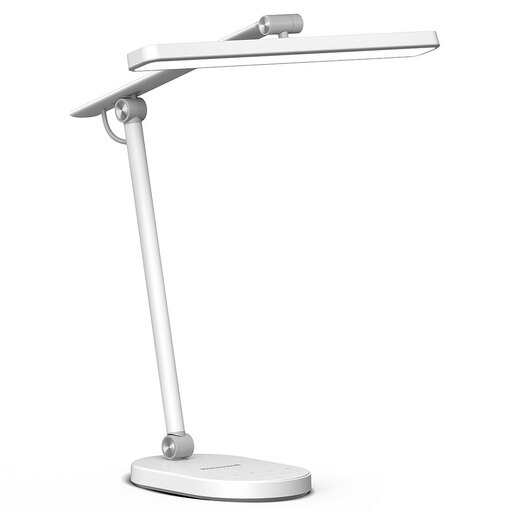
Why this product suits this profile: This desk lamp is designed for people who need different lighting moods and precise positioning when working or studying.
Rather than offering just one brightness level, the manufacturer specifies five brightness levels, three colour temperatures and automatic adjustment via an ambient light sensor.
700 lumens, 3000 to 5000 K, adjustable arm and lamp head, 60-minute timer and memory function.
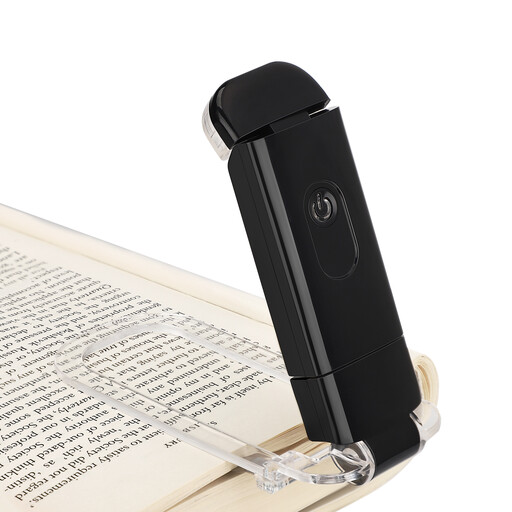
Why this product suits this profile: Designed as a reading lamp for the bed, train, aeroplane or travel luggage, this compact model is ideal for users who move between different locations.
The lamp can be used freestanding or attached with the clip. Its swivel and tilt functions help direct the beam precisely onto the book.
Weight of 37 g, 16 lumens, two brightness levels, 3000 K colour temperature and stated runtime of up to 8 hours.
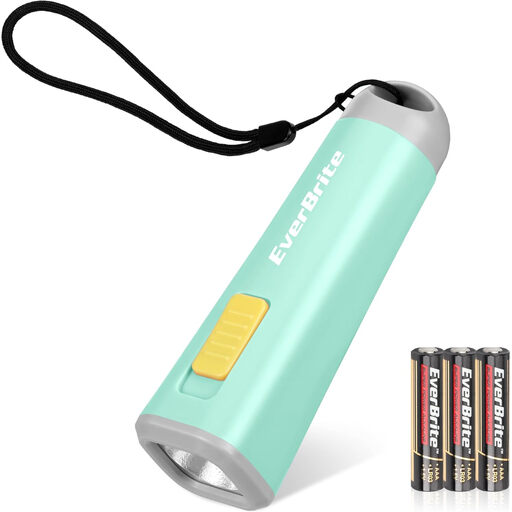
Why this product suits this profile: This children’s torch is designed for school, camping, reading and power cuts. Its light weight makes it easy to carry in a rucksack.
The product description explicitly states that the model is not waterproof and must not be shone directly into the eyes. Batteries should be kept out of the reach of young children.
Weight of 46 g, 25 to 30 lumens, warm yellow LED light and three AAA batteries included.
We have put together a complete, regularly updated list of products that fully meet these strict selection criteria and the safety regulations applicable in the EU.
A lamp should suit the size of the room and the activity. For a desk, even illumination across the work surface is useful. With a bedside lamp, compact dimensions, a warm light colour and simple controls are often more important.
For a cordless model, it is advisable to choose a regular charging spot. This keeps the lamp ready to use and prevents the battery from being unnecessarily deeply discharged. Lithium batteries should no longer be used if they become unusually hot, are damaged or show visible swelling.
When buying energy-efficient lighting, it is worth looking at the wattage, operating time and frequency of use. LED technology generally requires less electrical power than traditional incandescent bulbs. However, the actual running costs depend on the wattage, daily usage time and electricity tariff.
A reading lamp or desk lamp with targeted light direction is suitable for reading. Adjustable brightness and a comfortable colour temperature between warm white and neutral white make it easier to adapt the light to the room. A clip-on lamp is practical when the light only needs to illuminate a small area.
The lifespan depends on the LED module, heat dissipation, electronics and usage. Some product details, for example, specify 30,000 hours. Such figures are manufacturer estimates and are not a guarantee of identical usage time in every household. With battery-powered lamps, you should also take battery ageing into account.
You can estimate the cost using this formula:
Power in kilowatts × operating hours × electricity price per kilowatt-hour
A 10-watt lamp used for 5 hours a day consumes 0.05 kilowatt-hours per day. For a precise estimate, use the actual wattage and your personal usage time.