
Lieferung heute & morgen

Qualitätsgarantie

Willkommens-Angebote freischalten: KOSTENLOSE Lieferung | Bis zu 80 % RABATT | Kostenlose 30-Tage-JoyPlus-Testphase
App herunterladen
LED lamps offer a wealth of possibilities: as an LED floor lamp in the living room, an LED table lamp on the bedside table, an LED light strip in a cupboard, or as colourful accent lighting for gaming and entertainment areas. However, the sheer range can make it difficult to compare. Wattage, lumens, colour temperature, control options and installation have a greater impact on everyday usability than a striking design.
Wattage describes power consumption, not directly the brightness. For comparison, the luminous flux in lumens is what matters. An LED lamp with 1,300 lumens is significantly brighter than a decorative model with 30 lumens, even if both use modern LED technology.
Warm white light around 2,700 to 3,000 Kelvin is often suitable for a relaxing living atmosphere. Neutral or cool white light can be more practical for work surfaces and in the kitchen. A dimmable LED lamp should not just be advertised as "dimmable": check whether the dimming is integrated, stepless, or only possible via a compatible external dimmer.
An LED light strip with adhesive tape requires a clean, dry surface. Rechargeable models need to be charged regularly via USB. Luminaires with IP20 are intended exclusively for dry indoor areas and should not be used in damp spaces. For permanently installed luminaires, such as a ceiling light or pendant light, the electrical connection must only be carried out by a suitably qualified professional.
With a smart LED ceiling light or an RGBIC LED strip, additional points come into play: does the luminaire support Bluetooth, Wi-Fi, Matter or a specific app? Does the control work without a cloud connection? These details affect the setup and compatibility with your existing smart home system.
Consumption is given in watts, and the EU energy efficiency class is shown on the energy label. A low wattage does not automatically mean high efficiency, as the luminous flux must also be considered. Therefore, compare lumens per watt where possible, and pay attention to the stated lifespan and the number of switching cycles.
An LED arc lamp needs sufficient depth for the curved arm, in addition to its height. Under wall-mounted cupboards, the installation depth is the main consideration. For an LED cupboard light, the sensor range and mounting surface are also important. Check before you buy:
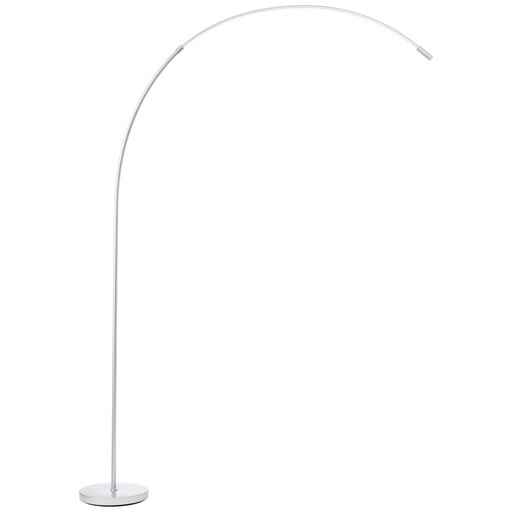
Why this product fits the profile: The 179 cm tall LED arc lamp combines a curved form with integrated LED technology, 1,300 lumens and an adjustable colour temperature from 3,000 to 6,500 Kelvin.
Brightness, colour temperature and dimming are all clearly specified. The touch switch is located on the lamp head, so operation is possible without bending down.
14 W power consumption, 2.28 m cable and stepless internal dimming. IP20 protection rating for dry indoor areas.
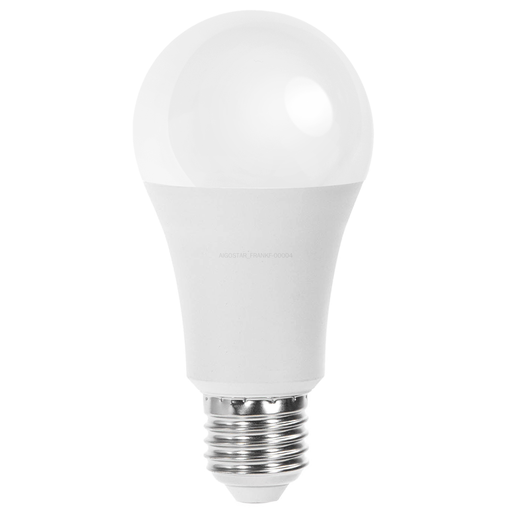
Why this product fits the profile: The E27 LED bulb can be used in existing compatible fittings and delivers warm white light at 3,000 Kelvin.
The relevant values are clearly stated: 1,500 lumens, 15 W, 190° beam angle and E27 cap. This makes it easy to match the bulb with your existing luminaire.
15,000 hours stated lifespan, 7,500 switching cycles and CRI Ra ≥ 80. Designed for dry indoor areas with 220–240 V.

Why this product fits the profile: Two 30 cm long lights with PIR sensor, three colour temperatures and a USB-rechargeable 1,100 mAh battery are ideal for cupboards, shelves and hallways.
The sensor range of 3 to 5 m, the battery capacity and the dimensions of 300 × 38 × 10 mm are all specified. This makes planning before installation much easier.
Tool-free installation with adhesive strips, automatic activation and a choice between 2,800–3,200 K, 4,500–5,000 K and 6,500–7,000 K.
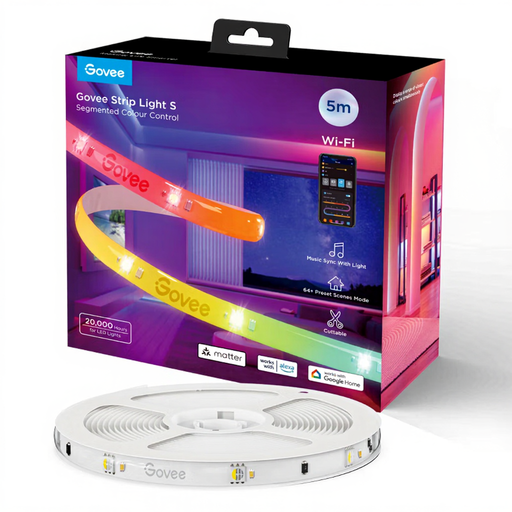
Why this product fits the profile: The 5 m long RGBIC LED strip supports Wi-Fi, Bluetooth and Matter, and enables segmented colour effects for the living area, gaming setup or home cinema.
The compatibility is not just vaguely described as "smart": Wi-Fi, Bluetooth and Matter are specifically named. The coating is intended for indoor use, not for wet rooms.
24 W input power, 24 LEDs per metre and app control with scene modes. The strip must not remain coiled when switched on.
We have compiled a complete, regularly updated list of products that fully meet these strict selection criteria and the safety regulations in force in the EU.
This depends on the room size, the number of luminaires and the desired light distribution. For a decorative table lamp, a few hundred lumens may be sufficient. A central or uplighting luminaire usually needs significantly more. Also compare the beam angle, so that the brightness is not just concentrated in one spot.
The lifespan is stated by the manufacturer in hours and depends on temperature, operating time, switching cycles and ventilation. A value such as 15,000 hours is a technical specification, not a guarantee for every installation situation. LED bulbs should not be covered and should only be operated within the intended ambient temperature range.
The running costs depend on the power, daily usage time and electricity tariff. The simple calculation is: wattage ÷ 1,000 × operating hours × electricity price. With smart lighting systems, a small standby consumption may also occur. For a fair comparison, you should therefore consider not only the purchase price, but also the power, lifespan and features.