
Lieferung heute & morgen

Qualitätsgarantie

Willkommens-Angebote freischalten: KOSTENLOSE Lieferung | Bis zu 80 % RABATT | Kostenlose 30-Tage-JoyPlus-Testphase
App herunterladen
LED lighting can save electricity in the home, make walkways safer and provide targeted illumination for work surfaces. The range extends from simple LED night lights and sensor lights to LED cupboard lighting and LED TV backlighting. However, the sheer variety of products can make comparison difficult.
Three typical purchasing decisions often lead to unnecessary expense:
Brightness is measured in lumens (lm), not watts. Watts primarily describe power consumption. 40 lumens may be sufficient for an orientation light in a hallway, while a task light may require considerably more illumination.
Colour temperature is specified in Kelvin (K):
A CRI or Ra value of 80 or above indicates how naturally colours appear under the light. This value does not replace personal assessment, but it does allow for a more objective comparison.
A twilight sensor measures the brightness of the surrounding area. According to the product specifications, the Aigostar LED Night Light switches on when the brightness falls below 20 lux and switches off again when sufficient light is available. A PIR sensor, by contrast, detects movement. The 20 cm cupboard light is specified as having a detection range of 3 to 5 metres.
You should also check whether the light:
A wireless LED lamp can be installed flexibly, but needs to be charged regularly. With socket-powered models, this maintenance step is not required.
Measure the available space before buying. For cupboards and shelving, length, depth and installation clearance are important. Adhesive strips are suitable for smooth, clean surfaces; on uneven surfaces, mechanical fastening may be more reliable.
The IP rating is relevant for damp rooms and outdoor areas. IP20, as used for the Aigostar Night Light, indicates use in dry indoor spaces. An outdoor wall light with a motion sensor should only be used if the stated IP rating and installation instructions cover the intended location. The product description for the Pheashine U-shaped outdoor wall light refers to a weather-resistant construction; the specific IP rating should be checked against the listing and packaging before installation.
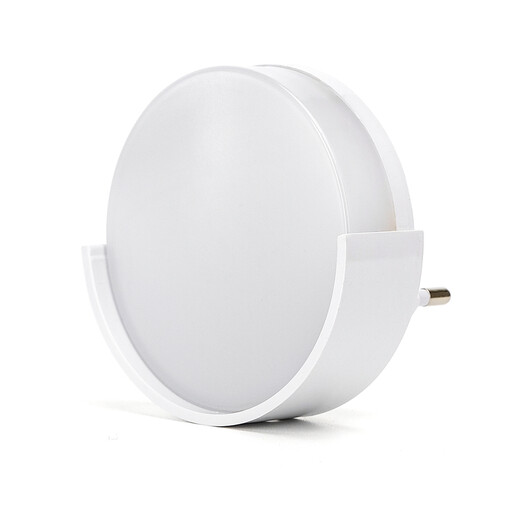
Why this product suits this profile: This socket-powered model is suitable for hallways, children's bedrooms or stairways when you want subtle orientation lighting at night without having to replace batteries.
The specified light sensor operates below 20 lux; the product is also rated at 40 lumens, 1 watt and IP20 for dry indoor spaces.
Socket-powered operation without a rechargeable battery; 6500 K, 40 lm and a stated lifespan of 25,000 hours.
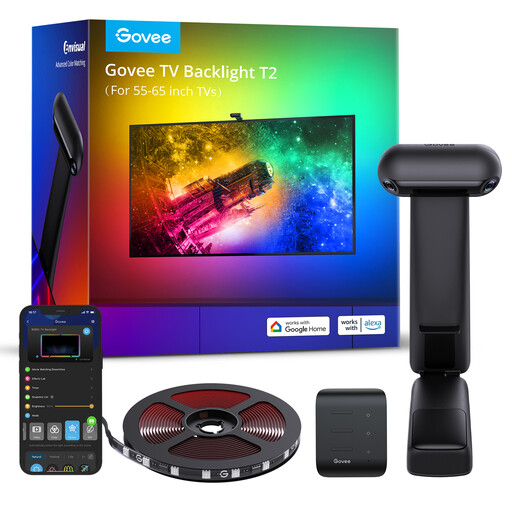
Why this product suits this profile: TV and gaming users get a system designed for 55- to 65-inch screens, with app control and two cameras that match the colours at the edge of the screen.
Compatibility is clearly limited to 55–65-inch televisions. The system is intended for indoor use and requires a 2.4 GHz Wi-Fi connection.
RGBIC technology, music mode and control via the Govee app, Alexa or Google Assistant; a 12-volt power adapter is required.

Why this product suits this profile: This compact daylight lamp is a good option for users looking for a mains-powered light with stated illumination data and a flexible stand.
According to the product data, the stated output of around 10,000 lux applies at a distance of 10 cm. The actual distance from the lamp should therefore be taken into account during use.
LED technology, a flicker-free and UV-free design according to the product description, plus horizontal and vertical positioning.

Why this product suits this profile: The two slim lights are suitable for kitchen wall units, wardrobes and shelving when you want to install them without drilling.
The PIR sensor has a stated range of 3–5 metres. The light is available not just in one colour, but with three colour temperatures.
800 mAh battery, USB charging, 21 LEDs per light and dimensions of 200 × 38 × 10 mm.
We have put together a complete, regularly updated list of products that fully meet these strict selection criteria and the safety regulations applicable in the EU.
For a child's bedroom, a star projector such as the Nomader VIVREAL can combine decorative light projection with a speaker function. Before buying, check the volume, timer, power supply and whether it can be placed safely out of the reach of young children.
For outdoor areas, the installation location, connection and IP rating are key considerations. According to the product description, a Pheashine outdoor wall light with 24 watts, light and motion sensors and 3,000 Kelvin is intended for paths, entrances and patios. Outdoor electrical lights should be installed according to the instructions; if you are unsure, consult a qualified electrician.
Consumption depends on the wattage and how long the light is used each day. A 1-watt light used for ten hours theoretically consumes 0.01 kilowatt-hours. To calculate the running cost, multiply this figure by your electricity tariff. Sensor and twilight functions can reduce operating time compared with lights that remain switched on continuously.
The manufacturer specifies the lifespan in operating hours. The Aigostar LED Night Light mentioned above is rated for 25,000 hours. This is a product specification and depends, among other things, on temperature, the power adapter, switching cycles and operating conditions. Good ventilation and a suitable power supply help ensure proper operation.
For simple orientation, a dimmed LED night light with a twilight sensor is often sufficient. If you want the light to come on only when someone enters the hallway, a sensor light with PIR motion detection is more suitable. Make sure it is positioned to avoid glare, provides enough brightness for steps and, where children are concerned, is installed securely and left uncovered.