
Lieferung heute & morgen

Qualitätsgarantie

Willkommens-Angebote freischalten: KOSTENLOSE Lieferung | Bis zu 80 % RABATT | Kostenlose 30-Tage-JoyPlus-Testphase
App herunterladen
Choosing the right LED wall light can be a challenge. The market offers a wealth of designs and features, but not every light delivers on its promises. Many buyers invest in products that show defects after a short time or are unsuitable for their intended location. To help you make an informed decision, we'll highlight the three most common pitfalls and show you which technical features really matter.
The most common traps when buying LED wall lights:
waterproof for outdoor use but only has an IP44 protection rating. This rating only protects against splashing water and is often insufficient for unprotected facades exposed to heavy rain. The result is corrosion and short circuits.dimmable wall light does not automatically work with every standard wall dimmer. Special LED dimmers (trailing-edge or leading-edge dimmers) are often required, leading to unexpected additional costs and installation problems.To avoid a bad purchase, you should base your selection on objective criteria. The following three parameters are crucial for the longevity and functionality of your new lighting.
The IP (Ingress Protection) rating indicates how well a light is protected against the ingress of foreign objects (first digit) and water (second digit).
The colour temperature, measured in Kelvin (K), determines the lighting mood.
The material affects not only the appearance but also the durability, especially outdoors.
A popular effect is the up and down light, where cones of light are cast both upwards and downwards onto the wall. This creates indirect, glare-free illumination and sets architectural accents.
Based on the quality criteria mentioned, we have compiled a few models for different needs and applications.
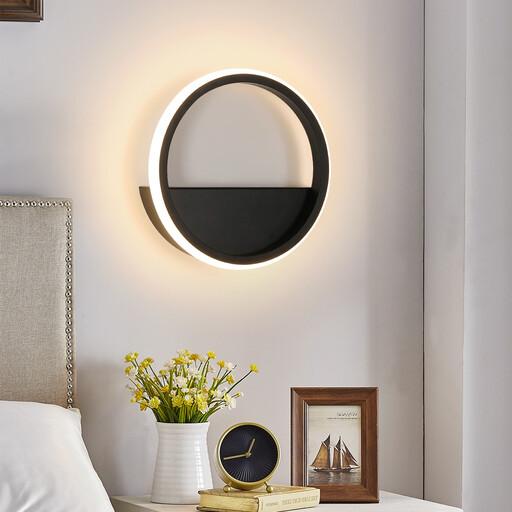
Why This Fits Their Persona: Ideal for anyone looking for simple yet stylish indoor lighting. The round, modern design in black fits perfectly in the hallway, staircase, or as an accent in the bedroom without breaking the bank.
This light is clearly declared as an indoor light (IP20) and makes no promises about dimmability. This avoids compatibility issues and installation disappointments from the outset.
The aluminium housing is robust and more durable than all-plastic models. The 3000K warm white light colour creates a pleasant atmosphere.
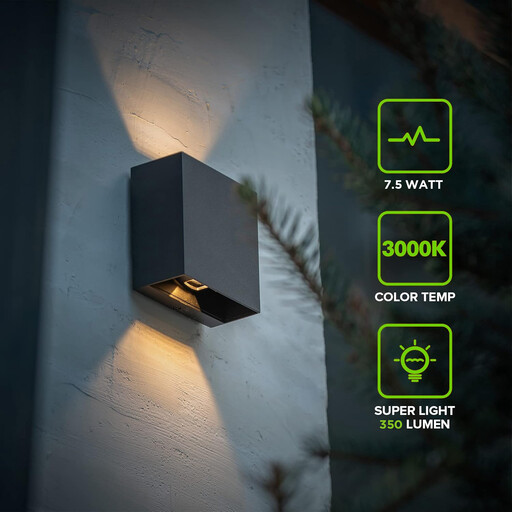
Why This Fits Their Persona: Perfect for users who are looking for not just a light, but a design element. The adjustable beam angle allows for custom up-and-down light effects on the facade or in the living room.
The rustproof aluminium housing and waterproof construction are designed for longevity. According to the manufacturer, the integrated LED has a lifespan of 50,000 hours, which counteracts the concern of a "throwaway" light.
The main feature is the individually adjustable beam angle (0-106 degrees), which enables creative lighting designs. The light is suitable for both indoor and outdoor use.
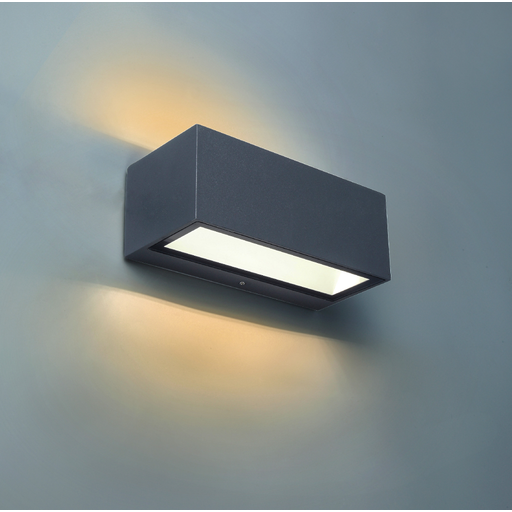
Why This Fits Their Persona: For homeowners who need robust and powerful lighting for their facade, entrance area, or terrace. The design is modern and functional, built for permanent outdoor use.
With an IP54 rating, this light is explicitly protected against dust and splashing water from all sides, exceeding the minimum standard of IP44. This makes it a reliable choice for unprotected exterior walls and avoids the trap of inadequate water resistance.
The die-cast aluminium housing is extremely weather-resistant. With 1300 lumens, the light offers high luminous efficacy and ensures bright, safe illumination.
We have compiled a complete, up-to-date list of products that fully meet these strict selection criteria and UK safety regulations.
The IP rating indicates how well a light is protected against the ingress of foreign objects (first digit) and water (second digit). For dry indoor spaces, IP20 is sufficient. For bathrooms or sheltered outdoor areas, at least IP44 is required. For areas exposed to direct rain, a higher rating like IP54 or IP65 is recommended.
No, not necessarily. "Dimmable" often means the light requires a compatible LED dimmer. Standard incandescent dimmers can cause flickering, buzzing, or damage to the electronics. Check the manufacturer's specifications before purchasing to determine which type of dimmer (e.g., leading-edge or trailing-edge) is required.
The lifespan figures provided by manufacturers (e.g., 25,000 or 50,000 hours) are laboratory values under ideal conditions. In practice, the actual lifespan can be affected by factors such as ambient temperature, voltage fluctuations, and frequency of use. High-quality thermal management and a robust housing, as found in aluminium lights, can contribute to a longer real-world lifespan.