
Lieferung heute & morgen

Qualitätsgarantie

Willkommens-Angebote freischalten: KOSTENLOSE Lieferung | Bis zu 80 % RABATT | Kostenlose 30-Tage-JoyPlus-Testphase
App herunterladen
Anyone looking to buy Magnesium 400 mg will find a wide range of tablets, effervescent tablets, direct granules and capsules. However, the products differ in more than just price. The key factors are the actual amount of magnesium they contain, the magnesium compound used, the form of the supplement and any added vitamins or minerals.
With high-dose magnesium in particular, some common advertising claims can lead to unsuitable purchases. Checking the product information carefully makes it easier to choose the right magnesium food supplement for your daily routine.
Packaging may, for example, state a high number of milligrams of “magnesium citrate” or “magnesium oxide”. However, what really matters is how much elemental magnesium is contained in each daily serving. For a product providing 400 mg of magnesium, this is generally equivalent to 107% of the EU Nutrient Reference Value (NRV).
An indication such as “1,422 mg magnesium glycinate” does not automatically mean that the product contains 1,422 mg of elemental magnesium. Buyers should therefore check the nutrition table rather than relying solely on the product name.
Magnesium 500 mg or Magnesium 600 mg may be of interest to certain users, but they also increase daily intake. According to the product warnings for several supplements, amounts above 250 mg from food supplements may have a laxative effect in sensitive individuals.
The recommended daily dose must not be exceeded. If you have impaired kidney function, an existing medical condition, are pregnant or breastfeeding, or regularly take medication, you should discuss your choice with a doctor or pharmacist.
Effervescent tablets often contain acidity regulators, sweeteners and flavourings. Direct granules may contain sorbitol, aspartame or other sweeteners. If you have any intolerances, it is therefore worth checking the complete ingredients list.
Practicality also matters in everyday life: a tablet taken with water is suitable for use at home, while magnesium direct granules can be more convenient when you are out and about, as they can be taken without water. If you have difficulty swallowing, you could choose gummies or a soluble format.
Always compare the stated “magnesium per daily dose”. Among the products considered here, amounts range from 125 mg in gummies to 300 mg and 400 mg, and up to Magnesium 500 mg or Magnesium 600 mg.
For a targeted search for high-dose magnesium, the following information is particularly easy to compare:
Magnesium citrate, magnesium bisglycinate, magnesium oxide and magnesium carbonate differ in their chemical form and the amount of space they require per serving. The product description should therefore clearly state which compound is used.
Claims of “better absorption” should not be accepted without checking them. The specific nutrition and ingredients information for the individual product remains decisive.
Magnesium with vitamin B may appeal to buyers who want to combine several nutrients in a single serving. Common additions include vitamins B1, B6 and B12, as well as folic acid. Other products contain potassium, calcium, vitamin D or vitamin C.
However, such combinations are not automatically suitable for every need. If you already take several food supplements, you should avoid duplicating vitamins and minerals.
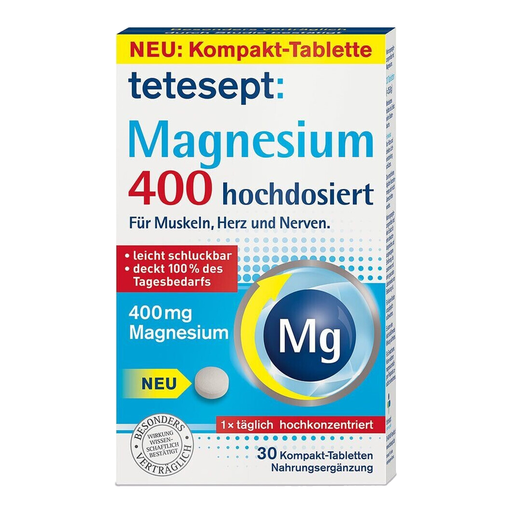
Why this product suits the profile: A simple tablet solution providing 400 mg of magnesium per daily dose, with 30 tablets. The product information states that the formula is gluten-free and lactose-free.
The daily amount is clearly stated as 400 mg. This makes it easier to compare the dosage with other magnesium products.
400 mg of magnesium per tablet; compact format for daily use.
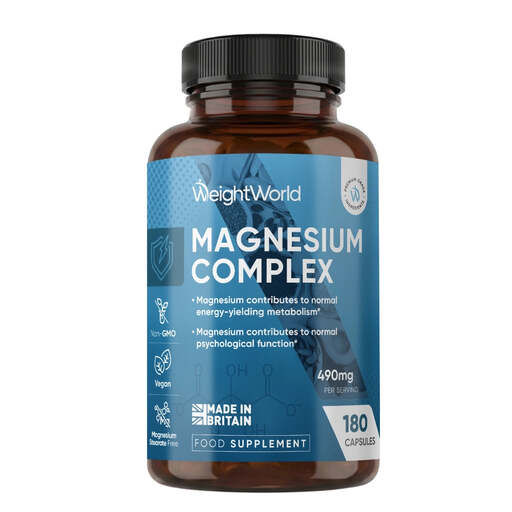
Why this product suits the profile: The formula combines magnesium citrate, magnesium bisglycinate, magnesium malate and magnesium oxide. According to the product information, the capsule shell is plant-based.
The magnesium forms used are clearly named in the ingredients list. This allows buyers to assess the composition rather than relying on a blanket advertising claim.
Four stated magnesium compounds; 180 capsules with a recommended intake of two capsules per day.
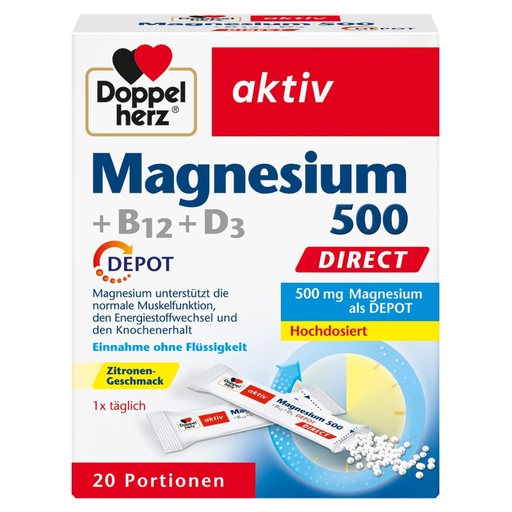
Why this product suits the profile: According to the nutrition information, the direct granules provide 500 mg of magnesium per sachet, as well as vitamins B12 and D3. The serving can be taken without water.
Individual sachets mean there is no need to estimate the daily amount when you are out and about. The product contains aspartame, which should be taken into account if you are sensitive to it.
500 mg per sachet; can be taken without water; additionally provides vitamins B12 and D3.

Why this product suits the profile: One effervescent tablet is dissolved in 250 ml of water. According to the product information, the supplement is gluten-free and lactose-free, and also contains vitamin C, vitamin E and B vitamins.
The daily serving and the required volume of water are clearly stated. If you want to avoid sweeteners or flavourings, you can check the ingredients list before buying.
400 mg of magnesium; effervescent format with an orange and grapefruit flavour; gluten-free and lactose-free according to the product information.
We have put together a complete, regularly updated list of products that fully meet these strict selection criteria and the safety regulations applicable in the EU.
Follow the dosage instructions on the packaging and do not take several high-dose magnesium products at the same time. For Magnesium 600 mg, for example, the product information expressly advises against using additional magnesium-containing food supplements.
Tablets, capsules and direct granules should be stored in a dry place and in accordance with the manufacturer’s instructions. With effervescent tablets, it is important to keep the tube tightly closed so that moisture does not alter their consistency. Drinking enough fluids may be particularly advisable when taking tablets and capsules.
For the products mentioned, 400 mg generally corresponds to 107% of the EU Nutrient Reference Value. For sensitive individuals, food supplement quantities above 250 mg may have a laxative effect. The recommended daily dose should therefore be followed and not increased without good reason.
No single form is universally suitable for everyone. Magnesium citrate and magnesium bisglycinate are often chosen deliberately, while magnesium oxide and magnesium carbonate are found in many high-dose tablets and effervescent products. The decisive factors are individual tolerability, the amount of elemental magnesium and the complete ingredients list.
The best-before date is printed on the packaging. Unopened products should be stored in a cool, dry place away from direct light, in accordance with the storage instructions. After opening, containers should be sealed tightly again.