
Lieferung heute & morgen

Qualitätsgarantie

Willkommens-Angebote freischalten: KOSTENLOSE Lieferung | Bis zu 80 % RABATT | Kostenlose 30-Tage-JoyPlus-Testphase
App herunterladen
The search for the right marker can quickly become overwhelming. Whether for the office, creative projects, or a child's first attempts at drawing, the market offers an enormous variety. However, not every marker delivers on its promise. Misleading product descriptions and unclear specifications often lead to poor purchases. This guide will help you identify the crucial features and make an informed decision when you're ready to buy markers.
Before you make a choice, you should be aware of three common problems that can lead to unusable products:
To avoid these problems, focus on three verifiable criteria. These will help you objectively evaluate a marker's performance.
The ink is the heart of every marker and determines its intended use. The three main types are:
The marker's tip defines how precisely or broadly you can work. Important types include:
Look for manufacturer-specific technologies or standards that offer objective advantages:
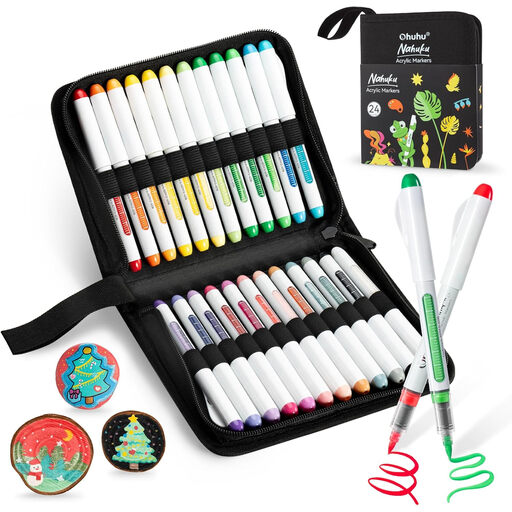
Why This Fits Their Persona: This set is aimed at creatives looking for a versatile tool for various surfaces. The water-based acrylic ink offers high opacity even on dark materials like wood, stone, or canvas and is waterproof after drying.
The ink is explicitly described as waterproof after drying and offers high adhesion, which counteracts the problem of misleading "permanent" markers.
Flexible 1-5 mm brush tip for variable line widths; high opacity and suitable for a variety of surfaces (e.g., rocks, fabric, ceramic, glass).
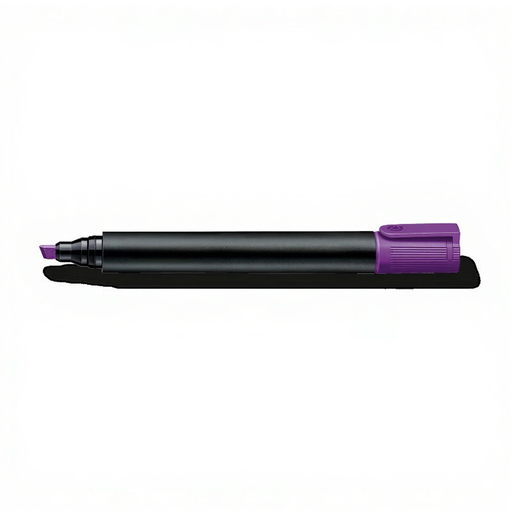
Why This Fits Their Persona: For professional use in the office, warehouse, or during presentations, reliability is crucial. This marker is designed for almost any surface and offers features aimed at a smooth workflow.
The DRY SAFE technology (tested according to ISO 554) prevents it from drying out quickly, even if left uncapped for days. The ink is smudge-proof and waterproof, making it a reliable permanent marker.
Versatile 2-5 mm chisel tip; quick-drying (suitable for left-handers); refillable and airplane-safe thanks to automatic pressure equalization.
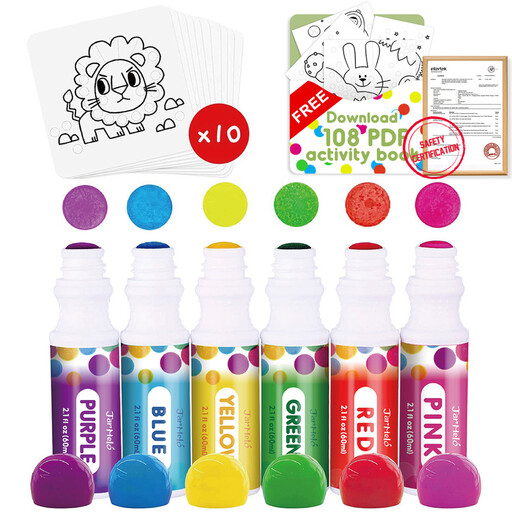
Why This Fits Their Persona: These markers are specifically designed for toddlers. The thick barrel is easy for small hands to grip, and the dot shape promotes hand-eye coordination without requiring precise strokes.
According to the manufacturer, the ink is 90% washable from skin and most fabrics. This is a more precise claim than a blanket "washable" and helps to better assess the risk of permanent stains.
Non-toxic, odourless, water-based ink; child-friendly design for easy handling; includes an activity book to foster creativity.
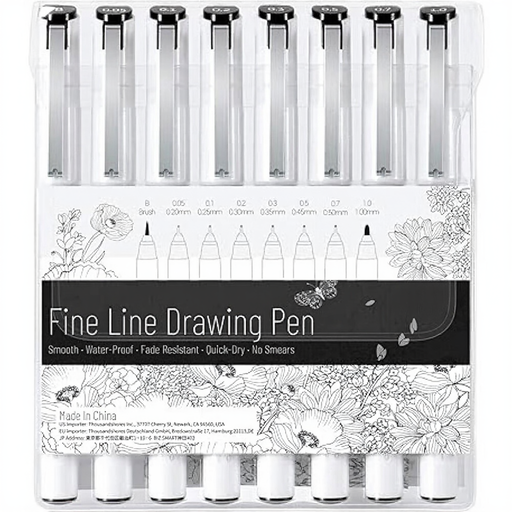
Why This Fits Their Persona: This set is ideal for technical drawings, illustrations, or detailed notes. It offers a range of precise tip sizes from 0.05 mm to 1.0 mm, as well as a brush tip for variable lines.
The black ink is specified as quick-drying, fade-proof, and water-resistant. This prevents smudging during work and ensures archival-quality results, counteracting the problem of fading ink.
Set with 7 different fineliner tips and one brush tip; caps are size-coded for easy identification; non-toxic and odourless ink.
We have compiled a complete, up-to-date list of products that fully meet these strict selection criteria and German safety regulations.
1. How should I store markers correctly to prevent them from drying out? Most markers, especially those with dual tips or brush tips, should be stored horizontally. This ensures that the ink flows evenly to both ends of the tip. For single-tip markers, storing them with the cap down is often beneficial. Always cap the marker tightly after use.
2. What does "DRY SAFE" mean on markers like the Staedtler Lumocolor? "DRY SAFE" is a technology developed by the manufacturer STAEDTLER. According to their specifications, based on ISO 554 testing, such a marker can be left uncapped for several days without the ink in the tip drying out. This is a practical advantage, especially in hectic work environments like offices or workshops.
3. Can you remove permanent markers from smooth surfaces like plastic or glass? Although the ink is considered permanent, it can often be removed from non-porous (smooth) surfaces using solvents. A cloth soaked in isopropyl alcohol (rubbing alcohol) or a special ink remover can help in many cases. Perform a test in an inconspicuous area first to ensure the surface itself is not damaged.