
Lieferung heute & morgen

Qualitätsgarantie

Willkommens-Angebote freischalten: KOSTENLOSE Lieferung | Bis zu 80 % RABATT | Kostenlose 30-Tage-JoyPlus-Testphase
App herunterladen
Finding the right pen can quickly become overwhelming. Whether for your studies, the office, creative projects, or the workshop, the selection is vast and the manufacturers' claims are just as varied. But not every marker lives up to its promise. The wrong ink, unsuitable tips, or pens that dry out quickly often lead to frustration and unnecessary expense. This guide will help you identify the crucial features and avoid the common pitfalls when buying markers.
Before you decide on a product, it's helpful to know the most common flaws found in low-quality pens.
To avoid these problems, you should check three core aspects before buying. These will determine whether a pen is suitable for your needs.
The type of ink is the most important distinguishing feature.
The shape of the tip determines the line width and the area of application.
Think carefully about what you need the marker for. A flip chart pen is designed so that its ink does not bleed through the thin paper. A STAEDTLER pen with "Dry Safe" technology can, according to the manufacturer, be left uncapped for days without drying out—an advantage in a hectic office environment. For artists, on the other hand, the lightfastness and blendability of the colours, as found in artist-grade Faber-Castell markers, are of central importance.
Here are some recommendations tailored to specific use cases that meet the quality criteria mentioned.
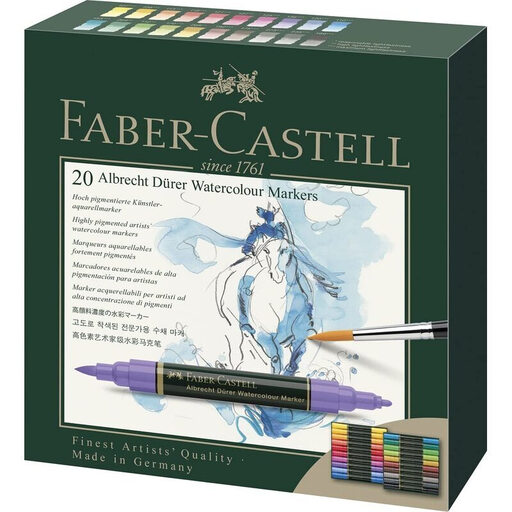
Why This Fits Their Persona: This set is aimed at creatives looking for a versatile tool for sketching and watercolour painting. The combination of a brush tip for broad washes and a fibre tip for details in one pen offers maximum flexibility, both in the studio and on the go.
The highly pigmented, water-based ink is formulated to achieve excellent effects on watercolour paper without bleeding through. The high-quality tips are robust and designed for artistic use.
Dual tips per pen (brush and fibre tip) for maximum versatility. The ink is fully water-soluble and has high lightfastness for long-lasting artwork.
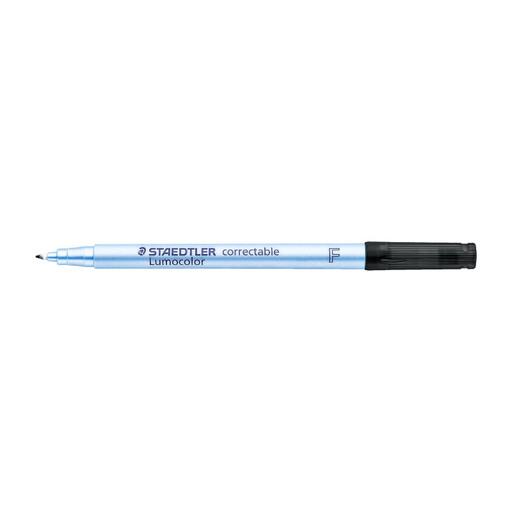
Why This Fits Their Persona: Perfect for anyone who writes on laminated calendars, reusable checklists, or transparent sleeves. This pen bridges the gap between a permanent marker and a whiteboard marker, allowing for flexible yet smudge-proof notes.
It solves the problem of using the wrong ink for smooth surfaces. Instead of an unreliable "universal pen," it offers a special dry-erase solution that is smudge-proof after drying and leaves no residue.
The ink is correctable with the integrated eraser at the end of the pen. The fine 0.6 mm tip is suitable for precise entries, and the "Airplane-Safe" technology prevents leakage on flights.
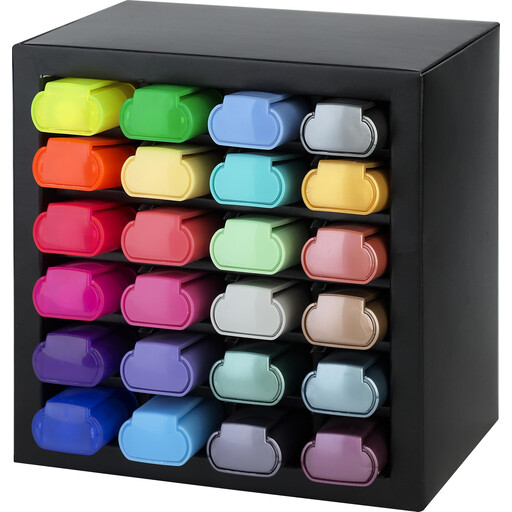
Why This Fits Their Persona: This comprehensive highlighter set is ideal for anyone who does a lot of highlighting and organising. With 24 pens in neon, pastel, and metallic colours, it offers enormous variety for colour-coded studying or project organisation in the office. The included desktop organiser keeps everything tidy.
The water-based ink is optimised for standard paper and prevents bleed-through. The durable chisel tip does not fray and allows for three different line widths, making it unnecessary to buy multiple pens.
Wide range of colours including pastel and metallic tones. The chisel tip allows for line widths of 1 mm, 2 mm, and 5 mm for maximum flexibility when highlighting and underlining.
We have compiled a complete, real-time list of products that fully satisfy these strict selection criteria and UK safety regulations.
1. How do I store markers correctly so they don't dry out? Most markers, especially those with dual tips, should be stored horizontally. This ensures an even distribution of ink to both tips. Always replace the cap firmly after use until it audibly clicks shut. Some manufacturers, like STAEDTLER, also offer "Dry Safe" technology, which they claim allows the pens to be left uncapped for several days.
2. What is the difference between water-based and alcohol-based ink? Water-based ink is low-odour, suitable for paper, and often washable from textiles. It is the standard choice for highlighters and children's felt-tip pens. Alcohol-based ink is the foundation for permanent markers. It is water-resistant, dries quickly, and adheres to almost all surfaces, but it has a stronger odour.
3. Can I use any permanent marker on CDs or DVDs? No, this is not recommended. Standard permanent markers contain solvents that can damage the sensitive data layer of a CD or DVD. Only use special CD/DVD markers, such as the STAEDTLER Lumocolor Permanent CD/DVD Marker. These have a particularly soft tip and an ink that does not damage the surface.