
Lieferung heute & morgen

Qualitätsgarantie

Willkommens-Angebote freischalten: KOSTENLOSE Lieferung | Bis zu 80 % RABATT | Kostenlose 30-Tage-JoyPlus-Testphase
App herunterladen
Anyone looking to buy milk online will quickly find a wide selection: UHT milk, whole milk, semi-skimmed milk, organic milk, lactose-free varieties, milk powder, children’s milk and infant formula. Buying online is particularly convenient for families, offices and high-volume users. At the same time, similar packaging and advertising claims can make choosing the right product more difficult.
The key factors are not eye-catching product promises, but fat content, ingredients, pack size, age range, storage and best-before date. These criteria make it easier to assess whether a product is suitable for everyday consumption, stocking up or a specific purpose.
A multipack may seem inexpensive at first glance. However, for a fair comparison, you should use the price per litre or 100 grams. For example, a pack containing 12 × 1 litre holds 12 litres. When buying a multi-carton milk bundle, you should also check whether you have enough storage space and whether the quantity can be used within the recommended period.
UHT milk and other long-life milk varieties can generally be stored at room temperature while unopened. The specific information on the packaging is always decisive. Once opened, the milk must be refrigerated and should be used within a few days. The storage guidance may vary between organic UHT milk, whole milk and semi-skimmed milk.
Children’s milk from 1 year, follow-on milk from 6 months and infant formula belong to different product categories. The stated age range must match the intended use. First infant formula and follow-on milk should only be prepared according to the instructions on the packaging. If you have questions about feeding an infant or toddler, it is advisable to consult a paediatrician or midwife.
The terms whole milk 3.5% or semi-skimmed milk 1.5% describe the fat content. Whole milk is suitable for drinking, coffee, muesli and recipes where a richer consistency is desired. Semi-skimmed milk can be a suitable choice for everyday use, drinks and cooking.
The Weihenstephan products listed contain 1.5 grams of fat per 100 millilitres in the semi-skimmed UHT milk. The whole milk version contains 3.5 grams of fat per 100 millilitres. This information allows for an objective comparison, regardless of advertising claims.
Classic milk generally contains milk as an ingredient and identifies milk as an allergen. Lactose-free milk often contains the enzyme lactase. According to the product information, Minus-L organic lactose-free UHT milk 1.5% contains milk and lactase. A lactose-free variety is not suitable for people with a milk protein allergy.
Milk powder may contain additional ingredients such as emulsifiers. According to the product description, Nestlé NIDO milk powder is made from whole milk powder and soya lecithin. Allergen information should be checked before purchase and again on the packaging delivered.
Depending on the product, unopened UHT milk can be stored in a cool, dry place outside the refrigerator. Refrigeration is required once it has been opened. Milk powder should be stored in a dry place, tightly sealed and protected from heat. For opened tins or pouches, manufacturers specify a precise period for use, such as three or four weeks.
With evaporated milk, it is important to distinguish between unsweetened and sweetened varieties. The ingredients, sugar content and storage instructions may differ considerably. Individually portioned evaporated milk is particularly suitable for offices and households where opened packs are used slowly.
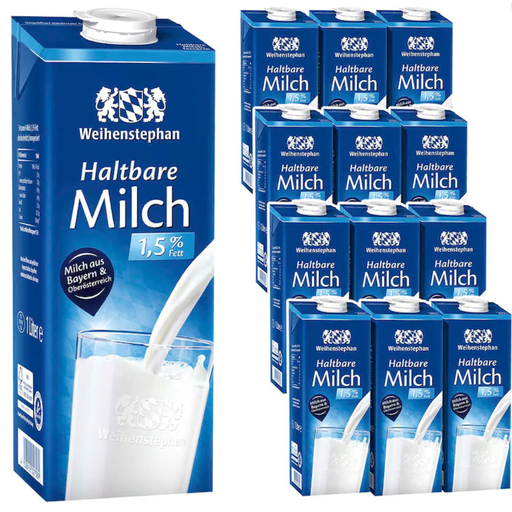
Why this product suits this profile: The 12-pack containing 12 × 1 litre is suitable for households that regularly use semi-skimmed UHT milk for muesli, coffee, cooking or baking.
The total quantity and fat content are clearly stated. This makes it easy to compare the price per litre with other UHT milk multipacks.
1.5% fat, 12 litres in total and unopened storage in a cool, dry place.
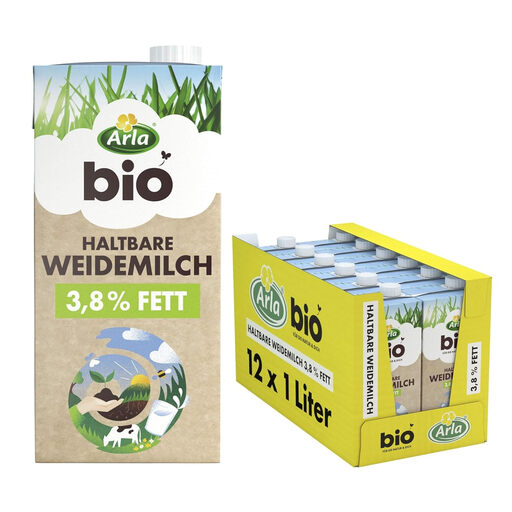
Why this product suits this profile: This organic UHT milk with 3.8% fat is aimed at shoppers who value organic certification, information about its origin and a larger pack size.
The product information states organic milk, 3.8% fat, 12 × 1 litre and specific storage instructions after opening.
Organic UHT whole milk, a 12-litre pack and stated origin in Denmark.
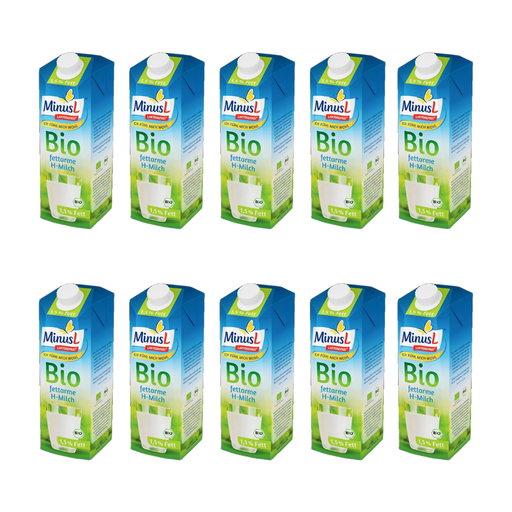
Why this product suits this profile: The 10-pack is suitable for households that regularly drink lactose-free milk or use it for coffee, muesli and recipes.
The product description explicitly mentions milk and lactase. This distinguishes the variety from conventional UHT milk.
Lactose-free organic milk, 1.5% fat and 10 × 1 litre for regular use.
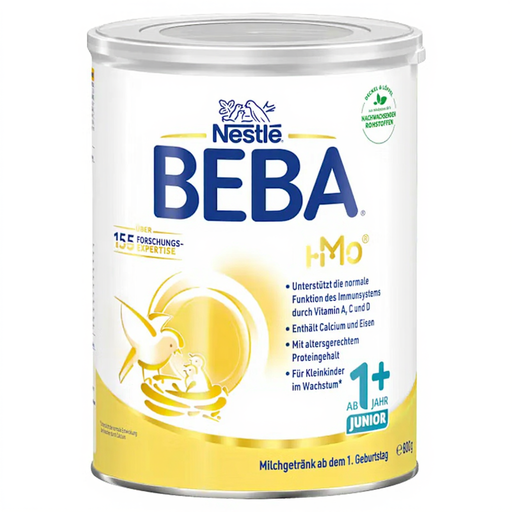
Why this product suits this profile: The from-12-months age guidance makes the choice clearer for parents looking for a milk drink option for toddlers.
The recommended age range, dosage and period for use after opening are stated in the product information.
800-g tin, suitable from 12 months and supplied with specific preparation instructions.
We have put together a complete, regularly updated list of products that fully meet these strict selection criteria and the safety regulations applicable in the EU.
For offices and high-volume users, milk multipacks or several cartons of UHT milk can make reordering easier. Milk powder is an alternative without the volume associated with liquid milk. Nestlé NIDO, for example, is available in a 400-g tin, a 900-g tin and a 12-pack of 900-g tins. Before buying, check the preparation ratio, allergens and period for use after opening.
For infants, options include Bebivita PRE from birth, as well as Bebivita follow-on milk 2 and Aptamil Pronutra 2 from 6 months. These products should not be equated with ordinary milk or children’s milk. The age range, preparation table and information on the original packaging are always decisive.
Evaporated milk is intended for coffee, tea, desserts and cooking recipes. Products with 4%, 7.5% or 8% fat may also differ in sugar content and storage requirements. For a targeted purchase, it is therefore worth checking the nutritional information per 100 grams.
Unopened long-life milk, such as UHT milk, is particularly practical for keeping in stock because, according to the manufacturer’s instructions, it does not necessarily need to be refrigerated. Nevertheless, you should take the best-before date, available storage space and actual consumption into account.
Opened UHT milk must be refrigerated. The exact period for use depends on the product and should be checked on the packaging. Product information often specifies a few days. Any changes in smell, taste or consistency are a reason not to use the milk.
Pay attention to the age range, the complete preparation table, storage conditions and period for use. Infant formula should be prepared fresh and not stored in the bottle for later use. If you are unsure which formula is suitable or how to change formula, seeking medical advice is recommended.